Deel vs Remote for Germany: Which EOR Actually Complies with German Labor Law in 2026?
TL;DR Verdict
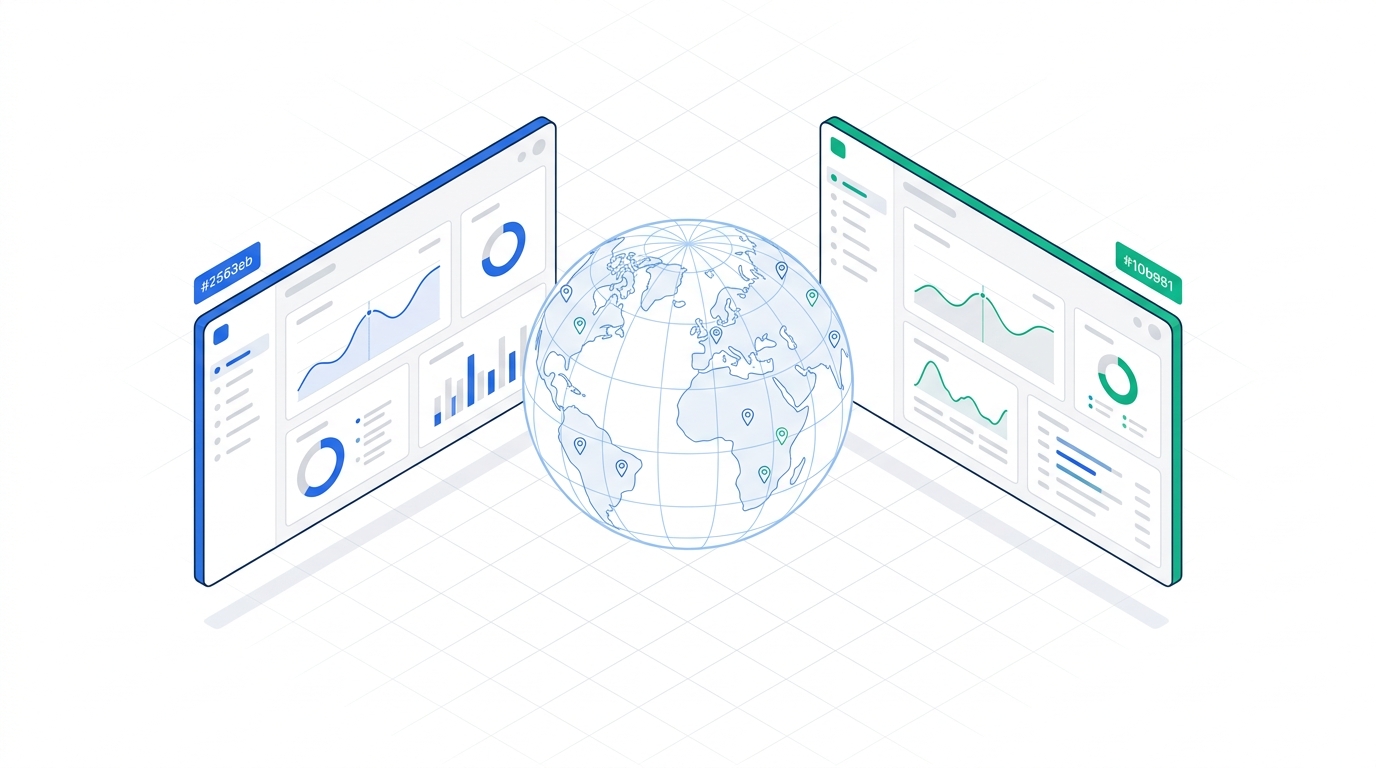
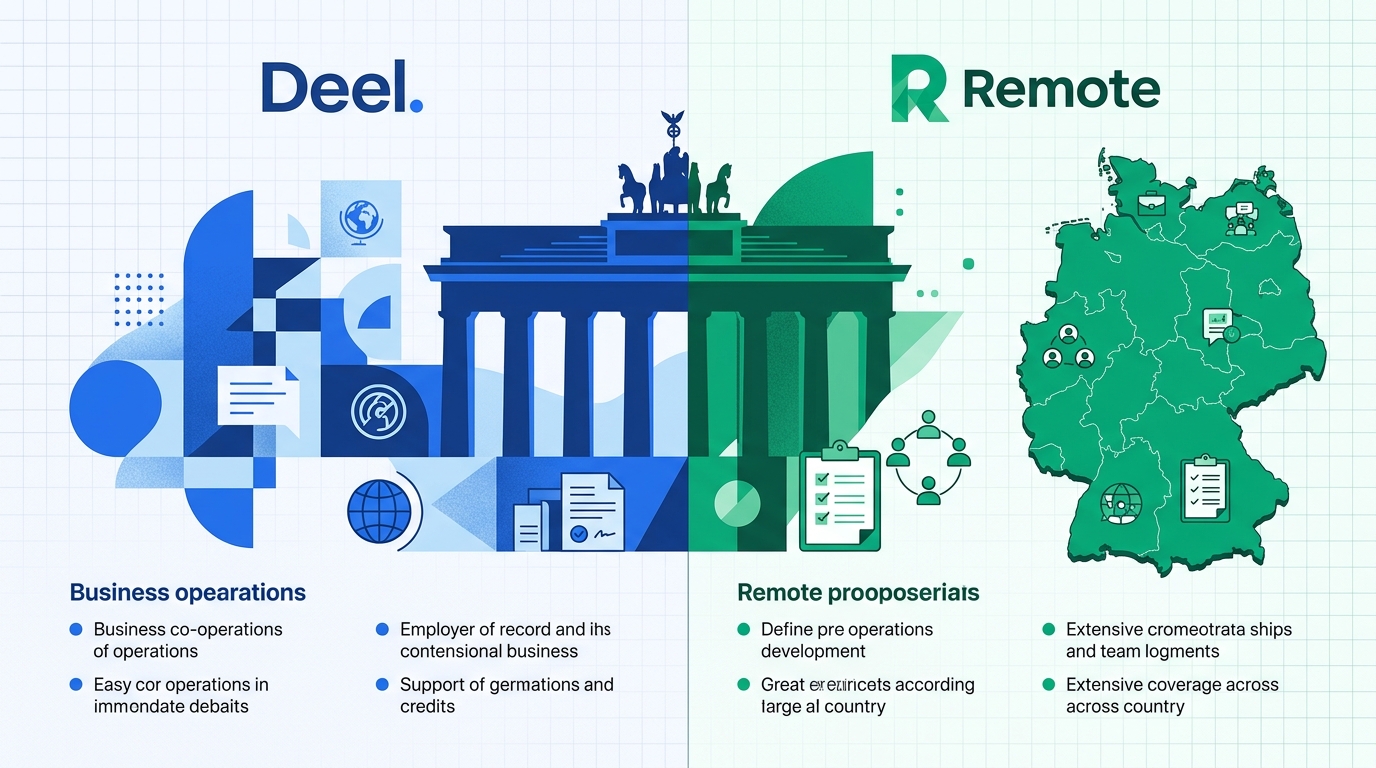
Both Deel and Remote charge $599/employee/month for EOR services. For German hiring specifically, Deel has a meaningful edge: it holds an indefinite AÜG license (Germany's mandatory labor-leasing permit), onboards employees in roughly 4 days, and operates through its own GmbH. Remote owns its German entity too, but its AÜG coverage is less clearly documented. That said, Remote offers supplemental health benefits beyond German statutory requirements, which matters if employee experience is your top priority. If you're hiring a single employee or a small team in Germany and compliance certainty is paramount, go with Deel. If you value stronger benefit packages and transparent pricing with no volume negotiation, Remote is the safer all-around EOR.
Deel
Indefinite AÜG license, owned GmbH, 4-day onboarding, stronger contractor integration.
Remote
Wholly owned entity, supplemental health coverage, transparent pricing, strong IP protection.
Quick Comparison: Deel vs Remote for Germany
| Criterion | Deel | Remote |
|---|---|---|
| EOR price (annual) | $599/employee/month | $599/employee/month |
| EOR price (monthly) | Sales quote required | $699/employee/month |
| Germany legal entity | Owned GmbH | Owned GmbH |
| AÜG license (Germany) | Indefinite license | Not publicly confirmed |
| German onboarding speed | ~4 business days | ~5–7 business days |
| Countries covered | 150+ | 180+ |
| Owned entities | 110+ countries | 85+ countries (all owned) |
| Contractor management | $49/contractor/month | $29/contractor/month |
| Supplemental health (Germany) | Statutory only | Supplemental included |
| IP protection | Standard | IP Guard included |
| G2 rating | 4.8/5 (13,922 reviews) | 4.5/5 (~3,600 reviews) |
| Volume discounts (20+ seats) | Negotiable ($400–500) | Modest (~$575) |
| HRIS (HR module) | Free up to 200 employees | Included with EOR |
Hiring in Germany? Start with Deel
Indefinite AÜG license, owned GmbH, and 4-day average onboarding for German employees.
Why Germany Makes EOR Selection More Critical Than Most Markets
Germany operates one of Europe's most protective employment frameworks — the Arbeitsrecht (German labor law). Unlike the US at-will employment model, German workers have strong dismissal protections, mandatory social contributions, and codified rights around notice periods, severance, and works councils. For companies hiring through an EOR, this means one thing: your compliance chain is only as strong as your EOR's German infrastructure.
Wrongful termination claims in Germany can run from €30,000 to €50,000 per employee. A compliance misstep — an improperly structured contract, a missed contribution deadline, or unlicensed employee leasing — puts that liability on the EOR, but your business relationship and your team member's employment are what get disrupted.
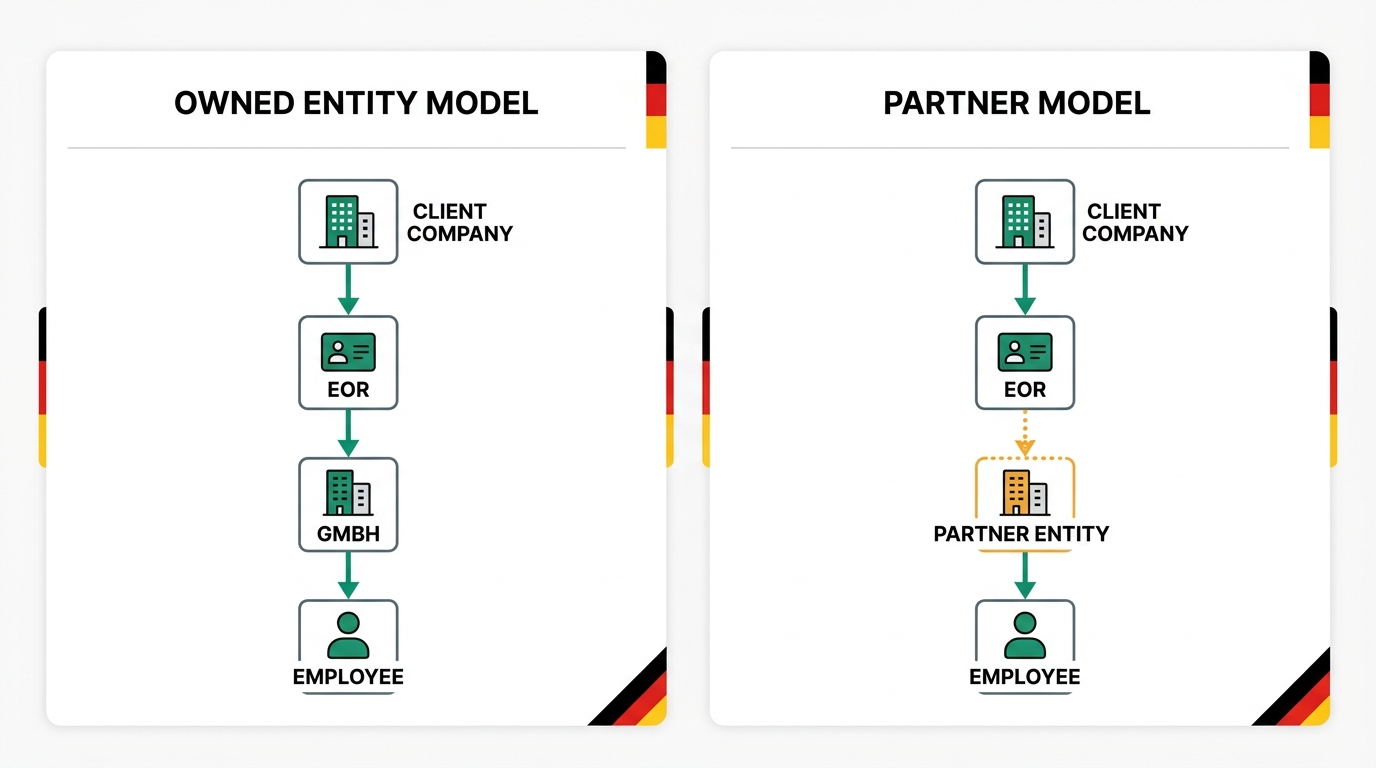
Two compliance factors separate tier-1 EOR providers from the rest when hiring in Germany: (1) whether the EOR operates through its own German GmbH, and (2) whether it holds the AÜG license — the Arbeitnehmerüberlassungsgesetz labor-leasing permit. Both Deel and Remote check the first box. The AÜG question is where they diverge meaningfully.
The AÜG License: Germany's Most Overlooked EOR Compliance Requirement
The AÜG (Arbeitnehmerüberlassungsgesetz) is Germany's employee leasing act. Any company that provides employees to a third-party business — including EOR providers — must hold this license to operate legally. The license is issued by the Federal Employment Agency (Bundesagentur für Arbeit), initially for one year, and can become indefinite after three consecutive years of compliant operations.
⚠️ Regulatory update (as of August 2026): In October 2024, the German Federal Employment Agency (Bundesagentur für Arbeit) extended AÜG licensing requirements to EOR providers employing workers abroad for German client companies. That extension was itself reversed effective October 1, 2025, under Weisung 202509010: fully remote arrangements with no physical presence in Germany are exempt again due to "insufficient domestic connection." This does not change the core scenario covered in this article — an employee who actually lives and works inside Germany still requires an EOR that holds a valid AÜG license, which is why AÜG status remains a decisive compliance factor below.
Deel's AÜG Status
Deel operates through two German entities: Deel Germany GmbH and Deel II GmbH. Deel Germany GmbH holds an AÜG license, and Deel publicly claims to be "the sole vendor in the EOR space that has obtained an indefinite employee leasing license (AÜG) in Germany." (Source: Deel's AÜG license disclosure, checked August 2026 — this is Deel's own statement, not an independent regulator filing.) An indefinite license means the Federal Employment Agency has assessed Deel's German operations over multiple years and granted permanent authorization — the highest compliance tier available.
Indefinite AÜG status is not a marketing differentiator — it's a concrete signal that Deel has operated a compliant German leasing entity for at least three consecutive years without enforcement actions. For HR directors and legal counsel evaluating EOR risk, this matters.
Remote's AÜG Status
Remote operates a wholly owned German GmbH and covers 180+ countries through owned entities. However, Remote has not publicly confirmed whether its German entity holds an AÜG license or at what stage the license sits (provisional vs. indefinite). Based on our research, Remote's labor leasing license coverage across its global portfolio sits at roughly 50% of entities where such licenses are legally required — a coverage gap compared to Deel's position.
This doesn't mean Remote is non-compliant in Germany — it means you should explicitly ask during your sales process: "Does Remote Germany GmbH hold a current AÜG license?" and request documentation. Any reputable EOR should be able to provide this immediately.
Pricing Breakdown: What You'll Actually Pay for a German Employee
Both platforms list $599/employee/month as their EOR rate on annual contracts (as of August 2026). But that number is just the platform fee. Here's what total cost of employment actually looks like for a German hire earning €60,000/year gross.
| Cost Component | Deel | Remote |
|---|---|---|
| EOR platform fee | $599/month (~€550) | $599/month (~€550) |
| Employee gross salary | €5,000/month | €5,000/month |
| Employer social contributions | ~€1,050/month (~21%) | ~€1,050/month (~21%) |
| Total monthly cost estimate | ~€6,600 | ~€6,600 |
| FX spread (USD/EUR) | 0.5–2% on each cycle | 0.5–2% on each cycle |
| Volume discount (20+ employees) | $400–$500/month | ~$575/month |
| Monthly billing option | $699 or by quote | $699/month (published) |
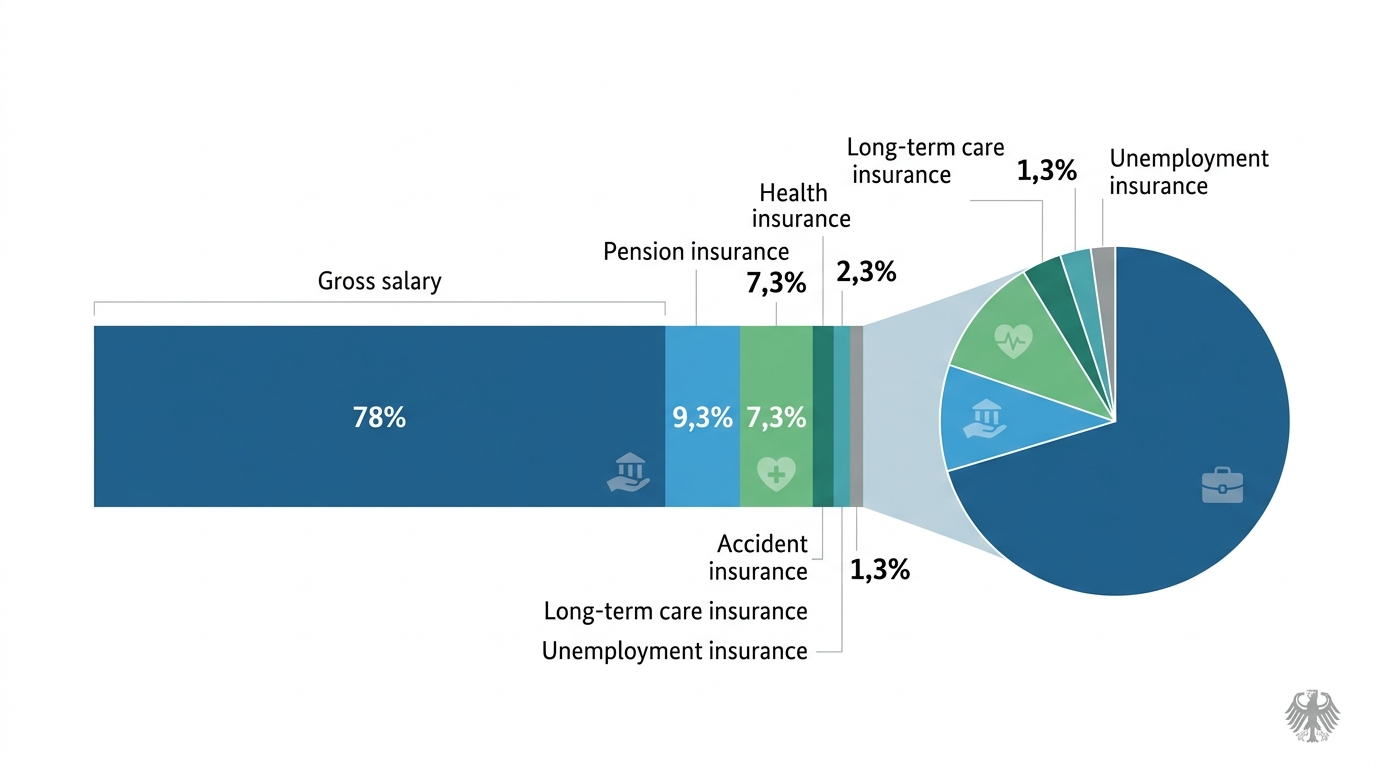
German employer social contributions include: health insurance (~7.3%), pension (~9.3%), unemployment (~1.3%), long-term care (~1.8%), and accident insurance (variable, typically 1–3%). Assessment ceilings for 2026 are €101,400/year for pension/unemployment and €69,750/year for health and long-term care — so high earners will see lower contribution rates as a percentage of total salary.
Who wins on price? At 1–5 employees in Germany, the platforms are effectively tied. At 20+ employees, Deel's willingness to negotiate to $400–$500/month creates a meaningful cost advantage. Remote holds closer to $575/month with more modest volume discounts, which may be acceptable for companies that value price transparency over negotiated savings.
Prefer predictable pricing? Remote publishes its rates.
Remote's $599/$699 pricing is published without a sales call, making it easier to model costs before committing.
Feature Comparison: What Each Platform Does Well
Payroll Processing in Germany
German payroll runs monthly, with most employees receiving salary by the 25th of the month or the last business day. Both Deel and Remote handle German payroll in-house, including income tax withholding (Lohnsteuer), social security contributions, and statutory reporting to German authorities.
Deel's payroll engine runs automated compliance updates — when Germany changed its minimum wage to €13.90/hour from January 2026, those changes are pushed into payroll calculations without manual intervention. Remote's approach is similar, with its owned-entity model giving its in-country legal team direct responsibility for payroll accuracy.
Deel also handles German-specific payroll structures such as Kurzarbeit (short-time work) arrangements and Lohnfortzahlung (continued pay during sick leave). Both platforms support the mandatory 6-week continued salary payment during employee illness before statutory health insurance takes over.
Employment Contracts
Germany's Nachweisgesetz (Verification Act) requires written documentation of employment terms — including probation conditions, overtime arrangements, and reference to applicable collective bargaining agreements — under its 2022 reform transposing EU Directive 2019/1152. A further amendment effective January 1, 2025 (the Bürokratieentlastungsgesetz IV) relaxed the format requirement, letting employers satisfy the Nachweisgesetz in text form (e.g., PDF or email) instead of a wet-ink signature in most cases. Both Deel and Remote generate contracts compliant with these requirements as of August 2026.
Probation periods in Germany can be set for up to 6 months. Both platforms allow you to configure this during onboarding. Deel's contract generation is faster — average onboarding is approximately 4 business days, compared to Remote's typical 5–7 days.
Contractor Management
If your German team includes a mix of employees and contractors, Deel has a stronger contractor management suite. Deel charges $49/contractor/month, while Remote charges $29/contractor/month. Deel allows contractor seats to count toward your EOR volume discount threshold, which can meaningfully reduce per-employee costs at scale.
Remote's contractor product is simpler but less integrated with its EOR workflow. If you anticipate converting contractors to employees in Germany — a common path for early-stage international teams — Deel's unified platform handles this transition more smoothly.
HRIS and Workforce Management
Deel offers a free HRIS tier for up to 200 employees, covering employee records, PTO tracking, org charts, and expense management. Remote includes its Remote HR module with all EOR plans at no extra charge. For a German team under 50, both platforms provide sufficient HR tooling without additional fees.
Deel's broader platform extends to immigration support, equity management, and IT device procurement — tools that matter for tech companies building distributed teams across Europe. Remote focuses more tightly on employment compliance and payroll, which suits HR teams who want a specialized EOR rather than an all-in-one HR platform.
Benefits Management: Germany's Statutory Floor and What's Above It
German law mandates a set of benefits that every employer must provide. Both Deel and Remote cover the statutory floor as part of their EOR fee:
- Statutory health insurance — employer pays ~7.3% of gross salary
- Pension contributions — employer pays ~9.3% (capped at €101,400/year)
- Unemployment insurance — employer pays ~1.3%
- Long-term care insurance — employer pays ~1.8%
- Accident insurance — employer pays (rate varies by industry)
- Paid vacation — minimum 20 days/year (most employers offer 25–30 days)
- Sick leave continuation — 6 weeks full salary, then statutory health insurance
- Maternity/parental leave — compliant with German Mutterschutzgesetz
Where the two platforms differ is in supplemental benefits. Remote explicitly offers supplemental health coverage in Germany — benefits that go beyond the statutory GKV (public health insurance) to include private-tier hospital coverage or dental enhancements. This is particularly relevant if you're competing for senior German engineers who expect private health insurance (PKV) as part of their package.
Deel's Germany benefits are described as "statutory compliant," with no published indication of supplemental health options. If benefits competitiveness matters for your German hires, ask Deel directly whether private health insurance can be added to the package and at what cost.
Compliance with German Labor Law (Arbeitsrecht): Key Requirements
German labor law is among the most detailed in Europe. Here's how Deel and Remote handle the key compliance requirements:
| Compliance Area | Deel | Remote |
|---|---|---|
| Nachweisgesetz (2026 update) | Covered | Covered |
| AÜG license | Indefinite | Unconfirmed status |
| Works Council (Betriebsrat) support | Advisory only | Advisory only |
| GDPR-compliant data handling | Yes | Yes |
| Dismissal protection (KSchG) | EOR manages termination | EOR manages termination |
| IP protection | Standard contracts | IP Guard system |
| Collective bargaining (Tarifvertrag) | Monitored | Monitored |
| Mini-job / Midi-job structures | Supported | Supported |
One area where Remote stands out is IP protection. Remote's IP Guard system generates contracts that explicitly assign intellectual property created by employees to your company, with contract language that has been reviewed to hold up under German civil law. This is particularly relevant for software and product companies where IP assignment ambiguity creates business risk.
Both platforms handle the Kündigungsschutzgesetz (KSchG — German dismissal protection act), which applies after 6 months of employment in companies with more than 10 employees. Any termination in Germany after this point requires documented cause or a negotiated severance agreement. Your EOR manages this process, but both Deel and Remote note that German terminations typically take 4–8 weeks minimum due to statutory notice periods.
Pros & Cons
Deel
✓ Pros
- Indefinite AÜG license in Germany (sole EOR with this status per their claim)
- Owns two German GmbH entities, direct compliance accountability
- Fastest German onboarding (~4 business days)
- Best volume discounts at 20+ employees ($400–500/month)
- Strong contractor management, unified with EOR
- Broad platform: HRIS, immigration, equity, IT procurement
- Highest G2 rating (4.8/5 from 13,922 reviews)
✗ Cons
- Monthly billing pricing requires a sales conversation
- Supplemental health benefits for Germany not published
- Contractor management costs more than Remote ($49 vs $29)
- Support quality inconsistent at high volume
- FX spreads of 0.5–2% on each payroll cycle
Remote
✓ Pros
- Supplemental health coverage in Germany included
- IP Guard system for IP assignment protection
- Fully transparent published pricing ($599/$699)
- More affordable contractor management ($29/month)
- 180+ countries with 100% owned entities
- Clean compliance track record (no third-party partners anywhere)
✗ Cons
- AÜG license status not publicly confirmed for Germany
- Slower onboarding in Germany (~5–7 days)
- Volume discounts less aggressive (~$575/month at scale)
- Narrower HRIS feature set compared to Deel's full suite
- Fewer reviews on G2 (3,600 vs 13,922) — newer platform
Not sure which one to pick?
Get quotes from multiple EOR providers side-by-side — including Deel, Remote, and alternatives like WorkMotion — before committing to a Germany hire.
Who Should Choose Which
Choose Deel if you…
- Need AÜG compliance certainty with documented indefinite license
- Are hiring 20+ employees (volume discounts are real at scale)
- Have a mix of contractors and employees in Germany
- Need fast German onboarding (days, not weeks)
- Want HRIS, immigration, equity, and IT in one platform
- Are expanding beyond Germany to 150+ countries later
Choose Remote if you…
- Prioritize employee benefits beyond statutory minimums
- Want private health insurance options for German engineers
- Need IP assignment airtight under German civil law (IP Guard)
- Prefer transparent pricing without a sales call
- Are hiring in 180+ countries with consistent owned-entity compliance
- Have a smaller contractor ratio in your German team
The Germany-specific verdict: For pure compliance certainty in Germany, Deel's indefinite AÜG license is a documented advantage. For employee experience — particularly attracting senior engineers with better-than-statutory health benefits — Remote edges ahead. If neither differentiator is decisive for your situation, the platforms are effectively tied on price and core EOR capability for Germany.
Frequently Asked Questions
Yes. Deel operates through two owned German GmbH entities and holds an indefinite AÜG (employee leasing) license, making it one of the most compliance-ready EOR options specifically for German hiring. As of August 2026, Deel's average onboarding time for German employees is approximately 4 business days.
The AÜG (Arbeitnehmerüberlassungsgesetz) is Germany's mandatory labor-leasing permit, required by any organization that employs workers on behalf of a third-party client — including an EOR employing someone who lives and works inside Germany, the scenario this article covers. EOR providers must hold this license to operate legally for German-based hires. A separate October 2024 update briefly extended the licensing requirement to EORs employing remote workers abroad for German client companies; the Federal Employment Agency reversed that extension effective October 1, 2025 (Weisung 202509010), so fully remote arrangements outside Germany are exempt again. For a German-based employee, though, an EOR without a valid AÜG license still creates legal exposure for your business.
Both are full-service EOR platforms at $599/employee/month (annual). The main differences are: (1) Deel has a documented indefinite AÜG license in Germany; Remote's AÜG status is unconfirmed publicly. (2) Remote offers supplemental health benefits in Germany; Deel covers statutory requirements only. (3) Deel negotiates to $400–500/month at 20+ employees; Remote holds closer to $575/month. (4) Deel has a broader HRIS and contractor platform; Remote has stronger IP protection (IP Guard).
For a German employee earning €60,000/year gross (~€5,000/month), expect to pay roughly €6,600/month total: €5,000 gross salary + ~€1,050 employer social contributions (~21%) + ~€550 EOR platform fee ($599 converted). Add 0.5–2% for FX spreads on USD/EUR conversion if billing is in USD. The statutory minimum wage is €13.90/hour as of January 2026, rising to €14.60 from January 2027.
The main alternatives for Germany-specific hiring include WorkMotion (German-founded, holds AÜG license, priced at €499/month), Rippling (strong HRIS integration, US-centric), Oyster HR (competitive pricing at $499–$699/month), and Remofirst (budget-oriented, flat-rate at $199/month). For companies prioritizing German compliance depth, WorkMotion is worth evaluating alongside Deel and Remote, as it holds IEC Gold Certification and built its platform around European labor markets.
Methodology
This comparison was originally researched in June 2026 and re-verified in August 2026 by reviewing publicly available pricing pages, official product documentation, and independent EOR review platforms including eorHQ, PayrollRated, and G2. Pricing data was re-checked against Deel's and Remote's official pricing pages. Germany-specific compliance information was cross-referenced with the Bundesagentur für Arbeit's current AÜG guidelines — including its September 2025 update (Weisung 202509010, effective October 1, 2025) — and the 2026 social contribution assessment ceilings. We do not accept payment to rank tools; affiliate placements in this article are clearly marked and do not influence our editorial conclusions. Claims about AÜG licensing were sourced from Deel's official blog documentation and third-party EOR analyses, with Remote's status noted as unconfirmed based on lack of public disclosure at the time of the August 2026 update.

Technology consultant with 10+ years in the Japanese tech industry. Specializing in SaaS evaluation, workflow automation, and B2B tool integration.