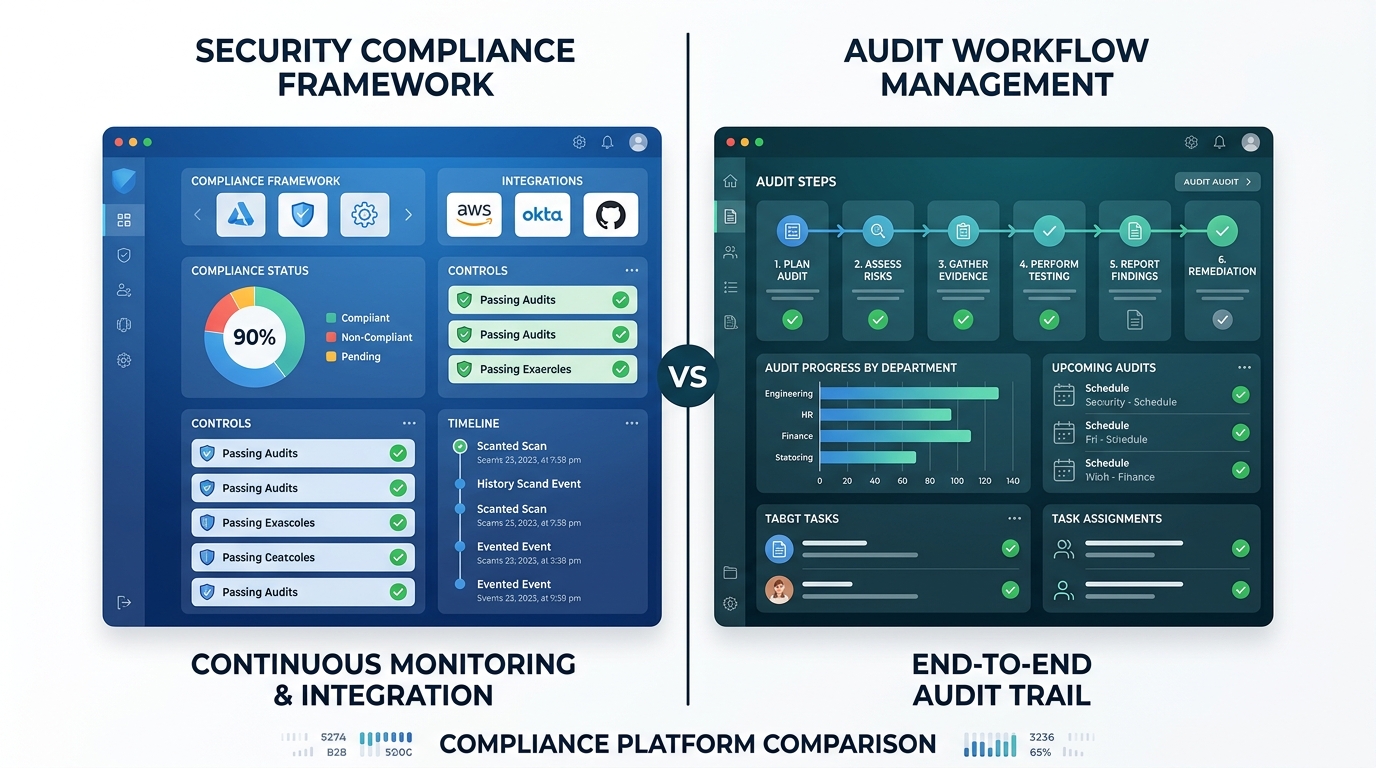
Vanta wins on integration breadth (400+ connectors vs Drata's 200+), monitoring frequency (hourly vs daily automated tests), and — as of April 2026 — holds the higher-tier FedRAMP 20x Moderate Authorization, which still makes it the stronger default for government-adjacent SaaS vendors (Drata's own FedRAMP 20x authorization, granted in December 2025, covers only the Low impact level). It's also faster to get audit-ready: most startups land their first SOC 2 in 3–4 months.
Drata wins on support quality (9.6/10 vs Vanta's 9.0/10 on G2), a single list-priced package that covers up to 50 employees ($15,000/yr on AWS Marketplace, vs Vanta's $14,000 Essentials tier for 1–20 employees), and Audit Hub — a genuinely excellent auditor collaboration tool. For companies managing multiple frameworks simultaneously, Drata's shared-control mapping reduces duplicate work significantly.
| Your team and scope | Lean toward | Why (prices as of Oct 14, 2026) |
|---|---|---|
| 1–20 employees, 1 framework (usually SOC 2) | Vanta, or Drata if nobody in-house has run an audit | List prices are close: Vanta Essentials $14,000 vs Drata Foundation $15,000. Vanta is product-led; Drata's CSM-led onboarding helps first-timers.Both offer 25% off for eligible startups (see Pricing). |
| 21–50 employees, 1 framework | Drata | Drata's $15,000 package still applies up to 50 FTE. Vanta's listed prices stop at 20 employees, so you need a quote. |
| 51–200 employees, 1 framework | Either, so decide on integrations and monitoring (often Vanta) | Vendr deal ranges overlap: Vanta $20K–$40K vs Drata $20K–$45K. Price won't settle it, but Vanta's 400+ integrations and hourly tests might. |
| 50–300 employees, 2–3 frameworks | Drata | Shared-control mapping cuts duplicate evidence work. Vendr ranges: Vanta $30K–$70K (50–200 employees) vs Drata $30K–$55K (100–300). |
| 200+ employees, 3+ frameworks or a custom framework | Drata | Custom frameworks at the Enterprise tier and Audit Hub. Expect $60K–$120K on Vanta (200–500, 3–5 frameworks) and $60K to $100K+ on Drata. |
| Any size, customers require FedRAMP Moderate | Vanta | Vanta holds FedRAMP 20x Moderate; Drata is authorized at Low only. |
Quick Comparison: Vanta vs Drata
List prices are from each vendor's own AWS Marketplace listing (12-month contracts, checked October 14, 2026). Deal ranges come from Vendr's buyer guides (checked the same day). Ratings, integration counts and feature data were last verified in August 2026.
| Vanta | Drata | |
|---|---|---|
| G2 Rating | 4.6 / 5 (2,600+ reviews) | 4.7 / 5 (1,300+ reviews) |
| Support Quality (G2) | 9.0 / 10 | 9.6 / 10 |
| Native Integrations | 400+ | 200+ |
| Compliance Frameworks | 35+ | 30+ |
| Automated Tests | 1,400+ | ~700+ |
| Monitoring Frequency | Hourly | Daily |
| FedRAMP Authorization | Moderate (Apr 2026) | Low (Dec 2025) |
| Trust Center | Public-facing | Public-facing |
| Auditor Collaboration | In-platform | Audit Hub (dedicated) |
| Custom Frameworks | Limited | Yes (Enterprise) |
| Questionnaire Automation | Add-on | Add-on |
| Entry list price / yr (AWS Marketplace) | $14,000 (Essentials, 1–20 employees) | $15,000 (Foundation, 1–50 FTE) |
| Typical deal, 1 framework, ~50–200 employees (Vendr) | $20K – $40K | $20K – $45K |
| Typical deal, 2–3 frameworks, mid-market (Vendr) | $30K – $70K (50–200 employees) | $30K – $55K (100–300 employees) |
| Best For | Teams under 20, FedRAMP Moderate, integration breadth | Scaling teams, multi-framework |
Pricing: What You'll Actually Pay
Neither vendor shows a price on its own website. Both, however, publish list prices on their AWS Marketplace listings, which are the only hard numbers available. Everything above those entry tiers is a custom quote based on headcount, framework count, and add-ons. For those, the best public reference is Vendr's anonymized deal data. All figures below were checked on October 14, 2026.
Read the two listings carefully, because they cover different headcount bands. Vanta's $14,000 Essentials price is a starting cost for 1–20 employees, and the listing says that larger headcounts move you into higher pricing bands. Drata's $15,000 Foundation Package is a single list price for any company with 1–50 full-time employees, and covers evidence collection, control monitoring and cross-framework mapping. A 15-person startup therefore sees nearly identical list prices. At 40 people, only Drata has a published number.
What larger deals cost (Vendr data)
Startup discounts we could verify
- Vanta: HubSpot for Startups members get 25% off Vanta. The offer is listed on HubSpot's startup perks page.
- Drata: the Drata for Startups program advertises 25% off your first Drata contract.
We left out smaller "$X off" perks that appear only on third-party coupon and perk sites, because we could not confirm them with either vendor. If you are still deciding whether either platform is affordable at seed stage, our compliance automation picks for early-stage startups compare cheaper options too.
Which is Cheaper for Multi-Framework Programs?
If you're running SOC 2 and ISO 27001 at the same time, which is common for companies selling to both US enterprise and European customers, neither vendor publishes a per-framework add-on price. Vendr's data is the closest comparison. Vanta buyers with 50–200 employees and 2–3 frameworks typically pay $30K–$70K a year. Drata Growth deals for 100–300 employees with 2–3 frameworks typically land at $30K–$55K. The floors are the same, but Drata's ceiling is lower, and its shared-control mapping keeps the work from multiplying. Get quotes from both with the same framework list and headcount, and use the other quote as leverage.
Integration Depth: 400+ vs 200+
Integration count is the most frequently cited differentiator between these two platforms — and it's also the most misunderstood. Raw numbers matter less than which integrations you actually need.
Both platforms connect deeply with the major cloud providers (AWS, GCP, Azure), identity providers (Okta, Google Workspace, Azure AD), MDM solutions (Jamf, Kandji), and core developer toolchains (GitHub, GitLab, Jira, Linear). For the majority of Series A–C SaaS companies, this overlap means either platform covers your stack well.
Where Vanta's larger connector library pays off: niche or less common tools. If your DevOps team runs Buildkite instead of GitHub Actions, or you use Airtable for HR records, you're far more likely to find a native Vanta integration than a Drata one. Drata's answer is typically custom integrations via their open API or CSV uploads — functional, but requiring manual maintenance that Vanta handles automatically.
Worth noting: Vanta's automation rate (60–70% of controls auto-evidenced) edges out Drata's (55–65%) precisely because of this breadth. Fewer manual uploads means less compliance team overhead week-to-week.
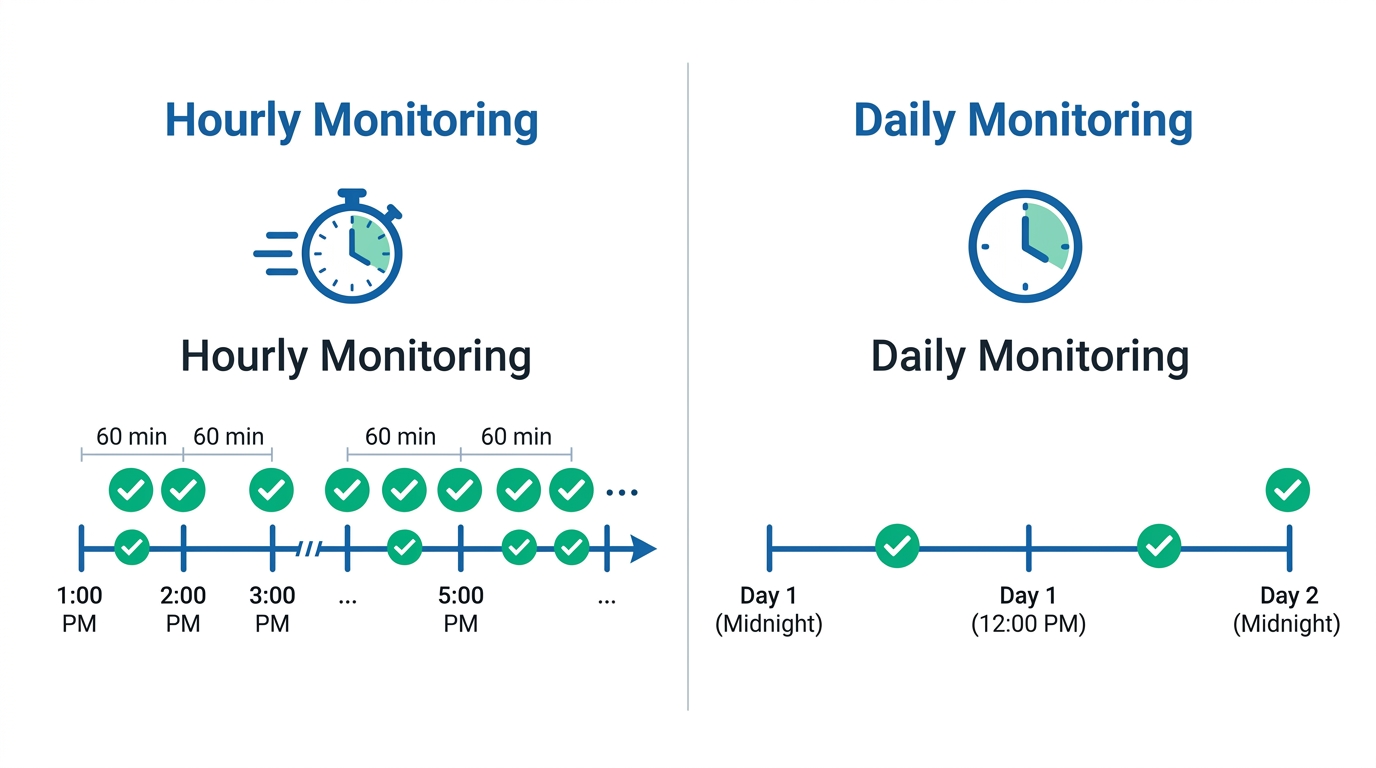
Monitoring frequency comparison: Vanta's hourly testing surfaces misconfigurations 24× faster than Drata's daily cadence.
Compliance Framework Coverage
Both platforms cover the frameworks that matter for most B2B SaaS companies. The gaps appear at the edges — and one gap is now decisive.
Vanta — 35+ Frameworks
SOC 2, ISO 27001:2022, ISO 42001, HIPAA, PCI DSS v4.0, GDPR, CMMC 2.0, NIST CSF, NIST SP 800-171, FedRAMP (Low + Moderate), NIS 2, DORA, TISAX, and more. Vanta's newer AI safety framework, ISO 42001, is notable for companies building AI products.
Drata — 30+ Frameworks
SOC 2, ISO 27001, HIPAA, GDPR, PCI DSS, NIST CSF, NIS 2, DORA, ISO 42001, and others. Enterprise tiers unlock custom framework building — useful for companies in regulated industries with bespoke requirements.
The FedRAMP Picture — Updated for 2026
On April 24, 2026, Vanta became the first GRC platform to achieve FedRAMP 20x Moderate Authorization for its Government Cloud offering (hosted on AWS GovCloud). Vanta's commercial cloud had already received FedRAMP 20x Low Authorization in July 2025. Drata has since caught up at the entry tier: its Trust Management Platform received its own FedRAMP 20x Low Authorization on December 5, 2025 (listed on the FedRAMP Marketplace, package FR2600167032), though it has not announced a Moderate-level authorization as of this writing.
For the majority of commercial SaaS companies, FedRAMP is irrelevant. But if there's any chance your roadmap includes government contracts, the Moderate-vs-Low distinction is a tiebreaker worth weighing early.
Shared Control Mapping: Drata's Advantage for Multi-Framework
When you're pursuing both SOC 2 and ISO 27001, many controls overlap. Drata's unified control framework lets you define a control once and map it to multiple frameworks automatically — reducing duplicate evidence collection and review work. Vanta offers similar functionality but is less structured in how it presents cross-framework mapping, which can make management more manual at scale.
Continuous Monitoring: Hourly vs Daily
This is an underappreciated difference that security-focused buyers should scrutinize carefully.
Vanta runs automated tests across your environment every hour. If a developer accidentally removes MFA from your admin account at 9 AM, Vanta will surface that as a failing control by 10 AM. Your compliance team can remediate and re-run tests within the same business hour.
Drata runs tests daily. In the same scenario, that misconfiguration could exist for up to 23 hours before detection. For most controls, this is a non-issue — SOC 2 Type 2 doesn't require hourly verification of every control. But for high-criticality controls like access management, encryption settings, and network configuration, faster detection genuinely reduces your security exposure window.
For organizations in regulated industries — financial services, healthcare, government — where continuous compliance is an explicit requirement (not just an audit checkbox), Vanta's hourly cadence is a meaningful differentiator.
Auditor Collaboration and Audit Readiness
Both platforms are built to smooth the audit process — but they take meaningfully different approaches.
Vanta — In-Platform Audit Workflow
Vanta lets you invite your auditor directly into the platform to review evidence, respond to requests, and track audit progress. Evidence is continuously auto-collected, so when the audit period arrives, the evidence library is largely already populated. Most Vanta customers report 3–4 months to first SOC 2.
Drata — Audit Hub
Audit Hub is Drata's dedicated auditor collaboration environment. Auditors can request specific evidence tied directly to controls, and Drata automatically pulls the requested evidence — eliminating the back-and-forth email chains that typically consume 20–30% of compliance team time during an audit window.
In practice, users consistently rate Drata's Audit Hub as one of the most polished features in the compliance automation space. The workflow is purpose-built for auditor communication, not bolted on. If your team has struggled with disorganized audit evidence requests in the past, Drata's approach is meaningfully better at eliminating that chaos.
That said, Vanta's continuous evidence collection means less scrambling in the weeks before an audit — the evidence is already there, already tagged to controls. Both approaches work; the question is whether you optimize for pre-audit organization (Vanta) or in-audit collaboration (Drata).
Trust Center and Security Posture Sharing
The "Trust Center" is the compliance platform feature that's quietly become a B2B sales accelerator. Rather than sending security questionnaires back and forth for weeks, vendors share a public URL where prospects can self-serve your security certifications, active compliance status, and available documentation.
Both Vanta and Drata offer configurable Trust Centers with live status dashboards. Prospects can see passing controls in real time, request specific documents under NDA, and download relevant certifications. Both platforms also include AI-powered questionnaire automation (as a paid add-on) that can pre-populate responses to security questionnaires using your existing compliance data — often cutting response time from days to hours. Drata retired its earlier standalone Security Questionnaire Automation tool on April 30, 2026 and replaced it with AI Questionnaire Assistance (AIQA), now built on the SafeBase platform Drata acquired in late 2025.
If your sales team is regularly stuck on security review delays — a common friction point in enterprise deals — both platforms address this similarly. Vanta's Trust Center has broader adoption due to Vanta's larger market share, which means prospects are often already familiar with the interface. Drata's version is equally capable but sees slightly less end-buyer recognition.
Customer Support and Implementation
This is where Drata consistently wins, and it's not a small margin.
Drata's approach is CSM-led: you get a dedicated Customer Success Manager who guides implementation, runs kickoff workshops, and stays involved through your first audit. For compliance programs run by small teams — or by engineers who've never done a SOC 2 before — this hand-holding is genuinely valuable. Drata's implementation support reduces the steep learning curve that makes compliance projects stall.
Vanta's approach is more product-led. The platform is designed to be self-serviceable, with guided onboarding flows, an extensive help center, and community resources. Vanta's support gets the job done — but users with complex edge cases or unusual compliance configurations report needing more back-and-forth to get satisfactory answers.
For a solo compliance manager at a 30-person startup, Drata's support model is a meaningful advantage. For a well-staffed security team at a Series C company that wants control and autonomy, Vanta's model works fine.
Note: both platforms also maintain partner networks of approved auditors and compliance consultants. If you're new to compliance and want external implementation help, both ecosystems offer options — though Drata's partner network is more structured in how it integrates with the platform.
Vanta: Pros and Cons
Pros
- 400+ integrations — largest connector library in the category
- Hourly automated monitoring (vs daily for most competitors)
- FedRAMP 20x Moderate Authorization (April 2026) — only platform in this comparison certified at the Moderate level
- 1,400+ automated tests across cloud, identity, endpoint, ticketing
- 35+ supported frameworks including TISAX, ISO 42001, CMMC
- Strong Trust Center with high end-buyer recognition
- AI-powered policy generation and evidence evaluation
- Faster average time to first SOC 2 (3–4 months)
Cons
- Published list prices ($14,000 Essentials) cover only 1–20 employees; above that it is quote-only
- Support quality (9.0/10) lags Drata (9.6/10)
- Steeper learning curve; 2–3 weeks to full productivity
- Cross-framework control mapping less structured at scale
- Can open many browser tabs — UI quirk noted by power users
- Vendr flags annual price increases as a common hidden cost, so negotiate a renewal cap
Drata: Pros and Cons
Pros
- Best-in-class support quality (9.6/10 G2) with dedicated CSMs
- Audit Hub — cleanest auditor collaboration workflow in the market
- Lower typical ceiling for 2–3 frameworks at mid-market ($30K–$55K vs Vanta's $30K–$70K, Vendr)
- Unified control mapping reduces multi-framework duplicate work
- Custom framework builder for Enterprise (unique capability)
- Cleaner, more intuitive UI — faster time to productivity (1–2 weeks)
- One $15,000 list package covers 1–50 FTE (AWS Marketplace, Oct 2026)
Cons
- Only 200+ integrations — niche tools often lack native connectors
- Daily monitoring frequency (vs hourly for Vanta)
- FedRAMP authorized only at the Low level (Dec 2025) — no Moderate tier yet
- Fewer supported frameworks (30+ vs 35+)
- Fewer automated tests than Vanta
- Complex initial setup for large, heterogeneous environments
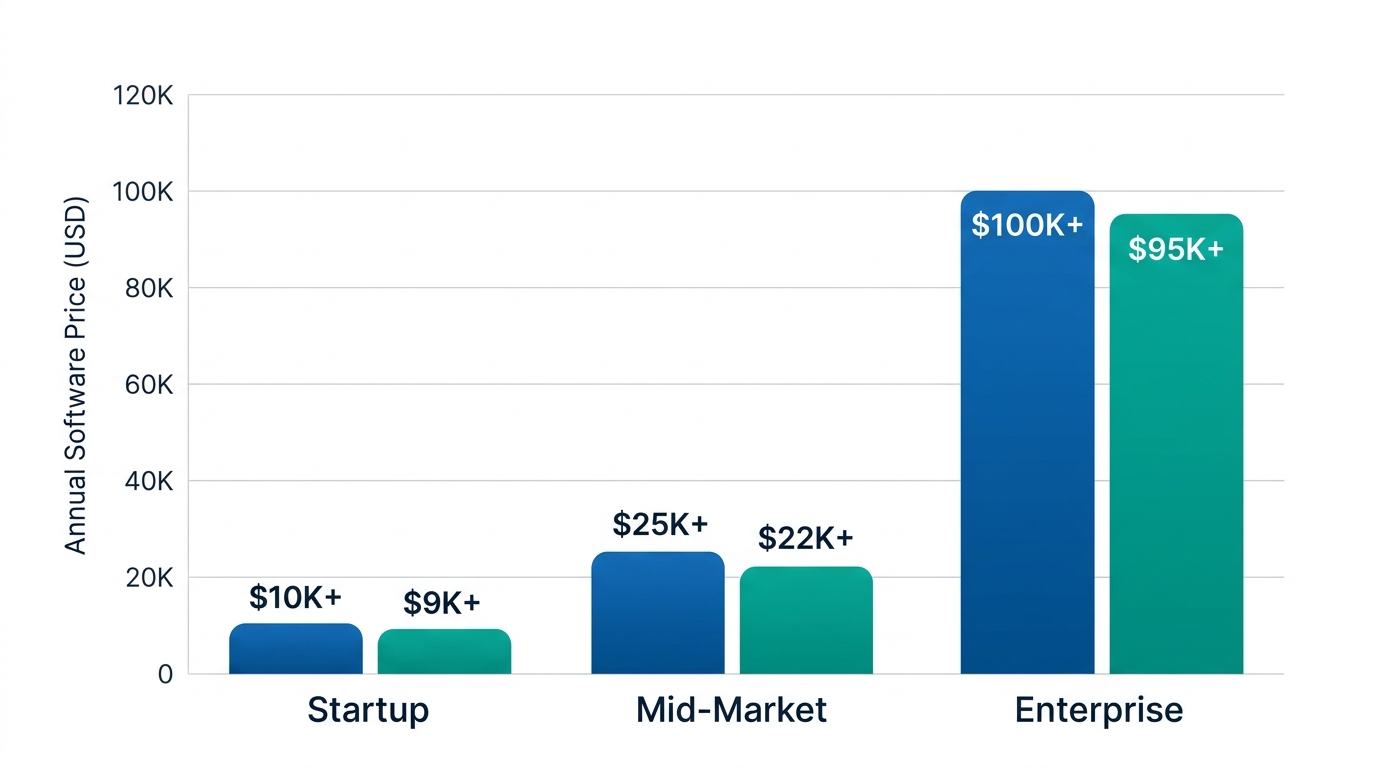
Annual cost ranges for Vanta and Drata across company sizes, based on aggregated procurement data (June 2026). See the Pricing section for list prices and Vendr ranges checked October 14, 2026.
Who Should Choose Which
The decision table in the TL;DR covers team size and framework count. The lists below add the non-price factors.
Choose Vanta if you…
- Need your first SOC 2 fast and have a small compliance team
- Require FedRAMP Moderate authorization (government contracts, federal data)
- Use niche or unusual tools that need native integrations
- Want hourly monitoring for high-criticality security controls
- Are pursuing unusual frameworks: TISAX, ISO 42001, CMMC
- Prefer a product-led, self-service experience over heavy onboarding
- Are a startup with 20 or fewer employees going for a first audit quickly
Choose Drata if you…
- Manage 2+ compliance frameworks simultaneously
- Have a scaling compliance program (100+ employees)
- Want dedicated CSM-guided implementation and ongoing support
- Are in an industry where auditor collaboration is frequent
- Need custom framework support for bespoke regulatory requirements
- Have 21–50 employees and want a published list price ($15,000) instead of a quote
- Want a structured, hands-on path through complex compliance
One scenario worth calling out: companies expanding into Europe. NIS 2 and DORA are now live regulatory obligations for many companies selling into the EU (and for financial service vendors' supply chains). Both platforms support these frameworks. However, Drata's stronger enterprise implementation support makes it a better fit for navigating DORA compliance — a framework that requires deep integration with your incident response and third-party risk processes. Vanta can technically cover it, but you'll need internal expertise to drive the project.
Also worth mentioning for companies evaluating workflow automation separately: if you're already using Zapier or Make to automate compliance-adjacent workflows — evidence collection, employee training reminders, policy acknowledgment tracking — both Vanta and Drata offer native integrations with those platforms. The compliance platform handles the framework-level requirements; automation tools handle the surrounding operational workflows.
Frequently Asked Questions

Technology consultant with 10+ years in the Japanese tech industry. Specializing in SaaS evaluation, workflow automation, and B2B tool integration.