Which one should you actually buy?
Best when you already have ops capacity and want the most accurate, personalized lead lists money can buy. It doesn't send anything — pair it with a sequencer.
Best default for teams under ~20 reps. One login covers data, sequencing, and calling, and the free tier is genuinely usable.
Best for 100+ seat orgs on Salesforce that need governance and forecasting. No native data, no public pricing, and it shows in the invoice.
Type "AI SDR" into Google in 2026 and Clay, Apollo, and Outreach all show up on the first page — often in the same list, sometimes as if they compete for the same budget line. They don't, not really. Clay is a data-orchestration layer that makes almost any other tool's targeting sharper. Apollo is a database-plus-sequencer built to be the only tool a small sales team needs. Outreach is built for the opposite problem: a sales org that already has data and reps, and needs governance, forecasting, and a system of record for how outbound actually happens at scale.
The confusion is understandable, because all three now market an "AI agent." Clay has Claygent, Apollo shipped an AI Assistant to general availability in March 2026, and Outreach has Kaia, Omni, and a growing family of Research and Revenue agents. All three use the word "autonomous" somewhere in their marketing. None of them, based on our research as of July 2026, will independently run a full outbound motion — finding a prospect, writing the message, sending it, and following up — without a human approving at least one step in that chain. That gap between the pitch and the product is worth being clear-eyed about before comparing a single pricing page.
At a Glance: Clay vs Apollo vs Outreach
| Clay | Apollo | Outreach | |
|---|---|---|---|
| Best for | Data enrichment & personalization at scale | All-in-one prospecting for lean teams | Enterprise sequencing & forecasting |
| Starting price | $185/mo (Launch plan) | Free; $49/user/mo (Basic, annual) | Custom quote only |
| Realistic entry spend | ~$185–$495/mo + credits | ~$49–$119/user/mo | Reported ~$100–$160+/user/mo, annual only |
| Pricing model | Data Credits + Actions (dual-credit) | Per-seat + usage credits | Per-seat + AI-credit consumption |
| Native contact database | None — orchestrates 100+ providers | 210M+ contacts, built in | None — bring your own |
| Headline AI agent | Claygent (web research agent) | AI Assistant (GA March 2026) | Kaia, Omni, Research & Revenue Agents |
| Sends email / calls natively | No | Yes — email, dialer, LinkedIn tasks | Yes — deep multichannel sequencing |
| G2 rating | 4.7/5 (180+ reviews) | 4.8/5 (7,100+ reviews) | 4.3/5 (3,300+ reviews) |
Data Coverage: Who Actually Has the Contacts
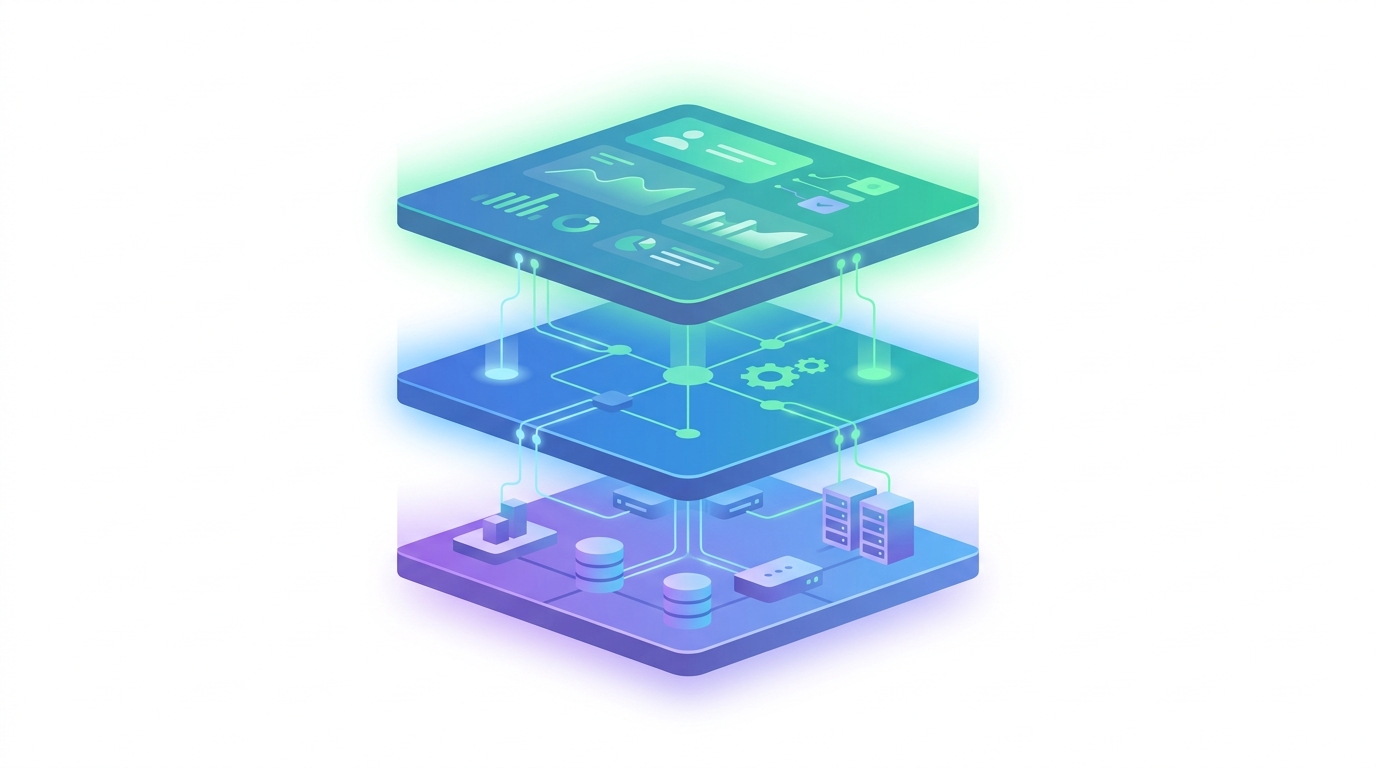
This is the fastest way to separate the three. Apollo owns a proprietary database of more than 210 million contacts, and its free plan gives full search access to it with basic filters — a solo rep can start prospecting the same day they sign up, no credit card required. Clay owns none of that. It has no proprietary database at all; instead, it "waterfalls" a search across more than 100 third-party data providers — Apollo included, among many others — firing each one in sequence until it finds a match, which typically surfaces 20–40% more usable data than querying any single provider alone. One head of sales operations reported a threefold jump in enrichment rate after switching from single-provider lookups to Clay's waterfall, though that kind of gain depends heavily on your starting data quality and shouldn't be read as a guaranteed multiplier.
Outreach has no data layer whatsoever. It is purely an execution and analytics platform, and every real deployment starts with a separate data purchase — most commonly Apollo or ZoomInfo — before a single sequence can be built. That is a structural fact worth internalizing early: the "Outreach cost" you see quoted almost never includes the data bill sitting underneath it.
The practical upshot: if data coverage is your primary gap, Apollo solves it out of the box for the lowest cost. If you already have a data source and the gap is data quality — accurate titles, verified emails, technographic signals, buying triggers — Clay's waterfall approach is built specifically for that problem, and Outreach doesn't touch it at all.
The "AI SDR" Reality Check: What Each Agent Actually Does
Every vendor in this comparison uses "AI SDR" or "agentic" somewhere in its 2026 marketing. It's worth pulling that apart tool by tool, because the term is doing more work in some pitches than in the product.
Claygent, Clay's AI agent, browses a URL or a set of sources and answers a custom research question about a company or a person — pulling a recent funding announcement, summarizing a job posting, or scoring product-market fit against criteria you define. It's genuinely useful for research and first-line personalization at scale, and it doesn't pretend to be more than that: Claygent researches, it does not send.
Apollo's AI Assistant reached general availability in March 2026 and is marketed as an end-to-end, natural-language layer across list building, enrichment, sequence drafting, and follow-up — Apollo has called it, in its own launch language, close to a "fully agentic GTM operating system." In practice, independent reviews describe a narrower reality: the Assistant drafts, a human approves, a human launches. That's a meaningful productivity gain over building lists and sequences by hand, and it is a real step up from the 2025 beta — but it is not autonomous prospecting.
Outreach's agent family is the most extensive of the three: Kaia handles conversation intelligence (call recording, transcription, sentiment, and automated coach scorecards), Omni is a conversational copilot for surfacing account and deal insight in natural language, and dedicated Research and Revenue Agents automate prospect research and draft personalized outreach at scale. Outreach's marketing goes further than Apollo's on autonomy, describing "plays" where agents can send emails, write LinkedIn messages, and drop personalized voicemails on a rep's behalf. That is a more aggressive claim than anything Apollo or Clay makes — and, based on our research, it is also the hardest of the three to independently verify at the "runs unsupervised in production" level, since most public case studies describe configured, reviewed workflows rather than fully hands-off sending.
Pricing and the Credit Traps Each Platform Sets
Clay overhauled its pricing on March 11, 2026, replacing three legacy self-serve tiers (Starter, Explorer, Pro) with two: Launch at $185/month (2,500 Data Credits, 15,000 Actions) and Growth at $495/month (6,000 Data Credits, 40,000 Actions), on top of a Free plan (100 Data Credits, 500 Actions, capped at 200 rows per table). Enterprise contracts reportedly average $30,000+ a year. The new structure splits usage into two separate meters — Data Credits for pulling enrichment data from the marketplace, and Actions for running workflows, routing requests, and API calls — which makes total monthly cost genuinely hard to predict until you've run real volume through it. Existing customers on legacy plans could keep their old pricing indefinitely, but had until April 10, 2026 to opt into switching plans, so if you're pricing out Clay now, you're looking at Launch or Growth by default.

Apollo is the only one of the three with a fully transparent, self-serve price list: Free ($0), Basic ($49/user/month billed annually, $59 monthly), Professional ($79/user/month annually, $99 monthly), and Organization ($119/user/month annually, $149 monthly), plus a custom Enterprise tier. The free plan is unusually generous on database access but thin on everything else — 5 mobile credits and 10 export credits a month, roughly 250 emails a day under fair use, and a two-sequence cap with no CRM integration. The part that catches teams off guard is the credit system layered on top of paid plans: a revealed phone number costs 8 credits, a verified email costs 1, and unused credits don't roll over month to month.
Outreach does not publish pricing anywhere, and getting a number requires a sales call. Publicly reported ranges put per-seat costs at roughly $100 to $160+ per user per month depending on tier — one commonly cited example is an Engage-tier deployment for 50 users landing around $72,000 a year, close to $120 per seat per month, with Enterprise/Unlimited tiers running higher. Contracts are annual only, first-year onboarding commonly runs $5,000 to $15,000, and negotiated discounts of 15–35% off list are frequently reported. Outreach's newer Amplify tiers (Core, Plus, Pro) add a consumption layer of AI credits — 25,000, 50,000, and 100,000 respectively — on top of the seat fee, which means your bill can move even if headcount doesn't.
Net: the cheapest way to start is Apollo's free tier, and the cheapest predictable monthly spend for a small team is Apollo's Basic plan. Clay's cost scales with how much enrichment you actually run, not with how many people are on your team. Outreach is the only platform of the three where you cannot get a real number without a conversation, and that number rarely starts under five figures a year even for a handful of seats.
Sequencing, Multichannel Execution, and Stack Complexity
Clay doesn't send anything itself. Its output is an enriched, scored, personalized list — the sequence still needs to run through Apollo, Outreach, Salesloft, Smartlead, or Instantly to actually reach an inbox. That handoff is Clay's real cost: it isn't just the $185-a-month sticker price, it's the ops time to build and maintain the workflows, plus a second tool's bill sitting next to it. The teams that get the most value out of Clay tend to be exactly the kind of team that's already comfortable running a self-hosted automation layer for other parts of the business — the same audience we cover in our comparison of self-hosting n8n vs Activepieces at scale — because Clay rewards the same build-your-own-pipeline instinct.
Apollo bundles list-building, email sequencing, a native dialer, and LinkedIn touchpoint tasks into a single interface. The tradeoff for that convenience is less workflow flexibility than Clay's node-based canvas and a narrower data-provider network than Clay can waterfall through. For a lean team, that tradeoff is usually the right one — fewer moving parts beats more customization.
Outreach's sequencing engine is the most mature of the three for multi-step, multichannel plays run at scale, with reporting, A/B testing, and pipeline forecasting built for revenue leadership rather than just individual reps. But because it has no data layer, a real Outreach deployment is really "Outreach plus a database," and increasingly "Outreach plus a database plus Clay" as an enrichment layer feeding cleaner leads into both. If your team routes alerts like a new high-intent reply or a booked meeting into a shared Slack channel, the setup is nearly identical whichever sequencer you're on — our guide to connecting Slack with HubSpot walks through that same notification pattern.
One more stack note: for deliverability-sensitive cold email at real volume, most Clay-centric stacks add a dedicated sending tool such as Smartlead or Instantly rather than routing high-volume cold outbound through Apollo or Outreach directly. We'll cover that specific decision — Smartlead vs Instantly for cold email deliverability — in a future comparison.
Clay's core idea is a spreadsheet-like canvas where each column can call a data provider, run an AI step, or trigger an API — turning what used to be a data engineer's project into something a growth or RevOps generalist can build. Waterfall enrichment is the headline feature: instead of trusting one provider's dataset, Clay chains more than 100 providers so a miss on one source automatically triggers the next, typically closing 20–40% more of the data gap than any single provider would alone.
Claygent, Clay's built-in AI research agent, extends that further — it can read a company's website, a recent press release, or a job board listing and turn it into a scored, personalized talking point, at a volume no human researcher could match. What Clay does not do is send anything: there's no native email, dialer, or LinkedIn sequencing, so the enriched list always needs a second tool downstream. Its G2 footprint (180+ reviews) is much smaller than Apollo's or Outreach's, reflecting a narrower, more technical buyer base rather than a fundamentally worse product.
Pros
- Waterfall enrichment across 100+ providers beats any single data source
- Claygent automates custom research and personalization other tools can't touch
- Most flexible, programmable workflow canvas of the three
- No per-seat pricing tax — a lean ops team can run high volume through one or two seats
- Slots into almost any existing stack instead of replacing it
Cons
- Zero native sending — always requires a second tool and a second bill
- Dual-credit pricing (Data Credits + Actions) is hard to predict before real usage
- Steepest learning curve of the three for non-technical operators
- March 2026 pricing overhaul raised effective cost for some long-time users
Need better data going into an existing sequencer?
Clay is built to sit in front of Apollo, Outreach, or any other sending tool — not replace it.
Apollo's pitch is consolidation: a 210-million-plus contact database, native email sequencing, a built-in dialer, and LinkedIn task steps, all under one login and one invoice. The free plan is genuinely usable rather than a lead-gen trial — a solo rep can search the full database and run a couple of real sequences before paying anything, which is rare in this category.
The AI Assistant that reached general availability in March 2026 lets a rep build lists, enrich records, and draft sequences through natural-language prompts rather than manual filter-building. It's still a draft-and-approve tool, not an autonomous one, but it's a real time save on the busywork that used to eat the first hour of a rep's day. Apollo also carries the largest review base in this comparison by a wide margin — 7,100+ on G2 — which is itself a signal: it's the tool most teams actually adopt and keep using at SMB and mid-market scale, not just the one they trial.
Pros
- One platform covers data, sequencing, and calling — real savings versus stitching three tools together
- Free tier is genuinely usable, not just a lead-gen trial
- Best price-to-feature ratio in this comparison for teams under ~20 reps
- Largest, most mature review base of the three — fewer surprises
Cons
- Data accuracy and freshness reported as inconsistent at scale, especially outside the US
- Credit system penalizes phone reveals (8 credits each) on top of the subscription price
- AI Assistant still requires review before anything sends — not autonomous
- Per-seat pricing gets expensive fast once a team passes ~15–20 reps
Need one tool that does data and sending?
Apollo's free tier is enough to validate outbound before you commit to a paid plan.
Start Apollo FreeOutreach's buyer is a 100-plus-seat sales org already running Salesforce that needs governance over messaging and cadence at scale, plus forecasting that revenue leadership can actually trust. Kaia, its conversation-intelligence layer, records and transcribes calls, scores sentiment, and generates automated coach scorecards; Outreach reports that Kaia shaves 11 days off sales cycles and adds roughly 10 percentage points to win rates on deals above $50,000 — figures worth treating as vendor-reported rather than independently audited, but directionally consistent with what conversation-intelligence tools in this category generally claim.
Omni and the dedicated Research and Revenue Agents automate insight surfacing and personalized draft generation, and Outreach's marketing describes "plays" where agents can send emails, write LinkedIn messages, or drop voicemails on a rep's behalf — a more aggressive autonomy claim than Apollo's. No native contact database is the structural gap underneath all of it: every Outreach deployment needs a second, separate data bill before a single sequence exists. Combined with unpublished pricing, annual-only contracts, and typical onboarding fees of $5,000–$15,000, the real first-year cost lands well above what either Clay or Apollo charges.
Pros
- Deepest enterprise-grade sequencing, reporting, and forecasting of the three
- Kaia's conversation intelligence has a documented (vendor-reported) win-rate impact on larger deals
- Built for governance — consistent messaging and cadence enforcement across a large, distributed team
- Strong native Salesforce integration for revenue operations teams that live there
Cons
- No contact database — budget for a second data tool on top
- Pricing is opaque until a sales call, with annual-only contracts and real onboarding fees
- The most aggressive autonomy claims of the three are also the hardest to independently verify
- Overkill, in both cost and complexity, for a team under 20–30 reps
Running sales at 100+ seats on Salesforce?
Get a scoped quote for your headcount, modules, and data-provider pairing.
Get an Outreach DemoWhich One Should You Actually Buy?
Apollo Free or Basic. You need volume and a working database more than you need sophistication, and the free tier is enough to prove outbound works before you spend anything.
Apollo Professional. One bill, one login, and the AI Assistant handles enough of the busywork. Add Clay only once someone owns "make our targeting better" as an actual job function.
Clay layered on top of Apollo, Instantly, or Smartlead. This is where waterfall enrichment and Claygent-driven personalization earn their cost — you already have the ops capacity to build and maintain the workflows.
Outreach (or Salesloft), paired with a separate data provider — commonly Apollo or ZoomInfo — and increasingly Clay as an enrichment layer feeding both. The premium buys governance and forecasting a per-seat SMB tool can't offer, even though the sticker shock is real.
If the deciding question in your head is "which one is the AI SDR that replaces a hire" — none of them, today. All three augment a human seller. None independently runs a full sequence, unsupervised, from cold prospect to booked meeting, in a way that's been reliably documented as of this writing.

FAQ
Can Clay replace Apollo or Outreach entirely?
No. Clay has no native sending capability — it enriches and prioritizes leads, but you still need a tool like Apollo, Outreach, Salesloft, Smartlead, or Instantly to actually send emails, make calls, or run LinkedIn touches. Most Clay users pair it with one of these rather than treating it as a replacement.
Is any of these platforms a true "AI SDR" that replaces a hire?
Not yet, based on our research as of July 2026. Apollo's AI Assistant and Outreach's Research and Revenue Agents both operate on a draft-and-approve model — they handle research and write a first draft, but a human reviews before anything sends in the large majority of real deployments. "Fully agentic" marketing language is ahead of what's independently verified in production.
Can I run Clay, Apollo, and Outreach together?
Yes, and it's a common stack for scale-ups: Clay enriches and scores leads, then hands them to Apollo for SMB-style sequencing or to Outreach for enterprise governance and forecasting. The tradeoff is cost and ops overhead — you're paying for and maintaining three tools instead of one.
Which is cheapest for a 5-person startup sales team?
Apollo, by a wide margin. Its free tier includes full database access and enough sequencing to validate outbound, and Basic (from $49/user/month billed annually) is far below Clay's $185/month entry point or Outreach's five-figure-plus annual minimums.
Does Outreach have its own contact database?
No. Outreach is purely an execution and analytics layer — you need to bring your own data, typically from Apollo, ZoomInfo, or a similar provider, before you can build a single sequence.
Methodology
This comparison is based on each vendor's published pricing pages and product documentation, G2 review aggregates, and vendor release notes, current as of July 2026. Pricing for Clay and Apollo reflects each company's public self-serve pricing pages; Outreach does not publish pricing, so its costs are estimated from publicly reported deal ranges and should be confirmed directly with a sales rep for your specific headcount and modules. Claims describing an "AI agent" as autonomous are vendor-reported unless otherwise noted — we did not have hands-on access to run unsupervised production campaigns on any of the three platforms.

Technology consultant with 10+ years in the Japanese tech industry. Specializing in SaaS evaluation, workflow automation, and B2B tool integration.