Three questions decide this one: do you need an EOR or payroll only, how many countries are you hiring in, and how big is the team? As of October 7, 2026, Deel lists $599 per EOR employee, $49 per contractor, and $29 per employee for global payroll on its pricing page. Papaya Global's prices could not be verified on its official site, so treat every Papaya plan as quote-only.
EOR, small team, one to a few countries → start with Deel. You can budget from the published $599 list price before a sales call, and Deel's EOR covers 130+ countries. If you hire in only one or two countries, a country-specialist EOR or your own entity may cost less than either platform.
EOR, larger headcount, many countries → get quotes from both. At this scale nobody pays list price without negotiating. Ask each vendor which of your countries run through its own entity and which run through a partner, and compare total cost line by line.
Payroll only (you already own entities) → the case for Papaya. Deel Payroll: Global is $29 per employee per month across 130+ countries. Papaya's payroll pricing is quote-only, but consolidated workforce analytics across a multi-country footprint is its core strength. If your finance team needs that reporting layer, get Papaya's quote and compare it with Deel's $29.
The 60-second verdict
If you have read three Deel-vs-Papaya articles already, you have probably noticed they all converge on the same vague conclusion: "Deel is better for SMBs, Papaya is better for enterprise." That is not wrong, but it is also not useful. The decision actually turns on three concrete questions: do you need owned-entity coverage in your specific hiring countries, how much do you care about payroll analytics versus hiring breadth, and how heavily will contractors versus full-time employees dominate your headcount mix?
Deel raised $300 million in Series E in October 2025 at a $17.3 billion valuation, hit $1 billion in ARR earlier the same year, and is widely reported to be preparing for a 2026 IPO. Papaya Global is reportedly exploring a sale at up to $4.5 billion. Both are well-funded and unlikely to disappear, so platform risk is a wash. The real differences are in product architecture.
Quick comparison table
| Dimension | Deel | Papaya Global |
|---|---|---|
| EOR base price | $599 / employee / month | Quote-only* |
| Contractor management | $49 / contractor / month ($325 / month for Contractor of Record) | Quote-only* |
| Payroll-only (own entity) | $29 / employee / month (Deel Payroll: Global, 130+ countries) | Quote-only* |
| Country coverage | 150+ countries overall; EOR in 130+ countries | Not verified* |
| Owned legal entities | Owned entities in 100+ countries (Deel, September 2025) | Mix of own entities (Papaya Direct) and in-country partners; current count not verified* |
| Product surface | EOR, payroll, contractors, HRIS, IT, immigration, equity, benefits | EOR, payroll, contractor payments, workforce analytics, Contingent OS |
| Workforce analytics | Standard reporting + Compliance Hub | BI-grade dashboards (signature feature) |
| Native HRIS integrations | 130+ (Workday, SAP SuccessFactors, NetSuite, BambooHR, etc.) | Smaller catalogue, BambooHR / NetSuite / SAP confirmed |
| G2 / Capterra rating | 4.8 / 5 (25,000+ reviews) | 4.5 / 5 (smaller review base) |
| Best for | Companies hiring fast across many countries, contractor-heavy teams | Enterprises consolidating payroll across an existing global footprint |
Deel's prices are from its official pricing page, checked on October 7, 2026. They are list prices per month and can be negotiated for larger headcounts and multi-year contracts. *Every request to Papaya Global's official site, including its pricing page, returned an access error on October 7, 2026, and archived copies were blocked too. Third-party sites list Papaya prices that contradict each other. We don't publish an estimate, so ask Papaya for a quote for your specific countries and headcount.
Pricing: what you actually pay
EOR pricing
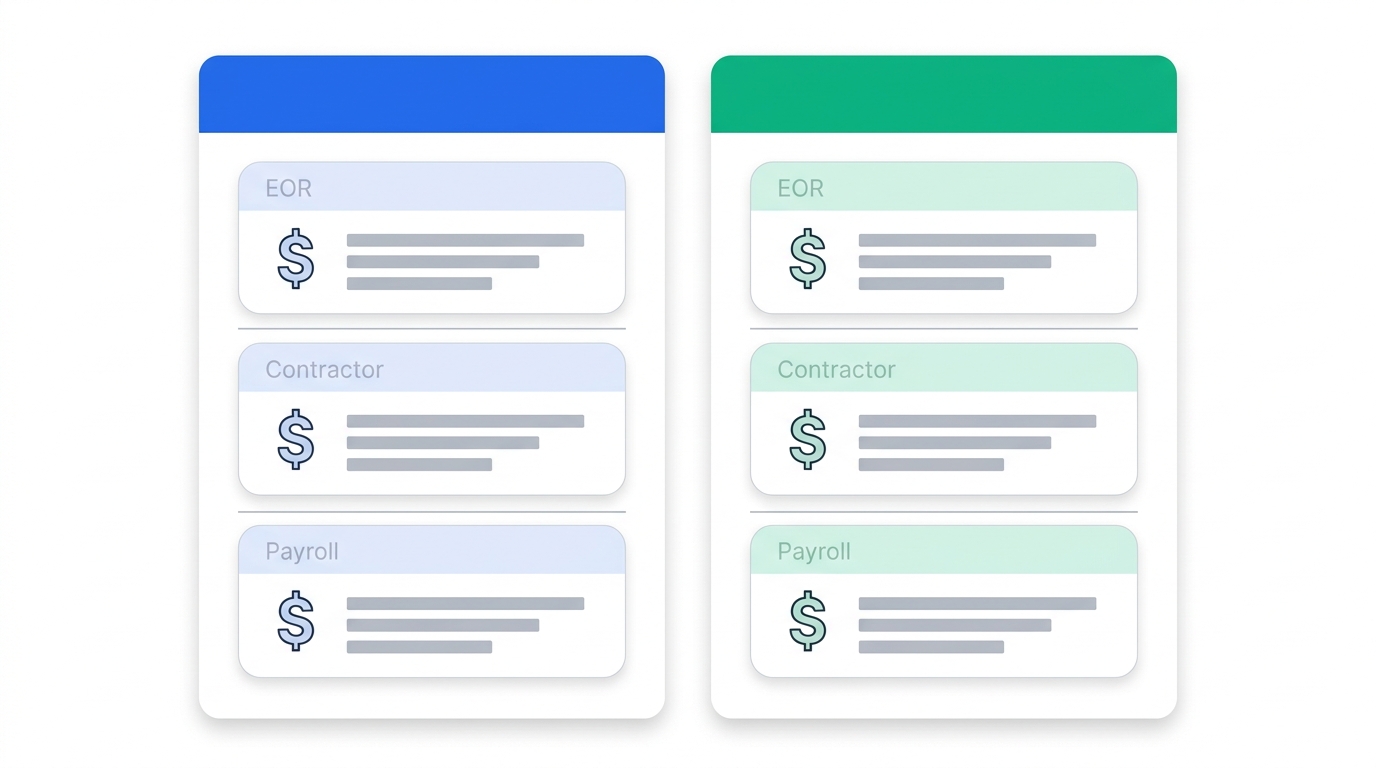
As of October 7, 2026, Deel's pricing page lists a single EOR price of $599 per employee per month. That page no longer shows a separate enterprise EOR tier. Papaya Global's EOR price is quote-only for this comparison because its official pricing page could not be retrieved, and we don't reproduce the conflicting third-party figures.
Even with a quote in hand, check that you are comparing the same scope. According to its pricing page, Deel's $599 covers contracts, managed payroll, tax filings, benefits enrollment, onboarding and compliance, on-demand HR and legal expertise, and 24/7 support. Papaya's pitch puts its workforce-analytics and reporting layer at the center of the product. If you don't need that analytics layer, don't pay a premium for it.
Contractor pricing
Deel charges $49 per contractor per month. If you want Deel to take on classification liability, Contractor of Record costs $325 per contractor per month. For a 30-contractor team, the standard plan works out to $17,640 per year at list price. Papaya's contractor pricing is quote-only. If your team is mostly contractors, get Papaya's per-contractor rate in writing and compare it with Deel's $49 before you choose.
Payroll-only pricing
If you already have legal entities in the countries where you operate, you need payroll, not an EOR. Deel Payroll: Global is listed at $29 per employee per month and covers 130+ countries, with a Deel Payroll Manager included on the managed option. Deel Payroll: US self-service is also $29 per employee per month. Papaya's payroll-only pricing is quote-only. Payroll consolidation is Papaya's core business, so this is the scenario where its quote is most worth getting.
Best for fast hiring across 150+ countries
Owned entities in 100+ countries, eight product lines under one platform, and the largest HRIS integration catalogue in the category. Strongest pick if you are hiring quickly or your workforce is contractor-heavy.
Country coverage and the owned-entity question
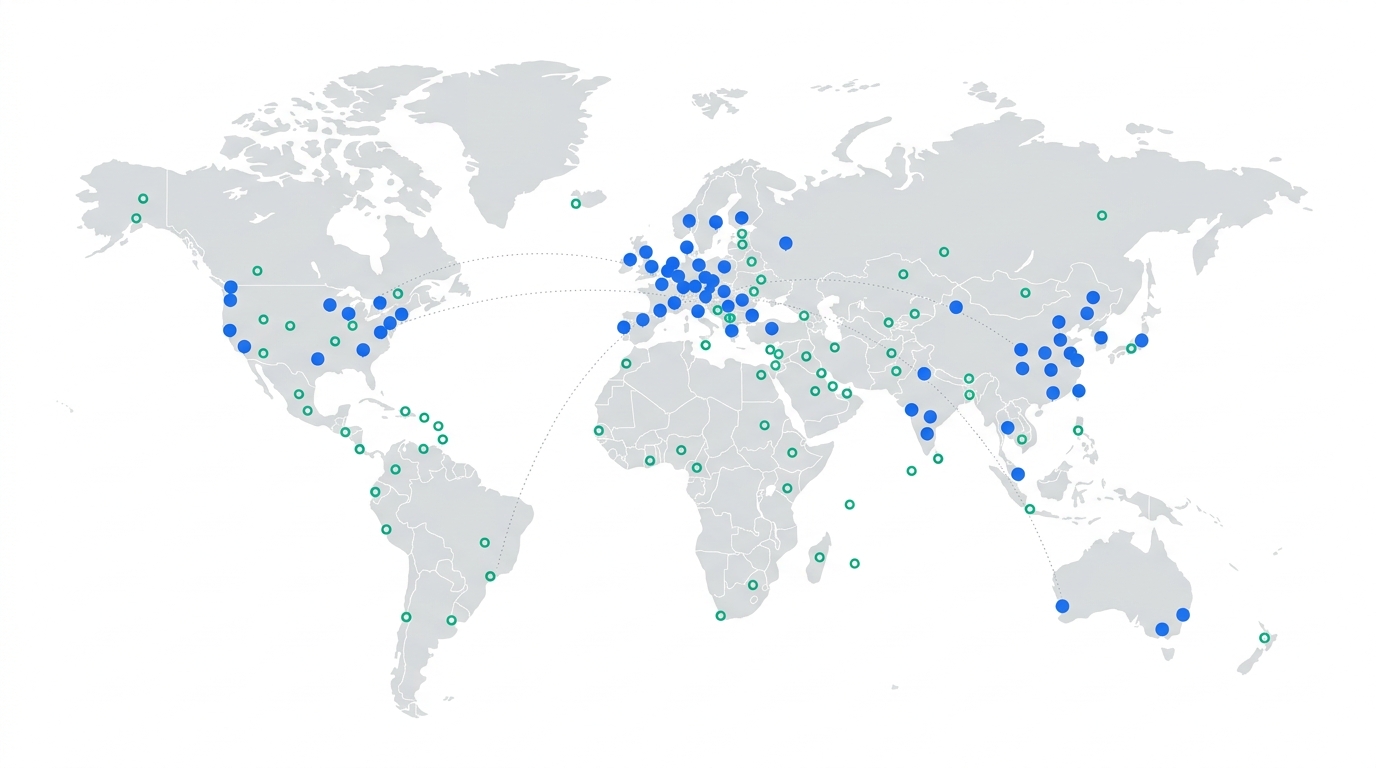
Headline country counts are the least useful number in this comparison. Deel says it supports 150+ countries overall and lists EOR employment in 130+. We could not verify Papaya's current figure on its own site. The more important difference is structural, and it matters for compliance and liability.
Deel announced owned entities in more than 100 countries in September 2025. In those markets, Deel itself is the legal employer of record. Elsewhere it uses partner entities, the model traditional EORs have used for years.
Papaya Global runs some markets through its own entities (its "Papaya Direct" footprint) and uses in-country partners (ICP) for the rest. We couldn't verify the current split on Papaya's site, so ask whether each of your hiring countries is direct or partner-served before signing.
Why does this matter? In countries with strict misclassification rules — Germany, France, the Netherlands, Brazil, the United Kingdom — the legal employer is the entity liable for tax errors, benefit shortfalls, and termination disputes. If your EOR uses a partner in that country, your contract is with the EOR, but the actual employment liability sits with a third party you have never signed with. When something goes wrong, you escalate to the EOR, the EOR escalates to the partner, and resolution times blow out.
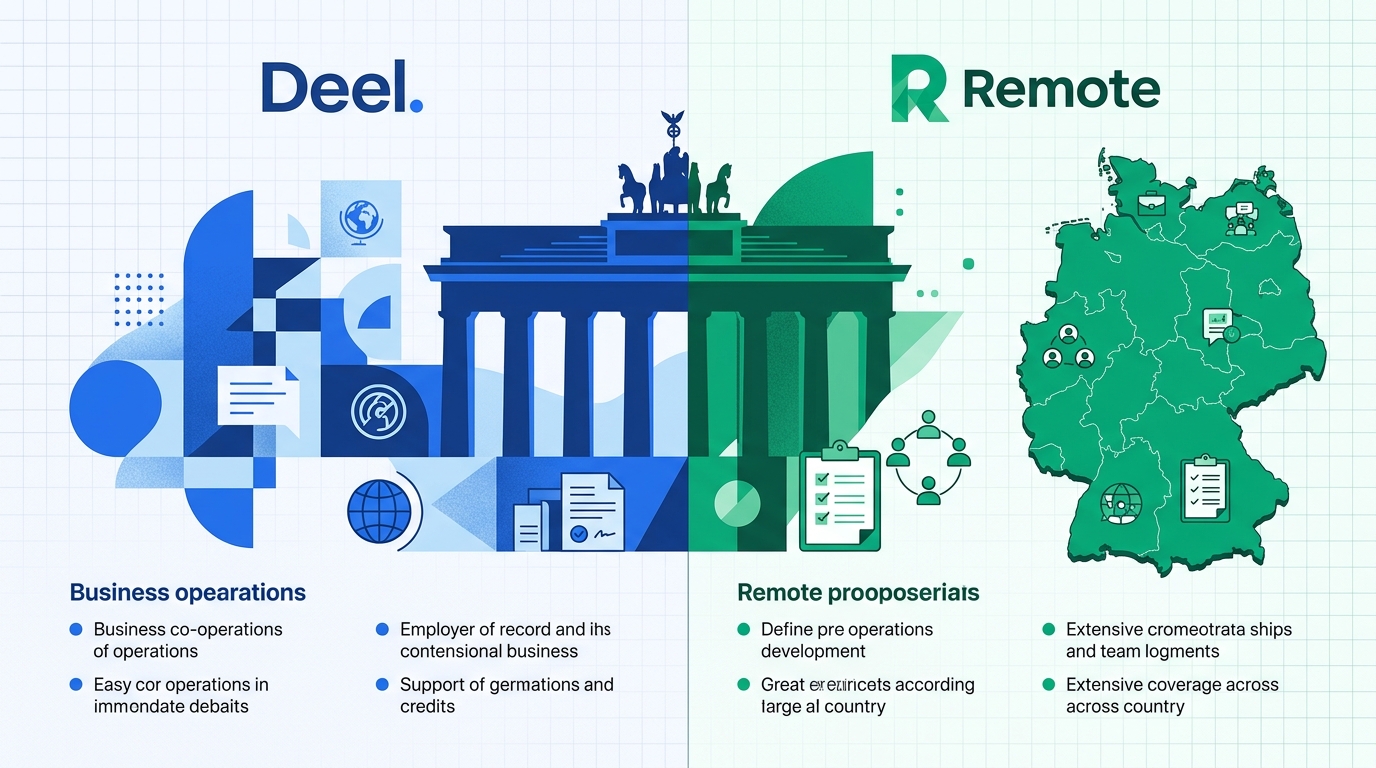
This is precisely why our analysis of Deel vs Remote for hiring in Germany ended up favouring owned-entity providers for German labour law specifically. If you are hiring in a single country with a complex labour code, prefer the provider with a direct entity there. Our best EOR for hiring in Germany roundup walks through how to verify entity status before signing.
Product surface: eight vs five
Deel and Papaya started in different parts of the market and have grown outward at different rates.
Deel's product surface in 2026 covers eight distinct lines: EOR, global payroll, contractor management, contractor of record, HRIS, IT (device procurement and provisioning), immigration, and equity. The bet is that if you are a fast-growing company you want to buy one platform and let it grow with you — onboard contractors today, convert them to employees through EOR next quarter, ship them laptops, sponsor a visa, give them equity. Deel calls this the "all-in-one" play and it shows up in their roadmap velocity.
Papaya Global's product surface focuses on five: EOR, global payroll, contractor payments, workforce analytics, and the new Contingent OS launched in June 2025. The bet here is the opposite — go deep on payroll and consolidated reporting rather than wide on HR functions. Papaya's workforce-analytics dashboards drill into payroll cost by country, worker type, and headcount class in ways the Deel platform doesn't natively replicate.
Which architecture wins depends entirely on what problem you are trying to solve. A 30-person startup hiring two engineers in Argentina, a designer in Portugal, and three contractors in India needs one platform to handle all of that without procurement gymnastics — Deel is the obvious fit. A 2,000-person retailer with existing legal entities in 12 countries and a CFO who wants a single payroll-cost dashboard across all of them is buying Papaya's analytics layer, not its EOR.
Workforce analytics: Papaya's signature feature
This is the area where the two products diverge most cleanly. Papaya Global's real-time dashboards cover payroll costs by country and worker type, headcount trends, DE&I metrics, and consolidated spend reporting across the entire workforce — including contractors, employees, and EOR-employed staff. Finance teams can drill into a specific country to see employer-tax breakdowns, benefit cost variances month over month, and currency-impact analysis on payroll cycles.
Deel ships reporting too, but it is closer to "good payroll exports + a compliance dashboard" than a true BI experience. The AI-powered Compliance Hub Deel rolled out in 2025 monitors 150 countries for regulatory changes, flags risks like visa expirations or misclassification, and pulls those signals into workforce data. That is genuinely useful, especially for legal and HR teams, but it is a different tool than what Papaya provides for finance.
If your evaluation includes "the CFO wants one consolidated view of global payroll cost," Papaya wins. If your evaluation includes "Legal wants to be flagged when a visa is about to expire in Brazil," Deel wins. These are not interchangeable.
Integrations and the HRIS question
Deel publishes 130-plus native integrations across HRIS, accounting, ATS, and SSO. The high-value ones for enterprise buyers are well-supported: a certified "Built for NetSuite" SuiteApp with deep custom-segment mapping for EOR and contractor invoices, bidirectional sync with Workday and SAP SuccessFactors, plus integrations with BambooHR, Greenhouse, Lever, QuickBooks, Xero, and Okta.
Papaya Global's integration catalogue is smaller and more targeted. BambooHR, NetSuite, and SAP are confirmed, plus integrations with the major ERPs that finance teams actually use to close the books. The depth of these specific integrations is often very good, but the catalogue breadth is narrower.
If you are running an SAP S/4HANA or Workday-centric stack and you want minimal custom integration work, Deel is the safer pick on integration coverage alone. If your integration needs are smaller — sync to NetSuite and a couple of finance tools — Papaya is fine and the simpler catalogue is sometimes an advantage.
For teams building lighter integrations through automation platforms instead of native connectors, the workflow patterns we covered in Zapier vs Make and Activepieces vs Make can stitch Deel or Papaya into a finance stack without writing custom middleware.
Support, implementation, and the things customers actually complain about
Both platforms carry the standard B2B SaaS pattern — high public ratings, persistent complaints in the reviews that matter.
Deel's recurring complaints
- Support response times degrade during peak onboarding seasons (January and September), with reports of up to 75% of onboarding cases experiencing delays during high-volume periods.
- Opaque billing line items make total-cost forecasting harder than it should be. Finance teams report difficulty reconciling Deel invoices to expected costs without manual work.
- Complex cross-border termination cases — particularly senior-level separations — are reported as the place where Deel's support quality is most uneven.
Papaya Global's recurring complaints
- The partner-based EOR model introduces inconsistency: data mismatches between Papaya's dashboard and what the in-country partner actually executed, occasional disputes about who owns a resolution.
- Implementation has a learning curve. The platform's depth is also its friction point — new administrators take time to configure multi-country workflows.
- Pricing transparency at the enterprise tier is a recurring concern in procurement reviews. Setup fees, year-end fees, and multi-currency fees are not always visible until contracting.
Best for enterprise payroll consolidation
BI-grade workforce analytics, multi-country payroll consolidation, and the deepest reporting layer in the category. Strongest pick if you already have legal entities in multiple countries and need a single payroll dashboard.
Pros and cons: Deel
Pros
- Owned entities in 100+ countries, one of the larger direct-employer footprints in the category
- Eight product lines under one platform reduces vendor sprawl
- 130+ native HRIS, ERP, and finance integrations
- Largest review base in the category, mostly positive (4.8/5)
- AI Compliance Hub catches regulatory changes proactively
- Strong roadmap velocity backed by $1B+ ARR and $17.3B valuation
Cons
- Contractor pricing at $49/month is one of the highest in the market
- Support degrades during peak onboarding seasons
- Billing transparency lags the platform's other strengths
- Workforce analytics are functional but not BI-grade
- Complex termination cases are uneven in execution quality
Pros and cons: Papaya Global
Pros
- Industry-leading workforce-analytics dashboards
- Payroll consolidation is the core product, not an add-on, which suits teams with existing entities
- Contingent OS (June 2025) unifies freelancers, contractors, and consultants
- Standardised reporting across owned and partner markets
Cons
- No price we could verify: EOR, contractor, and payroll-only pricing all require a quote
- Relies on in-country partners in part of its footprint; current owned-entity count could not be verified
- Partner-model fragmentation creates service-quality variance
- Setup, year-end, and multi-currency fees are not transparent until contracting
- Smaller HRIS and HR tooling surface than Deel
- Implementation learning curve is steeper for new admins
Who should choose which
Choose Deel if…
- You are hiring quickly across multiple countries and want one platform for EOR, contractors, payroll, equity, and IT.
- Owned-entity coverage in your target countries is non-negotiable (especially Germany, France, Brazil, the Netherlands, the UK) — confirm each country with Deel before signing.
- You run Workday, SAP, or NetSuite and need a deep, certified integration rather than a generic API connection.
- You are a startup or SMB where the procurement overhead of multiple vendors would be worse than slightly higher contractor pricing.
- You expect to convert contractors to employees frequently and want a smooth in-platform flow.
Choose Papaya Global if…
- You already have legal entities in five or more countries and need a single consolidated payroll dashboard across them.
- Your CFO or VP Finance has explicitly asked for workforce-cost BI, not just exportable reports.
- Your team is mostly contractors and Papaya's quoted per-contractor rate comes in below Deel's $49 list price.
- You are an enterprise comfortable with a partner-model EOR for non-strategic markets.
- You need to consolidate freelancer, contractor, and consultant management under one system (Contingent OS).
Honestly, choose neither if…
- You are hiring exclusively in one or two countries — direct local employment or a country-specialist EOR will usually be cheaper and faster than either platform.
- Your entire headcount is fewer than 10 contractors and you have no EOR needs — a contractor-only tool like Wise Business or Plane will run you a fraction of the cost.
Get a tailored quote before you sign
Both vendors will produce a country-specific total-cost-of-employment quote for free. Request both, compare line by line, and let the actual numbers — not the headline price — drive your decision.
Frequently asked questions
Is Deel cheaper than Papaya Global?
We can't say for certain. As of October 7, 2026, Deel lists $599 per EOR employee, $49 per contractor, and $29 per employee for global payroll each month. We could not verify Papaya Global's pricing on its official site, and third-party figures conflict, so treat Papaya as quote-only. Request quotes from both vendors for your countries and headcount mix and compare them line by line.
Does Papaya Global have owned entities or use partners?
Both. Papaya Direct markets use Papaya's own entities, and the rest are served through in-country partners (ICP). We couldn't verify the current number of countries in each model on Papaya's site, so ask Papaya which model applies to each of your hiring countries before signing.
How many countries does Deel cover with owned entities?
Deel announced owned entities in more than 100 countries in September 2025. Its pricing page lists EOR employment in 130+ countries, and the site cites 150+ countries overall. Countries without a Deel-owned entity use partner entities, so ask Deel which of your markets are direct before signing.
Can I switch from one platform to the other?
Yes, but switching EOR providers mid-employment is operationally heavy. Each employee technically has to be terminated by the outgoing EOR and re-hired by the incoming EOR. Practically you should plan for 4–8 weeks of transition per country, depending on local notice periods. Both vendors will assist with the transition but neither makes it frictionless.
Is Papaya Global a legit company?
Yes. Papaya Global is a venture-backed company that has raised $440 million across five rounds. Its most recent public valuation was $3.7 billion in 2021, and as of 2026 it is reportedly exploring a sale at up to $4.5 billion. Papaya is not BBB or ESAC accredited, which some procurement teams flag as a watch-out.
Which platform has better integrations with NetSuite and Workday?
Deel ships a certified "Built for NetSuite" SuiteApp with deep custom-segment mapping, plus bidirectional integration with Workday and SAP SuccessFactors. Papaya integrates with NetSuite and SAP but with a narrower catalogue overall. For Workday-centric or SAP S/4HANA enterprise stacks, Deel is the safer pick.

Technology consultant with 10+ years in the Japanese tech industry. Specializing in SaaS evaluation, workflow automation, and B2B tool integration.