OneTrust is the default pick for a B2B SaaS company with real EU revenue that wants DSAR, RoPA, DPIA, consent, and vendor risk in one platform. Minimum contract is roughly $10,000/year, and the median buyer pays about $11,835/year, per Vendr's aggregated purchase data.
Osano is the pick if you need something live this week on a startup budget — a free tier for a single small site, then $199/month once you outgrow it.
DataGrail wins if data subject requests are the actual bottleneck — no-code setup and 1,800+ integrations built specifically for high-volume DSAR fulfillment.
Already paying for Vanta, Drata, or Secureframe for SOC 2? Check what their GDPR module now includes before buying a second platform — see our full Secureframe vs Vanta vs Drata comparison for the cost breakdown.
Type "GDPR compliance software" into a search engine and you'll get two very different kinds of results mixed together: enterprise privacy suites built to run an entire data protection program, and lightweight cookie-consent widgets built to keep a marketing site off a regulator's radar. Neither list tells you which one a B2B SaaS company processing EU customer data actually needs — and almost none of them address the question a lot of readers here are really asking: I already bought a compliance platform for SOC 2. Do I need another one for GDPR?
We looked at six platforms built primarily around privacy operations rather than security-control evidence, checked their 2026 pricing against vendor sites and aggregated procurement data, and — because it's the question that matters most for this audience — checked exactly what Vanta and Drata's own GDPR modules include before writing them off as "not enough." They're not nothing. They're just not the whole picture either.
01Quick Comparison: 6 GDPR-Native Platforms
| Platform | Best for | Starting price | DSAR automation | Consent / cookie mgmt | Data discovery & mapping |
|---|---|---|---|---|---|
| OneTrust | Full privacy program, one platform | ~$10,000/yr minimum; GDPR bundles from ~$2,275/mo | Yes — automated intake & fulfillment | Yes — native CMP | Advanced, cross-system |
| TrustArc | Modular enterprise privacy programs | Custom; Cookie Consent ~$15K–$40K/yr, Rights Automation ~$25K–$60K/yr | Yes | Yes — enterprise CMP | Yes, via Data Mapping & Risk module |
| Osano | Startups and self-serve budgets | Free → $199/mo → custom enterprise | Yes — Subject Rights module | Yes — core product | Basic on lower tiers |
| DataGrail | High-volume DSAR fulfillment | Custom, roughly $30K–$100K/yr | Yes — no-code, 1,800+ integrations | Add-on module (+30–50% of core price) | Live data mapping |
| BigID | Petabyte-scale unstructured data discovery | Custom, roughly $80K–$200K+/yr | Via Subject Rights add-on | No native CMP | Best-in-class AI/ML classification |
| Securiti.ai | Unified data + AI governance | Custom, not publicly listed | Yes | Yes | Yes — DSPM-grade, AI-aware |
02Why Your SOC 2 Platform's GDPR Checkbox Isn't the Whole Story
To be fair to Vanta and Drata: this isn't 2023 anymore. When we checked Vanta's GDPR product page in July 2026, it now ships a real data inventory, a proper RoPA builder ("document purposes, data categories, legal bases, and processors"), DPIA templates with risk scoring, and automated DSAR workflows covering intake, identity verification, and fulfillment. Drata's rights-management layer does the same — intake through fulfillment within the 30-day statutory window, with quarterly RoPA reviews built in. These are not token features bolted on for a marketing checkbox; they're functional privacy tooling.
So if the bundled module works, why does a market for six more specialized platforms exist? Three reasons, and they're worth being honest about rather than manufacturing a gap that isn't there:
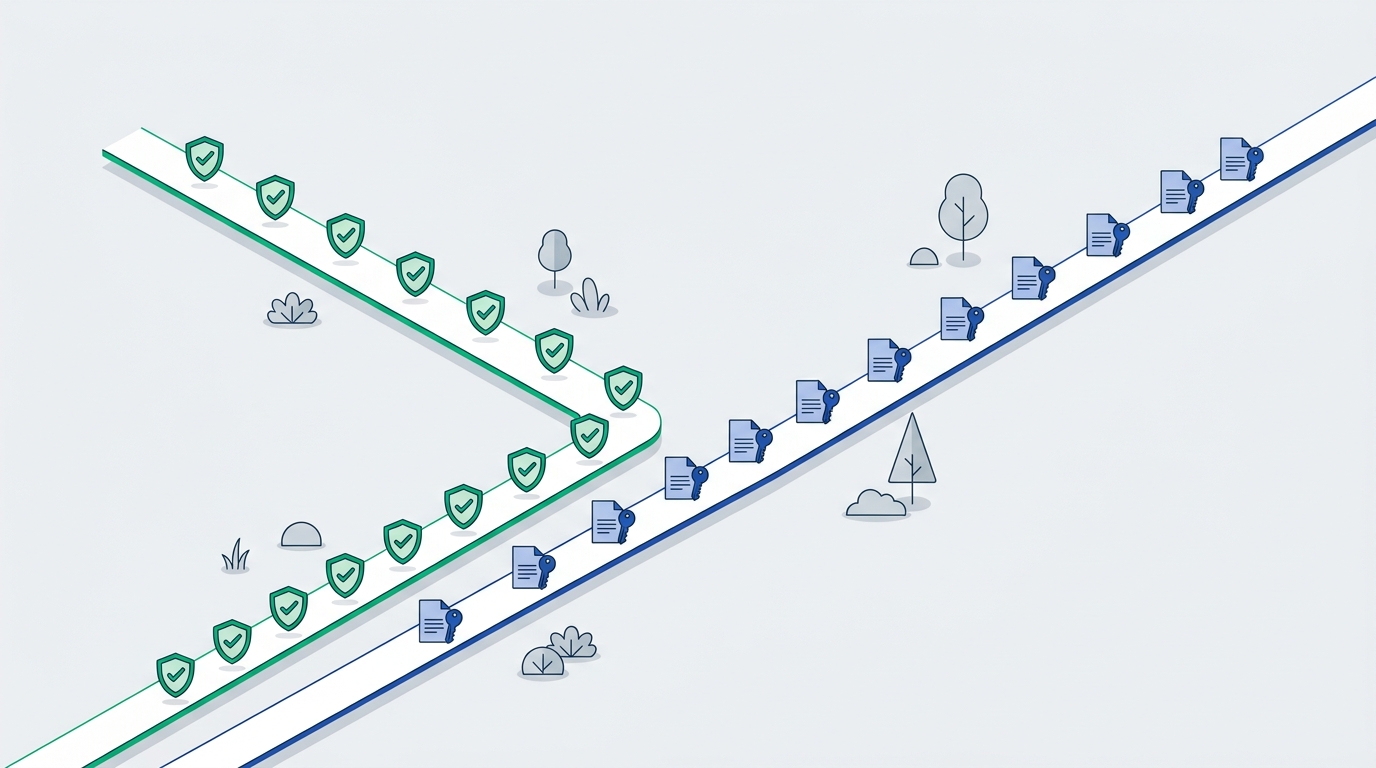
You can't buy the GDPR layer on its own. Vanta and Drata's GDPR tooling ships inside a SOC 2-first platform with a five-figure annual minimum. If your company doesn't need SOC 2 — because you're not selling into enterprise procurement yet, or you already have it from a different vendor — you're paying for a lot of security-evidence infrastructure to reach the privacy features. Our Vanta vs Drata comparison breaks down what that entry price actually includes.
Security-evidence platforms and privacy platforms optimize for different depth. Vanta and Drata's core engineering effort goes into cloud-infrastructure monitoring — hundreds of integrations that continuously verify security controls. A public-facing cookie consent banner with geolocation-based rule sets, IAB TCF support, and a customer preference center is a different product problem, and it shows: none of the SOC 2-first platforms match Osano, OneTrust, or TrustArc on consent-management depth, because that's not the muscle they built first.
Volume and scale assumptions differ. A DSAR workflow built to serve a few hundred B2B enterprise customers a year is a very different engineering problem than one built for DataGrail's 1,800-plus integration footprint or BigID's petabyte-scale unstructured-data classification. If your GDPR exposure comes from millions of consumer records rather than a customer list, the dedicated platforms below have simply seen more of that problem.
The honest framing, then, isn't "SOC 2 tools can't do GDPR." It's: if GDPR is a secondary, lighter requirement layered on top of a SOC 2 program you already need, the bundled module is genuinely worth trying first. If privacy operations — not security evidence — are the actual driver, a purpose-built platform will out-depth the bundle in the areas listed above.
03What GDPR Compliance Software Actually Needs to Cover
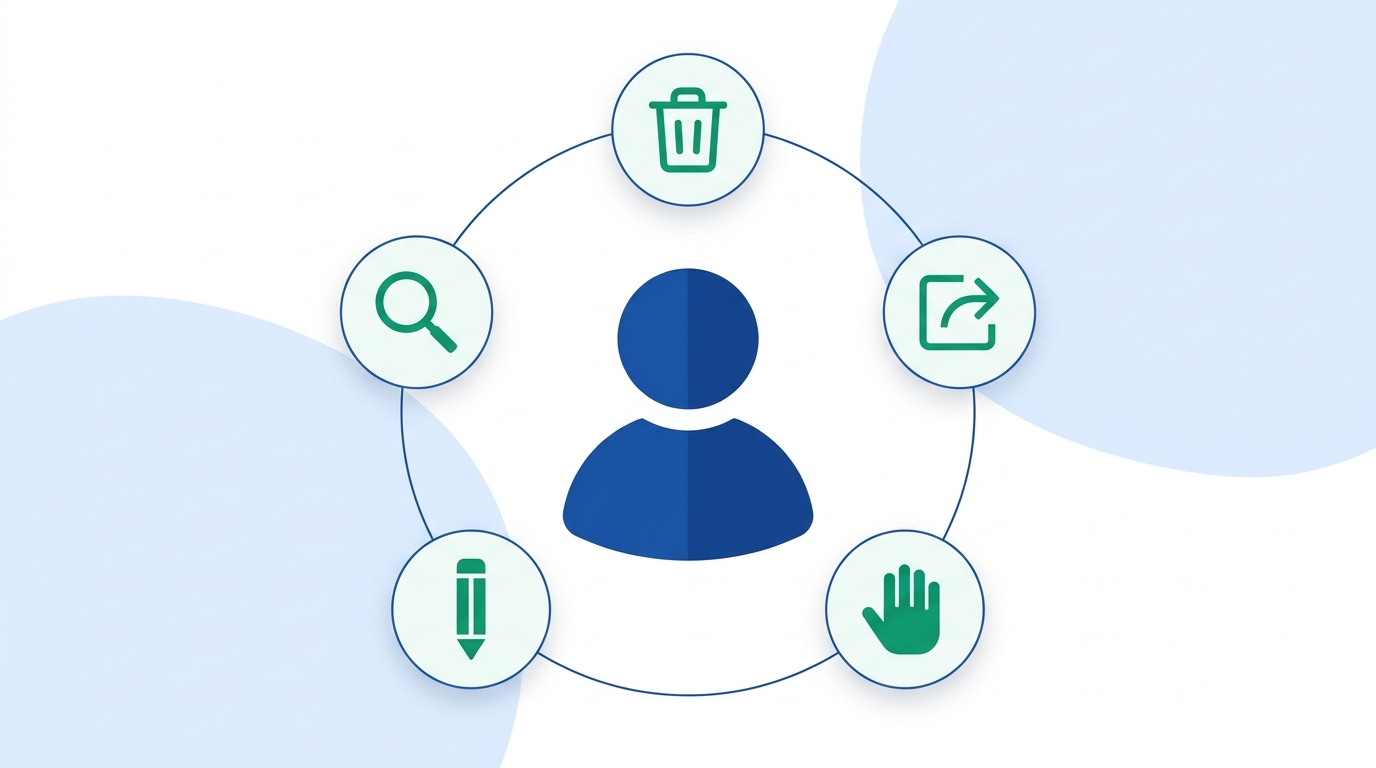
Before comparing platforms, it helps to know what "GDPR compliance software" is actually supposed to automate. Most of it maps to a short list of recurring obligations:
- RoPA — Records of Processing Activities (Article 30). A living register of what personal data you process, why, its legal basis, and who else touches it. This is the document a regulator asks for first.
- DSAR fulfillment (Articles 15–22). Handling access, deletion, correction, and portability requests from individuals — with a 30-day statutory clock that starts the moment a request comes in, wherever it comes in.
- DPIA — Data Protection Impact Assessments (Article 35). A structured risk assessment required before starting any processing activity likely to result in high risk to individuals — new AI features that touch personal data are a common 2026 trigger.
- Consent and cookie management (Article 7, overlapping with the ePrivacy Directive). Recording, timestamping, and honoring consent choices, typically via a cookie banner or preference center.
- Breach notification (Articles 33–34). A 72-hour clock to notify the relevant Data Protection Authority once you become aware of a qualifying breach, plus notifying affected individuals when risk is high.
- Article 27 EU representative. If you're a non-EU company processing EU residents' data at scale without an EU establishment, you generally need a named EU representative. No software vendor fulfills this legal role for you — some (OneTrust, TrustArc) sell it as an add-on service; for others you'll need a separate provider regardless of which platform you buy.
Every platform below claims to "do GDPR." What differs is which of these six obligations each one was built to handle first, and how deep the automation goes once you're past the demo. That's the lens we used for the reviews below.
04The 6 Platforms, Reviewed
OneTrust
OneTrust is the platform most privacy teams end up on once they outgrow a point solution, and it's easy to see why: it covers RoPA, DPIA, native consent management, DSAR automation, third-party/vendor risk, and a global regulatory database in one system, so a single team can run the whole program without stitching tools together. That breadth is also its reputation problem — reviewers consistently describe onboarding as long and the interface as dense, and pricing is the least accessible on this list. From Q2 2026, the minimum annual contract is roughly $10,000, with GDPR-specific bundles starting near $2,275/month and full privacy automation modules closer to $3,860/month. Vendr's aggregated data (306 purchases) puts the median buyer at about $11,835/year, with most small-to-mid-market companies landing between $10,000 and $40,000/year.
Pros
- Widest feature coverage of any platform on this list
- Native consent management, not an add-on
- Global regulatory database beyond just GDPR (useful once you expand past the EU)
- Established auditor and consultant ecosystem
Cons
- Highest entry price of the dedicated platforms
- Long implementation and onboarding relative to Osano or DataGrail
- Module-based pricing can get complex to forecast
- Overkill if you only need consent + DSAR
Best fit: Series B+ B2B SaaS with meaningful EU revenue that wants one platform for the entire privacy program.
TrustArc
TrustArc splits its platform into purchasable pieces — Privacy Studio (consent and rights tools), Governance Suite (data inventory and assessments), and Assurance Services (certifications) — which suits enterprises that want to buy exactly the modules they need rather than a bundled suite. Published pricing is sparse and most contracts get negotiated, but observed ranges give a sense of scale: a Cookie Consent Manager for one to five domains runs roughly $15,000–$40,000/year, Privacy Rights Automation for 100–500 requests/year runs $25,000–$60,000/year, and Data Mapping & Risk Manager for 10–30 data sources runs $40,000–$90,000/year. Stack more than one module and the total climbs quickly toward OneTrust-enterprise territory.
Pros
- Buy only the modules you actually need
- Strong DPIA and privacy-assessment tooling
- Long track record with large enterprise GRC teams
- Managed-services option if you don't want to run it yourself
Cons
- Almost no public pricing — every deal is a negotiation
- Module stacking gets expensive fast
- Steeper learning curve than self-serve competitors
- Smaller integration ecosystem than OneTrust or DataGrail
Best fit: enterprises that already run a broader GRC program and want to add privacy modules à la carte.
Osano
Osano is the one platform on this list you can actually be running before lunch. The Free plan covers one user, one domain, and up to 5,000 monthly visitors — enough for an early-stage SaaS company's marketing site and a first EU customer contract. Plus, at $199/month, extends that to two users, three domains, and 30,000 monthly visitors, and its Subject Rights product adds DSAR intake and workflow automation on top of the consent layer. Enterprise pricing is custom-quoted and typically starts around $2,000–$3,000/month once you need multiple domains, higher traffic, or the fuller data-mapping feature set — at which point it starts competing directly with OneTrust and TrustArc rather than undercutting them.
Pros
- Free tier is a genuinely usable starting point, not just a trial
- Transparent, publicly listed pricing through the Plus tier
- Fast to deploy — hours, not months
- Subject Rights module covers DSAR without a separate contract
Cons
- Data discovery and mapping are thinner than OneTrust or BigID
- Enterprise tier pricing converges with the bigger suites
- Less depth for complex, multi-entity data processing
- Fewer pre-built integrations than DataGrail
Best fit: seed-to-Series-A B2B SaaS signing its first EU customers and needing consent + DSAR live now.
DataGrail
DataGrail's whole pitch is that data subject requests shouldn't require engineering time to fulfill. Its no-code integration model — more than 1,800 pre-built connectors — means a privacy or legal team can wire up DSAR fulfillment across your SaaS stack without opening a ticket for every new source system, and its "Live Data Mapping" keeps the inventory current automatically rather than through a periodic manual audit. Pricing is entirely quote-based: small-to-mid-market companies (under 1 million data subjects, fewer than 500 DSARs/year, 10–20 integrations) typically land in the $30,000–$60,000/year range, rising to $50,000–$100,000/year for 1–5 million data subjects. Adding the consent-management module typically adds another 30–50% on top of the core platform fee, and contracts often carry 5–8% annual escalators — worth flagging at renewal time.
Pros
- 1,800+ no-code integrations — minimal engineering lift
- Live data mapping instead of periodic manual audits
- Purpose-built for DSAR volume and speed
- Strong fit for SaaS companies with many downstream tools processing customer data
Cons
- No public pricing — budget planning requires a sales call
- Consent management is a paid add-on, not included
- Built-in annual price escalators are common in contracts
- Less suited to companies with mostly offline or non-SaaS data sources
Best fit: B2B SaaS companies whose customer data fans out across dozens of connected tools, where DSAR fulfillment is the real pain point.
BigID
BigID solves a different problem than the other five: finding personal data you didn't know existed, across structured databases, unstructured files, and increasingly AI training and vector-store data. Its AI/ML-powered classification and capacity-based licensing model make it a fit for organizations sitting on large, messy data estates — the kind where "just export the RoPA" isn't realistic without automated discovery first. That power comes at enterprise cost and complexity: mid-market deployments typically run $80,000–$200,000/year, enterprise deployments scale past $200,000/year, and implementation is commonly a three-to-six-month project requiring one or two dedicated data engineers to run. For most B2B SaaS companies under a few hundred employees, this is more platform than the problem calls for.
Pros
- Best-in-class automated discovery across structured and unstructured data
- Strong fit for AI/ML data governance, not just GDPR
- Scales to petabyte-level data estates
- Deep risk-scoring and classification capability
Cons
- Highest cost floor of any platform on this list
- No native consent/cookie management
- Heavy implementation — months, not weeks
- Requires dedicated internal headcount to operate well
We haven't included a CTA for BigID here — it isn't a self-serve evaluation, and most B2B SaaS teams under enterprise scale will outgrow their budget before they outgrow the tools above it on this list.
Securiti.ai
Securiti positions itself as a "DataAI Command Center" — privacy compliance (DSAR, consent, data mapping) sitting alongside data security posture management and, increasingly, AI governance for companies building on top of large language models. That combination is the reason to consider it over a pure-play privacy tool: if your GDPR exposure and your AI-governance exposure (EU AI Act included) come from the same underlying data estate, managing both from one console cuts down on duplicate data mapping work. Pricing is entirely custom and not published anywhere, which makes it hard to comparison-shop up front — plan on a scoping call before you have any real number to work with. User reviews also note that not every module is equally mature for GDPR specifically, so scope the demo around your actual use case rather than the platform's broadest pitch.
Pros
- Combines privacy compliance with data security posture management
- Strong, growing AI-governance feature set
- Single data map can serve both GDPR and AI Act obligations
- Full DSAR, consent, and data-mapping coverage
Cons
- Zero published pricing — every evaluation starts from scratch
- Feature depth varies by module; verify GDPR-specific maturity in the demo
- Broad platform scope can mean a longer sales and scoping cycle
- Smaller install base than OneTrust or TrustArc for pure privacy use cases
Best fit: teams whose GDPR and EU AI Act obligations overlap and want one data map serving both.
05Who Should Choose Which
Signing your first EU customer contracts and need consent + DSAR live this week without a procurement cycle: Osano.
Meaningful EU revenue, a data protection officer or fractional privacy counsel in place, and a need to run the whole program in one system: OneTrust.
Customer data fans out across dozens of connected SaaS tools and requests are already eating engineering time: DataGrail.
Large volumes of unstructured or AI-adjacent data you can't fully inventory manually: BigID or Securiti.ai, depending on whether AI governance is also in scope.
Already running a broader governance, risk, and compliance program and want privacy as an add-on module rather than a new vendor relationship: TrustArc.
SOC 2 is the primary driver and GDPR exposure is comparatively light: try the bundled module first before adding a second contract. Compare their AI-era feature sets in our Secureframe vs Vanta vs Drata AI features breakdown.
06What's Changing in 2026: the EU Digital Omnibus
Whichever platform you pick, it's worth knowing that the rules it's automating are themselves mid-change. The European Commission's Digital Omnibus package, announced on November 19, 2025, proposes the most significant simplification of GDPR's administrative burden since the regulation took effect, and it's currently moving through the European Parliament and Council with adoption expected mid-to-late 2026.
Companies under 250 employees whose processing doesn't involve high-risk data categories would maintain a streamlined register instead of the full Article 30 documentation — directly relevant to how much RoPA automation you actually need to buy.
The EDPB and EDPS have voiced support for raising the risk threshold that triggers mandatory breach notification and extending the reporting deadline, plus a single entry point for notifying supervisory authorities instead of multiple parallel filings.
Rules currently under the ePrivacy Directive for accessing data on a user's device would move under GDPR where that access involves personal data processing — consolidating two overlapping legal bases most consent-management platforms already handle as one workflow.
The European Commission estimates the package could cut GDPR administrative burden for smaller businesses by up to 25% — though that figure is a Commission estimate, not a guaranteed outcome, and depends on the final text.
None of this is law yet, and until it is, the current GDPR text is what your platform needs to comply with. But it's a reasonable input into a buying decision: a company under 250 employees evaluating a heavyweight, fully manual RoPA build-out might reasonably wait for clarity rather than over-engineer a process the Omnibus may simplify within the year. If you're also tracking how EU regulation affects AI features specifically, the same legislative package is reshaping timelines there too — we cover that in our EU AI Act compliance checklist for B2B SaaS buyers.
07Frequently Asked Questions
Do I need separate GDPR software if I already have Vanta, Drata, or Secureframe for SOC 2?
Not automatically. As of July 2026, Vanta and Drata both ship real RoPA, DPIA, and DSAR tooling as part of their GDPR module, not just a mapped checklist. If GDPR is a secondary requirement layered on a SOC 2 program you already need, try the bundled module first. If privacy operations are the primary driver — especially consent management or high-volume DSAR fulfillment — a dedicated platform will generally go deeper for a comparable or lower incremental cost.
What's the difference between GDPR compliance software and a cookie consent tool?
A cookie consent management platform (CMP) is one component of GDPR compliance — it captures and stores consent for cookies and trackers. Full GDPR compliance software adds RoPA, DSAR fulfillment, DPIA, breach-notification workflows, and vendor risk management on top. Several of the platforms here, including Osano and OneTrust, started as CMPs and expanded into the fuller suite; others, like DataGrail and BigID, started from the data-discovery and rights-fulfillment side instead.
How much does GDPR compliance software cost for a mid-size B2B SaaS company?
For a company in the roughly 50–500 employee range with EU customers, expect $10,000–$60,000/year for a dedicated platform (OneTrust's lower tiers, DataGrail, or Osano's enterprise plan), rising well past $80,000/year for BigID-class data-discovery scale or a heavily module-stacked TrustArc deployment. All of these figures are custom-quoted in practice — treat published ranges as planning inputs, not quotes.
Does any of this software fulfill the Article 27 EU representative requirement?
No platform on this list acts as your legal EU representative on its own. OneTrust and TrustArc both offer it as a paid add-on service through partner networks; for the others, you'll need to appoint a representative separately if you're a non-EU company processing EU residents' data at scale without an EU establishment. Software can track the requirement; it doesn't satisfy it by itself.
Can compliance software make my company "GDPR certified"?
No — there is no single official "GDPR certified" status these platforms can grant you, unlike a SOC 2 report issued by an independent auditor. What they provide is the documentation, workflows, and evidence trail (RoPA, DPIAs, consent records, DSAR logs) that demonstrate accountability if a regulator or customer asks. GDPR compliance is an ongoing operational state, not a certificate you receive once.
Sources & further reading

Technology consultant with 10+ years in the Japanese tech industry. Specializing in SaaS evaluation, workflow automation, and B2B tool integration.