Deel wins on global hiring reach — 150+ countries via owned entities, published EOR pricing from $599/employee/month, and the fastest path to putting an engineer on payroll in a country you don't have an entity in. Rippling wins on the engineering-specific risk that actually causes incidents — because HR and IT data live in one system, offboarding an engineer revokes SSO, GitHub, cloud, and device access in the same action that ends their employment, instead of two systems that can fall out of sync. If your hiring is spread across five or more countries outside Rippling's 80-country EOR footprint, Deel is the safer default. If your engineers are concentrated in fewer countries but hold production access, Rippling's unified HR/IT model closes a gap Deel's IT add-on doesn't close as tightly. Most engineering orgs above 40 people end up running both in some form — and that's a legitimate answer, not a failure to decide.
Type "Deel vs Rippling" into Google and you'll get a dozen near-identical comparisons: pricing tables, feature checklists, a verdict that hedges. Almost none of them are written for the person who actually owns this decision at a growing engineering org — usually a VP Engineering, Head of Platform, or a CTO who inherited HR-adjacent tooling because nobody else would.
That's a mistake, because the calculus is genuinely different for engineering teams. A marketing hire who's slow to onboard costs you a week of ramp time. An engineer who keeps AWS console access, a GitHub org membership, or a production database credential for 48 hours after their last day is a security incident waiting to be reported. This piece treats the decision the way an engineering leader actually has to: as a tradeoff between hiring speed across borders and the tightness of the identity/access lifecycle for people who touch your infrastructure.
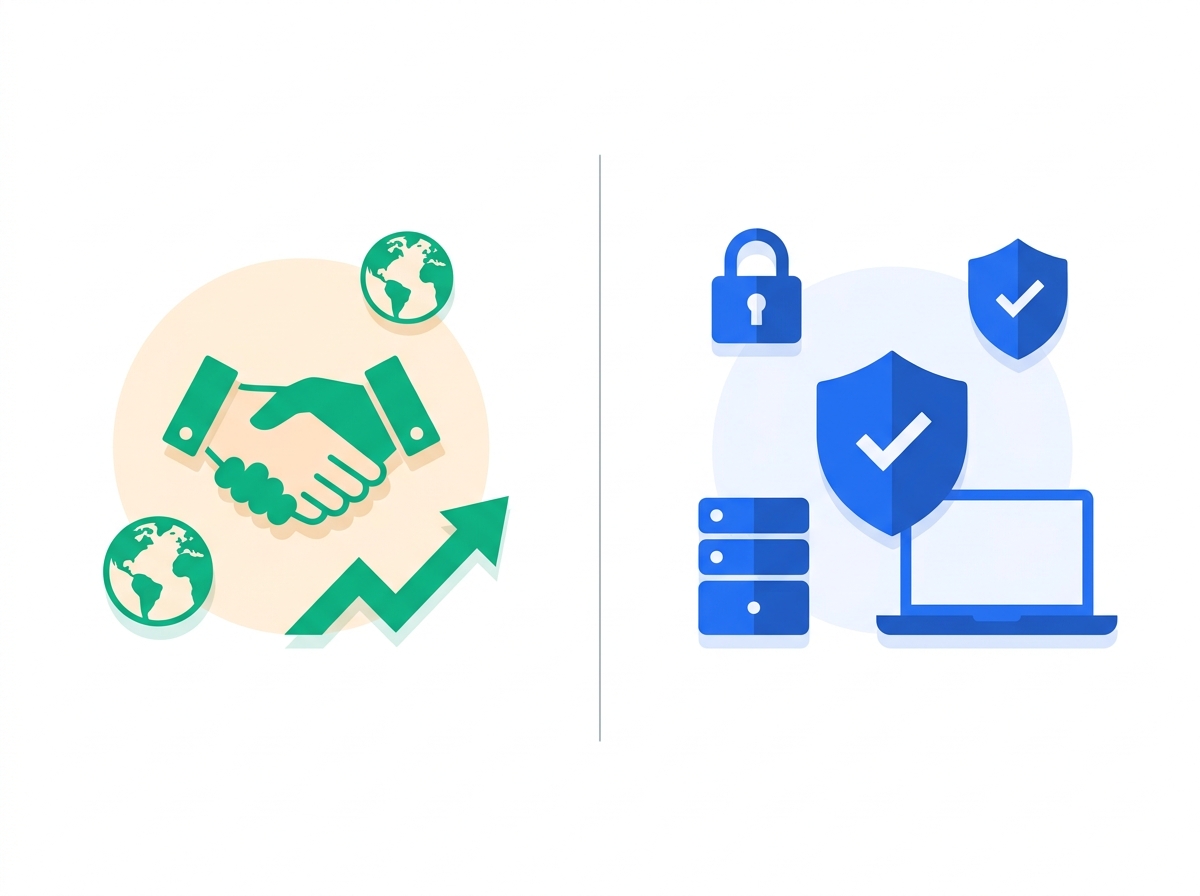
Why this is an IT + HR decision, not just an HR decision
Both vendors will tell you they do "HR and IT." What that means in practice is very different, and it matters most for engineering teams because engineers are disproportionately likely to hold high-privilege access.
Rippling was built from the ground up as a single employee-record system that both HR and IT actions read and write to. When someone's employment status changes in Rippling — hired, promoted, terminated — that's not a webhook fired to a separate IT product; it's a change to the same underlying record that access policies are evaluated against. Rippling's own materials describe this as access updating automatically as HR data changes, so a termination cascades into SSO deactivation, device locking, and app deprovisioning without a human triggering a second workflow in a second tool.
Deel's IT product (Deel IT) is a genuinely capable, separately-built layer that connects to Deel's HR/payroll core via integration rather than a shared data model from day one — Deel acquired and built out its IT/device management capability alongside its EOR business rather than starting from it. It covers zero-touch provisioning and device lifecycle management across 130+ countries, and it does trigger onboarding/offboarding actions from HR events. The practical difference shows up at the edges: in org structures with contractors converting to EOR employees, cross-entity transfers, or multiple connected identity providers, a two-system architecture has more seams where a status change can lag before it reaches the access layer, compared to a single-system one. Neither vendor publishes an audited "time from termination to full deprovisioning" metric, so treat this as an architectural difference to test in a trial, not a settled score — see the FAQ for how to actually test it before you buy.
If your engineering org is small and centralized in one or two countries, this gap is manageable either way — you can build the missing automation yourself with an identity layer like Okta or WorkOS sitting in front of both. If you're 80+ people with engineers scattered across a dozen jurisdictions and direct cloud access, the architecture of who owns the source-of-truth record stops being a nice-to-have.
Quick comparison table
| Dimension | Deel | Rippling |
|---|---|---|
| EOR country coverage | 150+ countries via owned entities (250+ owned entities in 100+ countries) | 80 countries (expanded from ~40 in 2026) |
| Native global payroll | In-house payroll teams in 130+ countries | Fully native payroll in 10 countries; partner-processed elsewhere |
| Contractor payments | 150+ countries, part of the same platform | 185+ countries, 50+ currencies |
| EOR pricing (published) | From $599/employee/month (Standard); Enterprise from $899 | Quote-only; no public EOR rate |
| Core platform pricing | Module-based, quote for most plans beyond contractor | From ~$8/employee/month base HR + mandatory ~$35–40/month platform fee; most companies land at $20–35 PEPM once modules are added |
| IT / device management | Deel IT: zero-touch provisioning, cross-OS management, 130+ countries — built as a connected add-on | Native to the core platform: device ordering, MDM, and app provisioning share the employee record with HR |
| Offboarding / access revocation | Triggered from HR events into Deel IT via integration | Same-record cascade: termination → SSO deactivation, device lock, app deprovisioning in one workflow |
| G2 standing (2026) | #1 in Employer of Record, Global Employment, Multi-Country Payroll categories | NPS of 90 on G2, ~30 points above the Core HR category average |
| Vendor risk flag | Named defendant in Rippling's federal RICO/trade-secrets suit; motion to dismiss denied Feb 2026, DOJ criminal probe reported | Plaintiff in the same litigation; case proceeding to discovery/trial |
Pricing and coverage figures checked against vendor sites and named sources in August 2026 — see Sources. Confirm current numbers directly with each vendor before budgeting, as both change plan structures frequently.
Detailed feature breakdown
1. Global hiring reach and entity coverage
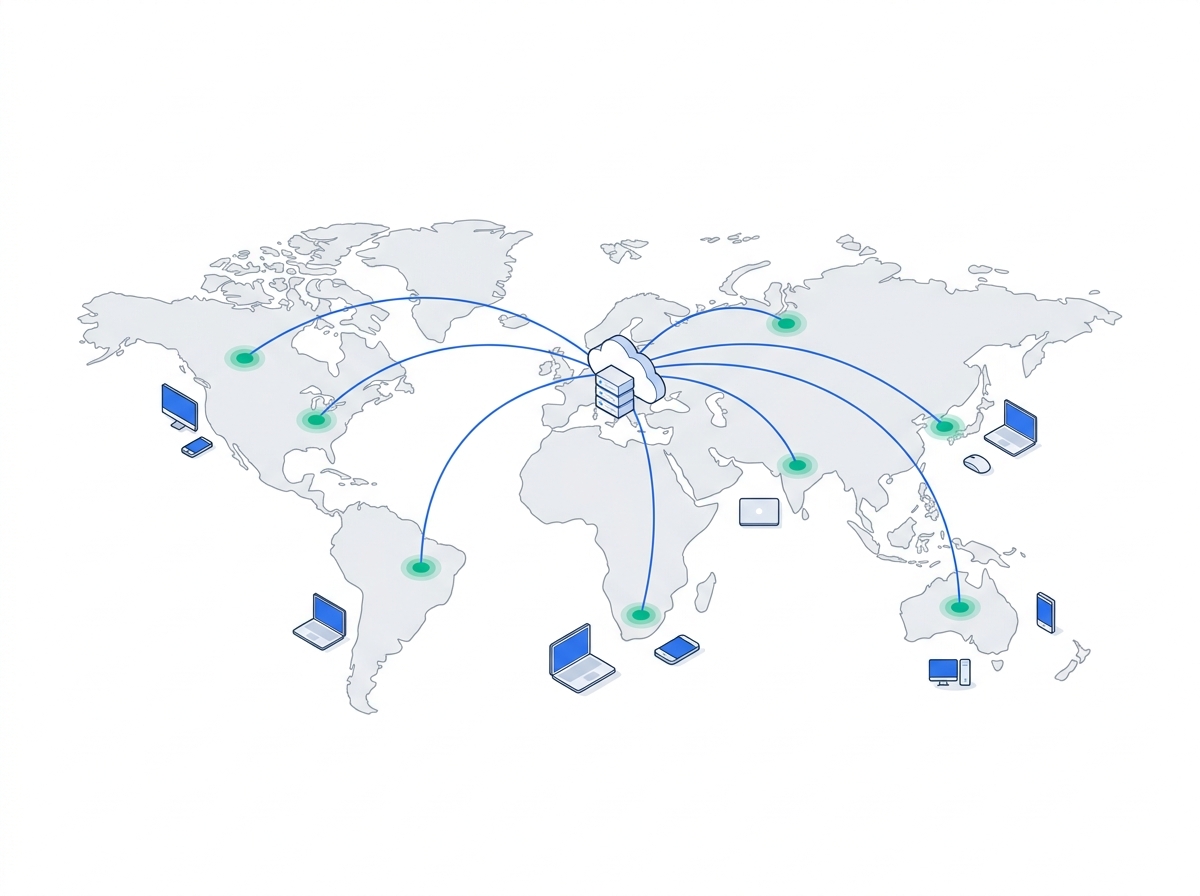
This is the dimension every other comparison leads with, and it's genuinely Deel's strongest ground. Deel operates through 250+ owned entities across 100+ countries and offers EOR hiring in 150+ countries when local partners are included, with in-house payroll teams running in 130+ countries. Rippling's EOR product is live in 80 countries as of its 2026 expansion (up from roughly 40), and its fully native payroll — the version with unlimited off-cycle runs and the tightest compliance ownership — is limited to 10 countries, with everything else routed through local processing partners.
For an engineering org hiring specifically in Latin America, Eastern Europe, Southeast Asia, or Africa — common patterns for cost-efficient senior engineering talent — Deel's broader owned-entity footprint reduces the odds you hit a country gap mid-hire. If your engineering hiring is concentrated in the US, UK, Canada, and a handful of Western European countries, both vendors cover you, and this dimension stops being the deciding factor. For a broader look at when EOR coverage itself is worth paying for versus standing up your own entity, see our EOR vs. setting up a foreign entity cost comparison.
2. IT and device management for engineers specifically
Engineers are the highest-friction persona for device provisioning: they need specific hardware (often higher-spec laptops), admin rights on their machine for local dev environments, and a longer list of app grants (cloud consoles, CI/CD, internal tooling) than a typical hire. Both vendors now compete directly here. Rippling can procure, configure, and ship laptops to 30+ countries with MDM enrollment and security policies pre-applied before the device leaves the warehouse, and it manages Mac and Windows fleets from a single dashboard rather than separate per-OS tools. Deel IT covers a similar zero-touch model across 130+ countries and explicitly markets support for high-spec engineering hardware alongside standard devices.
The functional gap is narrower than either vendor's marketing suggests. The architectural gap — whether device policy is a native property of the employee record or a synced copy of it — is where they still differ, and it mostly matters at the offboarding moment covered below.
3. Access provisioning and offboarding — the security-relevant dimension
This is the part generic HR-tool comparisons skip, and it's the one that should weigh heaviest for an engineering leader. Rippling's offboarding workflow revokes app access, disables SSO, locks devices, and can transfer files to a manager as one cascading, HR-triggered event — including scheduling a future-dated revocation for a notice-period termination. Because Rippling IT's SSO sits inside the same platform that holds employment status, a role change or termination is read by the access layer in real time rather than through a sync delay.
Deel IT performs the same categories of action — automated onboarding/offboarding tied to HR events, policy enforcement, centralized visibility — but as a connected system rather than a single data model from inception. For most terminations this distinction is invisible. It becomes visible in edge cases: multi-entity transfers, contractor-to-EOR conversions, or orgs running a separate identity provider that both platforms feed into, where an extra integration hop is an extra place for a status change to lag. If your engineers hold direct production, cloud console, or source-control admin access, that lag window is the actual risk you're pricing when you choose a platform — not the feature checklist. Pair either platform's offboarding automation with a clear SSO/access provisioning architecture (Auth0, WorkOS, or Okta sitting in front of your apps) so revocation doesn't depend on a single vendor's cascade working perfectly every time.
4. Pricing transparency and total cost modeling
Deel publishes EOR pricing directly: $599 per employee per month on its Standard plan, $899 on Enterprise. You can build a real budget from the public site before a sales call. Rippling's EOR pricing is quote-only, and buyers report it riding on top of a mandatory platform fee that isn't optional — you cannot license EOR alone without the base platform cost attached. Rippling's core HR module, by contrast, is one of the more transparently priced entry points in the category at roughly $8 PEPM plus a $35–40/month base fee — but once you add the payroll, benefits, and IT modules an engineering org actually needs, most companies land at $20–35 PEPM, and those module prices aren't published.
Net effect: Deel is easier to budget for pure global EOR hiring; Rippling is easier to budget for a small, US-concentrated core HR deployment, and harder to budget once you start layering on the IT and global modules that make the "one platform" pitch real. If Deel's EOR pricing is your anchor point, our Deel vs Remote pricing comparison goes deeper into how Deel's plan tiers actually break down.
5. Vendor risk — the litigation both comparisons underweight
As of February 2026, a federal judge allowed Rippling's civil RICO and trade-secrets lawsuit against Deel — alleging Deel cultivated a corporate spy inside Rippling — to proceed to discovery and trial in a US court, rejecting Deel's attempt to move the case overseas or dismiss its executives from it. The Wall Street Journal has reported a related DOJ criminal investigation into Deel. Rippling, as plaintiff, faces comparatively lower direct legal exposure from this specific case but is investing significant resources in prosecuting it through 2026.
This matters for engineering leaders specifically because both platforms hold employee PII, payroll banking details, and — via their IT products — device and access-management control over your fleet. A vendor security review for either platform in 2026 should explicitly flag the ongoing litigation as a risk-register item, not because it changes either product's current functionality, but because sanctions proceedings, executive attention diverted to litigation, and reputational spillover are the kind of thing procurement and security teams are supposed to track. If your org runs a formal vendor risk process, treat this the same way you'd treat any pending litigation disclosure — and if you're building out that review process for the first time, our ISO 27001 vs SOC 2 guide covers the certification questions worth asking any vendor handling employee data.
Evaluating either platform for a distributed engineering team?
Before you commit, run both vendors' offboarding workflow through a real test scenario — a terminated engineer with GitHub org access, an AWS console role, and a company laptop — and time how long full deprovisioning actually takes in a sandbox account. Neither vendor publishes this number; you have to generate it yourself.
Pros & cons
Deel
Pros
- Broadest owned-entity EOR footprint (150+ countries)
- Published, budgetable EOR pricing
- #1 G2 ranking in EOR / Global Employment categories
- Strong for engineering hires concentrated in LatAm, CEE, SEA, Africa
Cons
- IT/device management is a connected add-on, not a native part of the core record
- Named defendant in an active federal RICO/trade-secrets case
- Core platform pricing outside EOR is largely quote-based
Rippling
Pros
- HR and IT share one employee record — tightest access-revocation architecture of the two
- Native cross-OS device management and MDM built into the core platform
- Exceptionally high G2 NPS (90) in Core HR
- Transparent entry-level Core HR pricing
Cons
- EOR footprint (80 countries) trails Deel meaningfully for broad global hiring
- Fully native payroll limited to 10 countries; other markets rely on partners
- EOR pricing is quote-only and tied to a mandatory platform fee
- Plaintiff in the same ongoing litigation — resourcing and attention risk
Who should choose which
Choose Deel if…
- You're hiring engineers in 5+ countries, especially outside Rippling's 80-country EOR list
- You need a budgetable EOR number today, not after a sales call
- Your IT/device stack can stay separate (e.g., you already run Okta/Jamf/Kandji and just need HR + EOR to feed into it)
Choose Rippling if…
- Your engineering headcount is concentrated in fewer countries, inside its 80-country EOR range
- Engineers hold direct production/cloud access and you want offboarding to be one atomic action, not two synced systems
- You want HR, payroll, and device management consolidated under one vendor relationship and one source of truth
For orgs past roughly 40–50 engineers spread across multiple regions, the honest answer is often "both, for different populations" — Deel or a similar EOR for the long tail of one-off country hires, Rippling (or a Rippling-style unified core) for the concentrated headquarters/hub countries where you want the tightest access lifecycle. That's not fence-sitting; it's matching each tool to the failure mode it actually minimizes.
FAQ
Is Deel better than Rippling?
Who competes with Deel and Rippling?
How do I actually test offboarding speed before committing to either platform?
Does the Deel-Rippling litigation affect which one I should choose?
Can I use Rippling for IT/device management and Deel for EOR hiring at the same time?
Methodology
This comparison is based on each vendor's current public pricing and product pages, vendor blog posts describing offboarding and device-management workflows, third-party G2 category rankings, and contemporaneous reporting on the Rippling v. Deel litigation, all checked in August 2026. Neither vendor was interviewed directly for this piece; claims about internal system architecture (e.g., "single employee record" vs. "connected systems") are drawn from each company's own technical and marketing descriptions of their platforms, since neither publishes independently audited offboarding-speed benchmarks. Readers evaluating either platform for a security-sensitive engineering population should verify current behavior in a sandbox environment before purchase, as both products iterate frequently.
Sources
- Deel — Deel vs Rippling: Honest Employer of Record Service Comparison (2026)
- Deel — Deel's Owned Infrastructure and Entities Now Available in Over 100 Countries
- Rippling — Rippling EOR — Now in 80 Countries
- Rippling — Rippling Device Management Software
- Rippling — How Rippling Runs IT: Ensuring Smooth Offboarding
- Deel — Mobile Device Management With Deel IT
- Bloomberg Law — Rippling to Advance Corporate Espionage Suit Against Deel
- TechCrunch — The Rippling/Deel Corporate Spying Scandal May Have Taken Another Wild Turn
- Pin — Rippling Pricing 2026: HR and Recruiting Module Costs

Technology consultant with 10+ years in the Japanese tech industry. Specializing in SaaS evaluation, workflow automation, and B2B tool integration.