The short version
In Spain, the EOR platform fee is the smallest variable in your decision. What actually moves your cost and your risk is whether the provider's Spanish entity applies the right convenio colectivo (sector collective agreement), gets your 14 payments and capped social security base right, and keeps you clear of the post-reform indefinido-by-default rules. Three picks worth shortlisting:
Search "best EOR for Spain" and you'll get the same thing ten times: a ranked grid of logos, a price column, and a feature checklist that could describe any country. Useful for a first pass, almost useless for the decision that matters — because Spain is one of the markets where the generic checklist hides the expensive details.
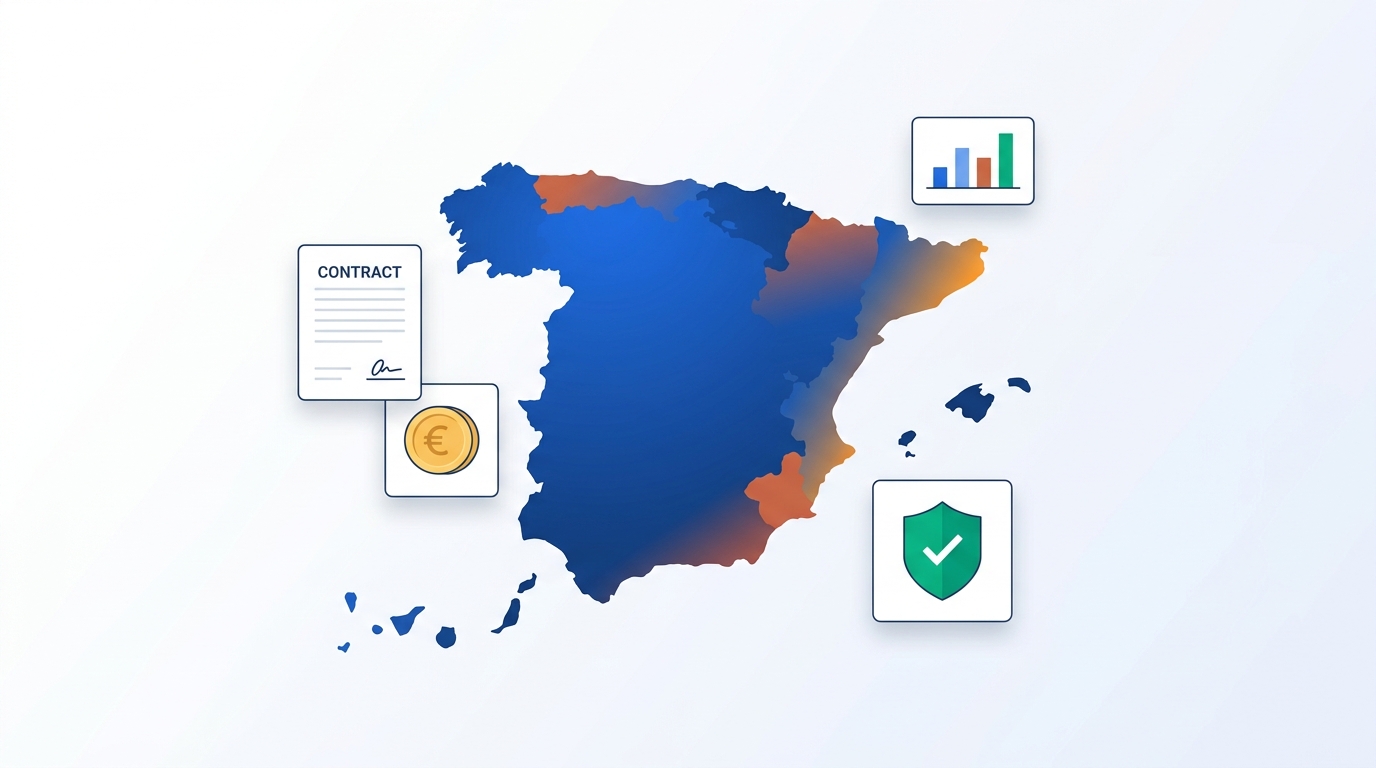
Spain isn't a hard country to hire in. But it has three features that quietly determine whether your EOR setup is clean or a slow-motion liability: a dense web of convenios colectivos that override the Labor Statute on pay and benefits; a social security system with a hard contribution ceiling that flips the usual cost math for senior hires; and a 2022 labor reform that made permanent contracts the default and turned "just use a contractor" into a fineable misclassification risk. This guide compares six EOR providers on exactly those points, with 2026 pricing checked against each vendor's published rates. If you're staffing across the EU, it pairs with our deep dives on the best EOR for hiring in France, Germany, and the Netherlands.
What actually makes Spain different
Most EOR comparisons treat Spain as a generic Western-European market. It isn't. Three things separate a provider that "supports Spain" on a coverage map from one that runs Spanish payroll correctly.
1. The convenio colectivo decides half your obligations
Spain has thousands of convenios colectivos — sector- and region-level collective bargaining agreements that legally override the national Workers' Statute on minimum salary tables, working hours, overtime, supplementary pay, trial periods, and sometimes extra paid leave or a 13th-month-style bonus. The correct convenio is determined by the employee's actual job and sector, not by what's convenient. Pick the wrong one and you under- or over-pay against a binding salary table, which surfaces later as a back-pay claim. A good Spain EOR identifies the applicable convenio at onboarding and builds payroll around it; a weak one applies a generic default and hopes.
2. The social security base is capped — which flips the cost math
Employers in Spain pay roughly 30–31% of an employee's contribution base in social security (the largest piece, contingencias comunes, is 23.6%, plus unemployment, FOGASA, vocational training, and the MEI). But unlike France — where contributions run on the full salary — Spain caps the monthly contribution base at €5,101.20 in 2026 (about €61,214/year). Earnings above that ceiling aren't subject to the standard contributions (only a smaller "solidarity" levy introduced for high earners). The practical effect: the higher the salary, the lower your effective employer-cost percentage. Spain can be cheaper than France or Germany for senior, well-paid roles — a point almost no listicle makes.

3. Permanent is the default; contractors are a trap
The 2021–2022 labor reform (RDL 32/2021) made the contrato indefinido (permanent contract) the default and sharply restricted temporary contracts, with real fines for misuse. It also tightened the screws on misclassification: hiring someone as a falso autónomo (false freelancer) when they work like an employee exposes you to back social-security contributions and penalties. For most genuine roles, the compliant route into Spain without your own entity is an EOR placing the worker on a proper indefinido contract — which is exactly what these providers do.
The 6 best EOR providers for Spain in 2026, at a glance
| Provider | Spain entity model | EOR fee (per employee/mo) | Deposit | Best for |
|---|---|---|---|---|
| Remote | Owned | $599 flat | None | Safest default for Spain |
| Deel | Owned | From $599 (volume discounts apply) | Yes | Multi-country scale, platform depth |
| RemoFirst | Partner | From ~$199 | Varies | Lowest cost, 1–3 hires |
| Multiplier | Owned | ~$400 | Varies | Value pick, balanced |
| Oyster | Owned | ~$599 (annual) | Varies | EU-native, benefits & experience |
| Rippling | Mixed* | ~$500 + platform fees | Varies | Existing Rippling HR/IT customers |
*Rippling owns entities in several primary markets and uses partners elsewhere; confirm the current Spain model directly before signing. "Owned" vs "partner" matters less in Spain than in France, but an owned entity still means tighter control over convenio handling and payroll filings.
How much hiring in Spain actually costs
The platform fee is the visible number and the one buyers fixate on. The number that sets your real budget is the loaded cost: gross salary, plus employer social contributions on the capped base, plus the platform fee. Here's how the layers behave for two very different salaries (figures approximate, 2026 rates).
A €45,000 indefinido hire (mid-level, below the ceiling):
- Gross annual salary: €45,000 (paid across 14 instalments — 12 monthly + 2 pagas extras)
- Employer social contributions (~31% of the full salary, since it's under the cap): ~€13,900
- EOR platform fee: ~€6,600/year (≈ $599 × 12)
- Approx. total annual cost: ~€65,500
A €90,000 senior hire (above the ceiling):
- Gross annual salary: €90,000
- Employer social contributions: charged only on the ~€61,200 capped base (~€19,000), plus a small solidarity levy on the excess — an effective rate of roughly 21–22% of total pay, not 31%
- EOR platform fee: ~€6,600/year (flat fees don't scale with salary)
- Approx. total annual cost: ~€116,000
Two takeaways. First, a $100–$200/month difference in platform fee is rounding error next to the employer burden — don't optimize the wrong number. Second, because the base is capped, Spain rewards seniority: the same provider is proportionally cheaper for your €90k principal engineer than for your €30k support hire. If your Spain plan skews senior, that reshapes the build-vs-EOR math.
The 6 providers reviewed
Remote — best overall for Spain
$599/employee/mo · flatRemote owns its Spanish entity and charges a single flat $599/employee/month worldwide (on annual billing), with no security deposit. For Spain that's a strong combination: a direct local employer that registers the worker with the Seguridad Social, identifies and applies the correct convenio colectivo, runs the 14-payment cycle, and handles IRPF withholding — all on predictable pricing without tying up cash. It's the provider we'd reach for first when Spain is a lasting part of the plan rather than a one-off experiment.
Pros
- Owned Spanish entity; direct indefinido employment
- Flat $599 worldwide — easy to forecast
- No deposit; better cash flow than deposit-takers
- Strong, localized benefits and convenio handling
Cons
- Fewer device/IT "everything-app" features than Rippling
- Integration marketplace narrower than Deel's
- Flat rate less competitive at very low headcount than RemoFirst
Deel — best for multi-country scale
From $599/employee/moDeel pairs an owned Spanish entity with the deepest platform in the category: the widest country coverage, the largest integration marketplace, and excellent contractor-to-employee conversion tooling — handy if some of your Spanish talent starts as freelancers and you want to convert them to a compliant indefinido rather than risk the falso autónomo exposure. The trade-offs are financial, not compliance-related: Deel typically requires a security deposit and applies a 3–5% FX spread on cross-border payouts, though volume discounts can pull the headline fee below list. For a single Spain-only hire focused on cost predictability, Remote edges ahead; for a team spread across several countries, Deel's breadth usually wins. (See our full Deel vs Papaya Global comparison for the enterprise-payroll angle.)
Pros
- Owned Spanish entity; indefinido and temporal supported
- Broadest country coverage for multi-EU teams
- Largest integration and HR-app ecosystem
- Best-in-class contractor-to-employee conversion
Cons
- Security deposit ties up cash upfront
- 3–5% FX fees on cross-border payouts
- Platform can feel heavy for a single hire
RemoFirst — best on budget
From ~$199/employee/moRemoFirst is built around a low headline fee — from roughly $199/employee/month, among the cheapest credible EOR rates in the market. For a small number of standard Spanish hires where the role is clear and the convenio is well-understood, that price gap is real money versus $599 rivals. The trade-off is that RemoFirst leans on local partner entities rather than owning every entity, and the platform and support are leaner than Remote's or Deel's. For one to three uncomplicated hires it's a smart, lean choice; for a growing team navigating tricky convenios or edge-case terminations, the savings can be a false economy.
Pros
- Lowest credible EOR fee for Spain (~$199)
- Fast, no-frills onboarding for small teams
- Solid fit for clear, standard indefinido roles
Cons
- Partner-entity model; less direct control
- Leaner platform and support depth
- Add-ons can narrow the headline savings
Multiplier — best value, balanced
~$400/employee/moMultiplier runs an owned-entity model at around $400/employee/month — meaningfully below the $599 list price of Remote and Deel while keeping the core compliance machinery in-house: Seguridad Social registration, convenio-aligned payroll, the 14-payment cycle, and IRPF handling. You give up some of the ecosystem breadth and polish of the majors, but for teams that want owned-entity assurance without paying premium platform rates, it's the value sweet spot. It also publishes clear guidance on Spanish payroll changes — including the 2026 MEI pension contribution increase — which is a good sign of local attention.
Pros
- Owned entity at a below-market fee
- Standard indefinido employment, convenio-aligned
- Good balance of price and compliance depth
Cons
- Thinner integration ecosystem than Deel
- Less white-glove than premium advisory providers
- Brand recognition lower with Spanish candidates
Oyster — best for EU-native experience & benefits
~$599/employee/moOyster built its reputation as a distributed-first, EU-friendly EOR with a strong emphasis on benefits administration and a smooth employee experience — useful in Spain, where competitive supplementary health and clear payslips help you win candidates. Pricing sits around the $599 mark on annual terms, comparable to Remote. It doesn't have Deel's sprawling platform or Rippling's IT layer, but for a company whose priority is treating Spanish hires well and keeping benefits competitive, Oyster is a credible owned-entity choice. Compare its Spain terms head-to-head with Remote, since they overlap closely on price and positioning.
Pros
- Strong European benefits administration
- Polished, employee-friendly onboarding
- Owned-entity coverage for Spain
Cons
- Overlaps closely with Remote on price — diligence both
- Smaller integration ecosystem than Deel
- Less suited to heavy multi-country payroll consolidation
Rippling — best if you already run Rippling
~$500 + platform feesRippling's edge is the single system: HR, IT, device management, and payroll under one roof. If your company already runs on Rippling, adding a Spanish hire keeps everything in one console and one source of truth. The caveats for Spain are the layered platform fees on top of the EOR rate, and an entity model that mixes owned and partner entities by country — worth confirming for Spain specifically. For a standard indefinido hire it can work well; if your priority is the deepest Spain-specific payroll and convenio depth rather than system unification, an owned-entity specialist is the cleaner choice.
Pros
- Best-in-class unified HR + IT + payroll
- Smooth device and app provisioning for new hires
- One console if you're already a Rippling shop
Cons
- Stacked platform fees reduce headline savings
- Mixed entity model — confirm Spain specifically
- Less Spain-specific depth than owned-entity specialists
Which one should you choose?
Strip away the feature lists and the decision usually comes down to your team size, salary mix, and how many countries you're hiring in. Match your situation to the row below.
Spain compliance: what a good EOR handles for you
Whichever provider you pick, the value is in executing a specific sequence of Spanish obligations correctly. Use this as your due-diligence checklist when you evaluate a provider's Spain service.
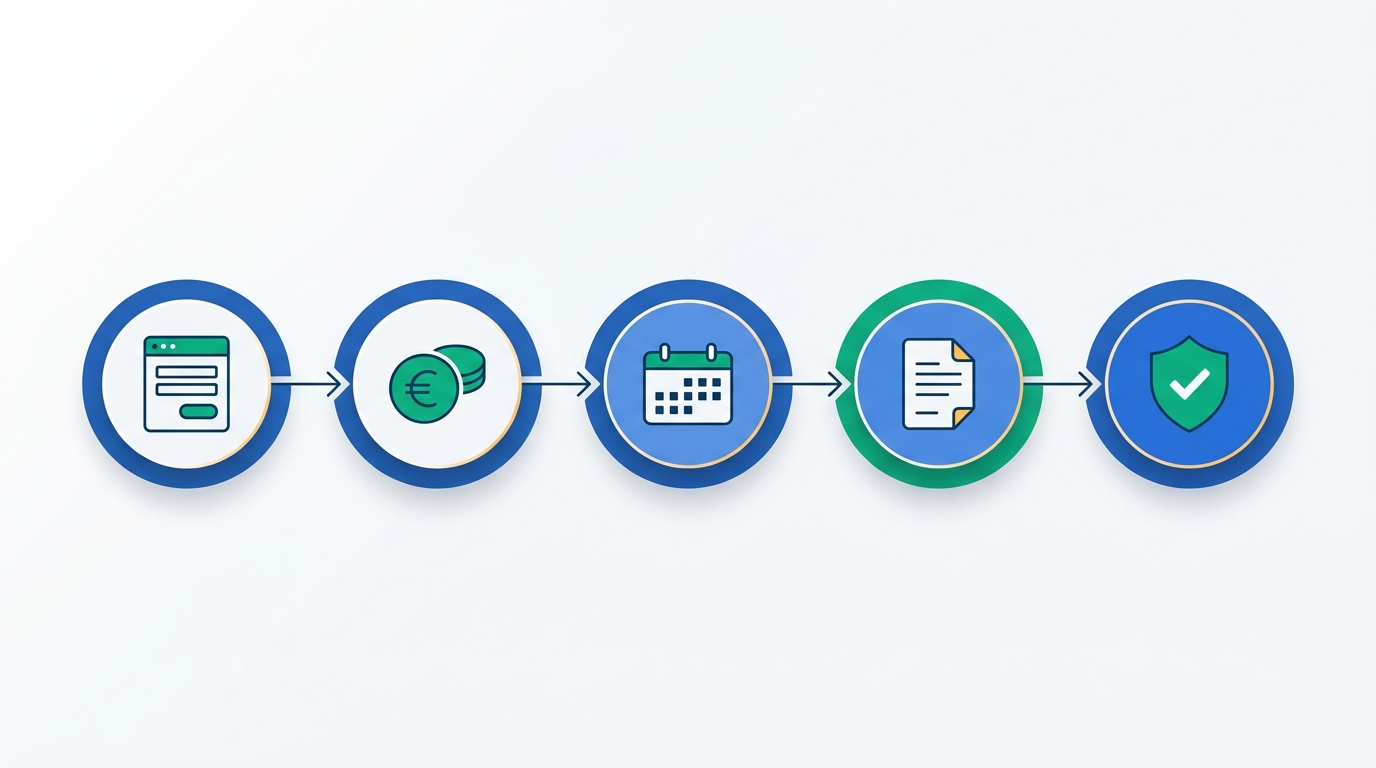
- Seguridad Social registration: registering the employee and the contribution account, then calculating and paying the ~30–31% employer contributions on the capped base each month.
- Correct convenio colectivo: identifying the applicable sector/regional agreement and applying its salary tables, hours, and supplementary pay. This is the step weak providers skip.
- The 14-payment cycle: running 12 monthly payslips plus two pagas extras (typically June and December), or prorating them into monthly pay where the convenio allows.
- IRPF withholding: withholding personal income tax at the correct rate from each pay run and remitting it to the tax authority.
- Compliant indefinido contract: a permanent contract by default, with a correctly set trial period (periodo de prueba) per the convenio — avoiding the restricted use of temporary contracts.
- Severance & finiquito at exit: calculating statutory severance — 20 days/year (max 12 months) for objective dismissal, 33 days/year (max 24 months) if a dismissal is ruled unfair — plus the finiquito settlement of outstanding pay and accrued holiday.

How we chose
We evaluated providers on five criteria, weighted for the Spanish market: (1) entity model — owned vs partner, which affects control over convenio handling and payroll filings; (2) true total cost — platform fee plus deposits, FX, and termination handling, not the headline rate alone; (3) Spain compliance depth — Seguridad Social, convenio application, the 14-payment cycle, IRPF, and severance; (4) pricing transparency and cash-flow impact; and (5) fit by team size and salary mix, given the capped contribution base. Pricing reflects each vendor's published 2026 rates as of June 2026; confirm current figures and your specific Spain terms directly with each provider before signing. Our assessment is based on documented research, not first-hand use of every platform.
Frequently asked questions
How much does an EOR cost in Spain?
Platform fees run from roughly $199 (RemoFirst) to $599+ per employee per month, with most owned-entity majors around $599 and Multiplier near $400. But the larger cost is Spain's ~30–31% employer social contributions on top of gross salary — charged only up to the capped base of €5,101.20/month in 2026. Budget the full loaded cost, not the platform fee in isolation.
What is the best Employer of Record for Spain in 2026?
For most companies, Remote is the safest default — owned Spanish entity, flat $599, no deposit, and clean convenio handling. Deel wins for multi-country EU teams, RemoFirst for the lowest budget, and Multiplier for owned-entity value. The "best" depends on your team size, salary mix, and how many countries you're hiring in.
Why does the convenio colectivo matter so much?
Spain's sector and regional collective agreements legally override the national Workers' Statute on minimum salary tables, hours, overtime, and supplementary pay. Applying the wrong convenio means paying against the wrong binding table, which can surface as a back-pay claim. A strong EOR identifies and applies the correct convenio at onboarding; a weak one applies a generic default.
Can I just hire a contractor in Spain instead of using an EOR?
Only if the person is genuinely independent. Spain's 2022 labor reform tightened misclassification rules: treating someone who works like an employee as a falso autónomo (false freelancer) exposes you to back social-security contributions and penalties. For employee-like roles, an EOR placing the worker on a proper indefinido contract is the compliant route without your own entity.
Did Spain reduce the workweek to 37.5 hours?
No. The government's bill to cut the statutory maximum from 40 to 37.5 hours was defeated in Congress on 10 September 2025 (178–170), and there's no active timetable to revive it as of mid-2026. The 40-hour legal maximum stands — though many individual convenios already set shorter weeks. Plan to the law as it is.
How fast can I onboard someone in Spain through an EOR?
With an owned-entity provider, onboarding is commonly a few business days to about a week once the contract, convenio, and Seguridad Social registration are in order — far faster than the weeks-to-months it takes to incorporate your own Spanish entity and register independently.

Technology consultant with 10+ years in the Japanese tech industry. Specializing in SaaS evaluation, workflow automation, and B2B tool integration.