Best Payroll Software for International Teams (2026): 7 Platforms Compared
Most "best global payroll" lists mix two different products together as if they were one. That mix-up is why so many companies overpay for an Employer of Record they've already outgrown, or under-provision for one they still need. Here's the question to answer first — then seven platforms compared once you know which one you're actually shopping for.
The 30-second version
If you have no legal entities abroad yet and just need to hire compliantly in a handful of countries, start with an Employer of Record — Remote for the safest, most transparent default, or Deel if you want the broadest country and integration coverage from day one.
If you already own entities in the countries where most of your headcount sits, you want Global Payroll, not EOR — Deel, Remote, Papaya Global, and Multiplier all now offer it, typically for a fraction of the EOR fee.
If payroll should live inside a bigger HR + IT system (device provisioning, app access, spend), look at Rippling. If finance wants one wire transfer and one audit trail instead of a dozen local providers, look at Papaya Global.
Why "global payroll software" actually means two different products
Almost every comparison article in this category — including several we've published ourselves — treats "global payroll" as a single shopping decision. It isn't. There are two distinct products hiding under that label, and picking the wrong one is the single most common (and most expensive) mistake HR and ops leads make when a team goes international.
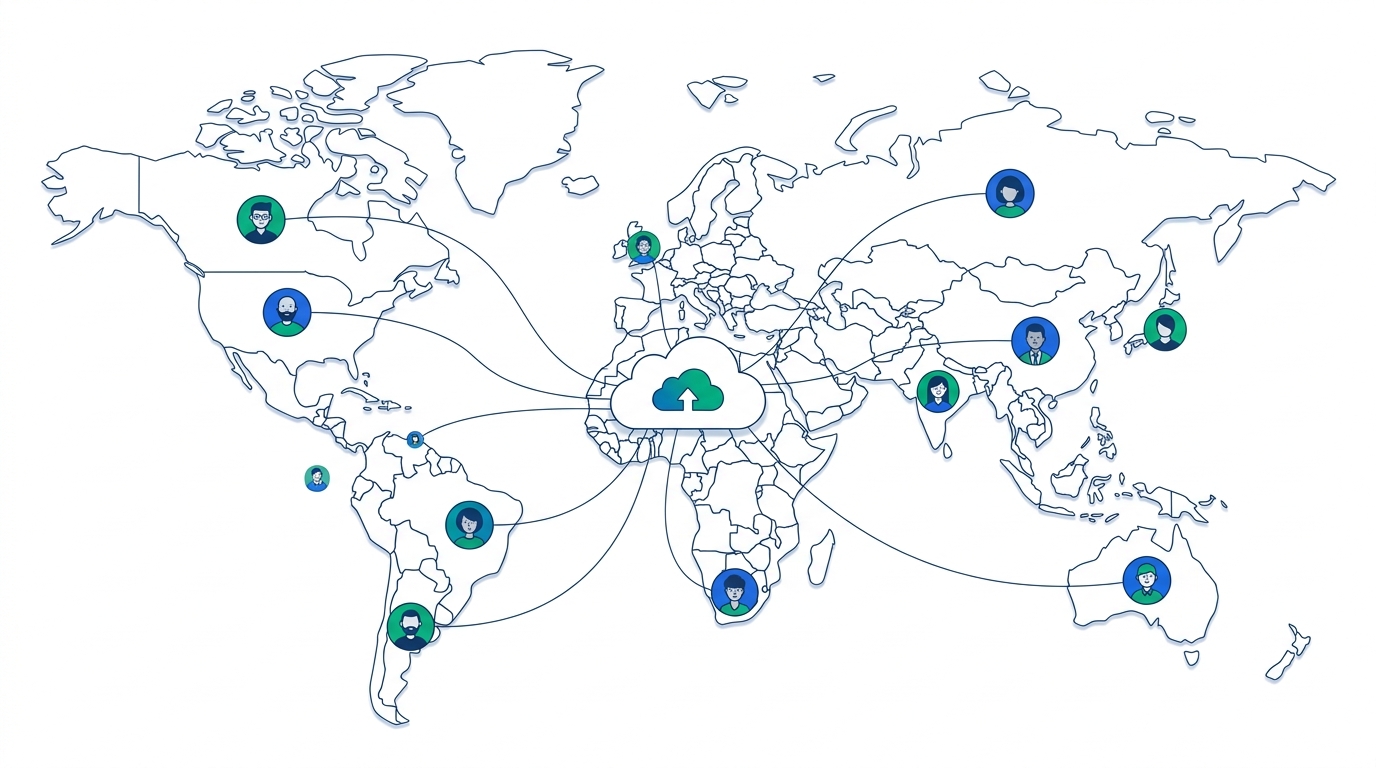
An Employer of Record (EOR) becomes the legal employer of your worker in a country where you have no entity. It carries the compliance risk, runs the local payroll, and issues the employment contract — you direct the person's day-to-day work, but the EOR's name is on the paperwork. Global payroll software is a different thing entirely: a centralized system that processes payroll for people who already work for entities you own. You remain the legal employer everywhere; the software just consolidates the calculation, filing, and payment workflow onto one dashboard instead of a dozen local providers.
You need this when…
- You have no legal entity in the country yet
- Headcount there is small (often under ~15–25 people)
- You're testing a market before committing to incorporation
- Speed to hire matters more than the per-head cost
You need this when…
- You already own the entity in that country
- Headcount has crossed the point where EOR fees exceed entity costs
- You want direct control over benefits and equity
- You're consolidating several countries' payroll onto one system
Every platform in this guide sits somewhere on that spectrum: some (Multiplier, and historically Remote and Deel) started as pure EOR businesses and added payroll later; others (Papaya Global, Rippling) started closer to payroll infrastructure and added EOR as a bolt-on. That history still shows up in which one each vendor is genuinely strongest at.
Quick comparison: 7 platforms at a glance
Pricing below reflects each vendor's published rates as of July 2026. EOR and Global Payroll are priced separately by every vendor here — treat the two columns as different products, not tiers of the same one.
| Platform | EOR from | Global payroll from | Country reach | Best for |
|---|---|---|---|---|
| Deel | $599/employee/mo | $29/employee/mo + $1,000 setup/entity | 150+ (EOR) / 100+ (owned payroll) | Broadest platform, multi-country scale |
| Remote | $599–699/employee/mo | $29/employee/mo + delivery fee | 180+ (EOR) | Compliance-first, owned-entity default |
| Rippling | Not a core product | ~$29 PEPM add-on + $8 base | 185+ pay / ~10 native payroll | One system for HR + IT + payroll |
| Papaya Global | $650–770/employee/mo | $25–29/employee/mo | 160+ | Finance-led treasury & audit visibility |
| Multiplier | $400/employee/mo | Custom (new, 2026) | 150+ via 40+ owned entities | Lowest-cost owned-entity EOR |
| Oyster | $499–699/employee/mo | ~$25–50/employee/mo | 180+ | Distributed-first UX, lean HR teams |
| ADP Global Payroll | Not offered as EOR | Custom / quote-based | 140+ | Enterprises already on ADP |
None of these headline rates include the pass-through costs: employer social contributions and statutory benefits, which add roughly 15–40% on top of gross salary depending on the country, plus FX spreads on cross-border payouts. Budget the loaded cost, not the platform fee, before comparing vendors.
The 7 platforms, reviewed
Deel — broadest platform for multi-country scale
EOR from $599/employee/mo · Global Payroll from $29/employee/mo + $1,000 implementation fee per entity
Deel's country coverage and integration marketplace are the largest in this category, and its contractor-to-employee conversion tooling is genuinely useful if part of your international team started as freelancers — a common path that carries real misclassification risk if it's handled manually. Once you own entities, Deel's Global Payroll product runs the calculation and filing for $29/employee/month, though each new entity carries a $1,000 implementation fee on top. Several independent pricing trackers also note a security deposit and a 3–5% FX spread on cross-border payouts for EOR customers, which is worth modeling into your total cost rather than comparing on the headline rate alone. We go deeper on Deel's payroll product specifically, versus a payments-first alternative, in our Deel vs Papaya Global comparison.
Pros
- Widest country coverage for both EOR and owned-entity payroll
- Largest integration and HR-app marketplace
- Strong contractor-to-EOR conversion workflow
Cons
- Per-entity implementation fee adds up if you're rolling out several countries at once
- Security deposit and 3–5% FX spread reported on cross-border EOR payouts
- Platform can feel heavier than you need for a single country
Remote — the compliance-first default
EOR $599/employee/mo (annual) or $699 month-to-month · Global Payroll from $29/employee/mo + delivery fee
Remote built its reputation on owning more of its own legal entities directly, rather than routing through third-party in-country partners the way some competitors do for their long-tail markets — that matters because you're relying on the EOR to actually be the compliant employer of record, and a partner-heavy model adds a layer you can't fully audit. Remote also doesn't charge a security deposit, which keeps cash flow simpler than deposit-taking competitors, and its pricing page publishes flat rates rather than requiring a sales call. The trade-off is a narrower integration marketplace than Deel and fewer of the IT/device-management features Rippling offers on the same employee record.
Pros
- One of the largest owned-entity footprints in the category
- No security deposit required
- Transparent, published pricing rather than quote-only
Cons
- Smaller integration ecosystem than Deel
- No IT/device-management layer the way Rippling has
- Payroll delivery fee adds a variable on top of the $29 base
Rippling — payroll as one line in a bigger system
Base platform from ~$8/employee/mo (module pricing quote-based) · Global Payroll module ~$29 PEPM add-on
Rippling's core advantage isn't payroll depth — it's that payroll sits on the same employee record as device provisioning, app access, and spend management, so onboarding someone in a new country can also ship their laptop and grant their SaaS access automatically. Native, in-house payroll only runs in around ten countries; beyond that, Rippling pays workers in 185+ countries and 50+ currencies through a blended in-house-plus-partner model, with tax compliance "guaranteed" in 88+ jurisdictions. Pricing is the catch: nearly everything beyond the base platform fee is quote-based, and — as we found writing our Rippling vs Gusto comparison for startups — Rippling has a reputation for retrospective, full-month billing that can produce lumpy invoices when you hire mid-cycle.
Pros
- Single employee record spans HR, IT, finance, and payroll
- Free unlimited off-cycle payroll runs in native-payroll countries
- Strong fit for tech companies already standardized on Rippling
Cons
- Native (highest-quality) payroll coverage is narrower than pure specialists
- Module pricing isn't published — get a written quote before comparing
- Retrospective full-month billing can produce invoice spikes around hire dates
Papaya Global — built for finance, not just HR
Global Payroll $25–29/employee/mo · EOR $650–770/employee/mo
Papaya Global was built payroll-orchestration-first: instead of replacing your in-country payroll providers, it can sit on top of them, aggregating the output into a single funding flow and a unified analytics and audit layer for finance. That's a genuinely different value proposition from Deel or Remote's "we are the employer" model, and it's why Papaya tends to win evaluations run by CFOs and controllers rather than HR generalists. EOR pricing sits at the high end of the category, and per-country implementation fees aren't published — budgeting $5,000–$25,000+ per new market, depending on complexity, is a reasonable starting assumption based on third-party pricing analyses.
Pros
- Consolidates fragmented local payroll providers into one funding flow
- Strong analytics and audit trail for finance teams
- Premium EOR tier ($770) adds dedicated HR support
Cons
- EOR pricing is among the highest in this comparison
- Per-country implementation fees are opaque and can run into five figures
- Less HR-generalist-friendly than Deel or Remote's UX
Multiplier — the lowest-cost owned-entity EOR
EOR flat $400/employee/mo, no setup or offboarding fees · Global Payroll Payments custom-priced (launched April 2026)
Multiplier's edge is straightforward: it operates 40+ directly-owned legal entities — a genuinely high ownership ratio for the category — while pricing its EOR product meaningfully below the market leaders and charging nothing extra to set up or offboard an employee. In April 2026 it extended beyond EOR into Global Payroll Payments, running multi-currency payroll across 120+ currencies with automated statutory tax calculations. That payroll product is new enough that it hasn't been battle-tested at the scale Deel's or Remote's has, so if owned-entity payroll (not EOR) is your primary need, weigh Multiplier's newer track record against the others' longer operating history.
Pros
- $400/employee/month flat EOR — the lowest headline rate here
- No setup or offboarding fees
- 40+ directly-owned entities, unusually high for the category
Cons
- Global Payroll Payments product is new (launched 2026), less proven
- $400 headline still excludes 15–40% in statutory employer costs
- Smaller integration ecosystem than Deel or Rippling
Oyster — distributed-first UX for lean HR teams
EOR $699/employee/mo (or $499 on the annual Scale plan) · Global Payroll ~$25–50/employee/mo
Oyster covers 180+ countries for EOR and, like most of this list, layers on an owned-entity payroll product for markets where you've already incorporated. Its onboarding flow and async-friendly support are consistently cited as easier for generalist HR teams than the more enterprise-feeling platforms in this comparison. Two things to weigh: its FX spread (roughly 1–1.5% above mid-market rates) runs wider than Deel's or Remote's (roughly 0.5–1%), which compounds at higher payroll volumes, and Oyster also sells a separate US PEO plan ($114/employee/month) for domestic co-employment — a genuinely different mechanism from EOR, and one worth understanding before you pick one for US-based hires (we cover the practical difference between a PEO and an EOR in more depth).
Pros
- Wide EOR footprint (180+ countries)
- UX and support built around a distributed-team mindset
- Separate US PEO option for domestic co-employment
Cons
- FX spread runs wider than Deel's or Remote's
- Global payroll pricing is less consistently published across sources than EOR pricing
- Smaller platform/integration footprint than Deel
ADP Global Payroll — for enterprises already on ADP
Custom / quote-based · no published per-employee rate
ADP Global Payroll combines two legacy ADP products, Celergo and GlobalView, to cover payroll in 140+ countries for large multinational employers. It's not offered as an Employer of Record — ADP handles payroll processing for entities you already own, positioning it squarely in the "global payroll," not EOR, half of the framework above. Pricing is entirely quote-based and generally scoped to enterprise headcounts; ADP doesn't compete on self-serve transparency the way Deel or Remote do. Where it wins is depth of compliance infrastructure built over decades and the ability to consolidate vendor relationships if your US or domestic payroll already runs through ADP.
Pros
- Deep, decades-old compliance infrastructure across 140+ countries
- Single-vendor consolidation for companies already on ADP domestically
- Built for large, established multinational headcounts
Cons
- No published pricing, even by this category's opaque standards
- Not an EOR — no option for countries where you have no entity
- Self-serve setup speed lags newer, cloud-native entrants
Which one should you choose?
Match your situation to the row below rather than picking a single "best" platform — the right answer changes with entity status and headcount, not just company size.
When does it actually pay to switch from EOR to an owned entity?

This is the question nearly every company on this list eventually asks, and it's the one most "best global payroll" articles skip entirely. The honest answer: it depends heavily on the country, but there's a useful rule of thumb. In markets across Asia, for example, the break-even point for swapping an EOR for your own entity plus global payroll typically falls between roughly 12 and 25 employees — beyond that, cumulative monthly EOR fees exceed the cost of setting up and maintaining the entity. Western European break-even points tend to sit lower, since incorporation and statutory overhead are often cheaper and faster to stand up than in parts of Asia — see our country-specific cost breakdowns for hiring in Spain and hiring in France if one of those markets is where you're closest to that line.
Switching isn't just a vendor change — it requires carefully handling accrued tenure, PTO balances, and severance reserves under the destination country's labor law, since the legal employer of record changes hands. Budget around three months end to end for a clean transition. This is also exactly why the hybrid model described earlier is so common in practice: rather than treating the switch as a single company-wide event, most teams migrate one country at a time, on their own schedule, once headcount there crosses the local break-even point — often on the same vendor that ran their EOR, since Deel, Remote, Multiplier, and Papaya Global all offer both products on one platform.
The fragmentation problem nobody budgets for
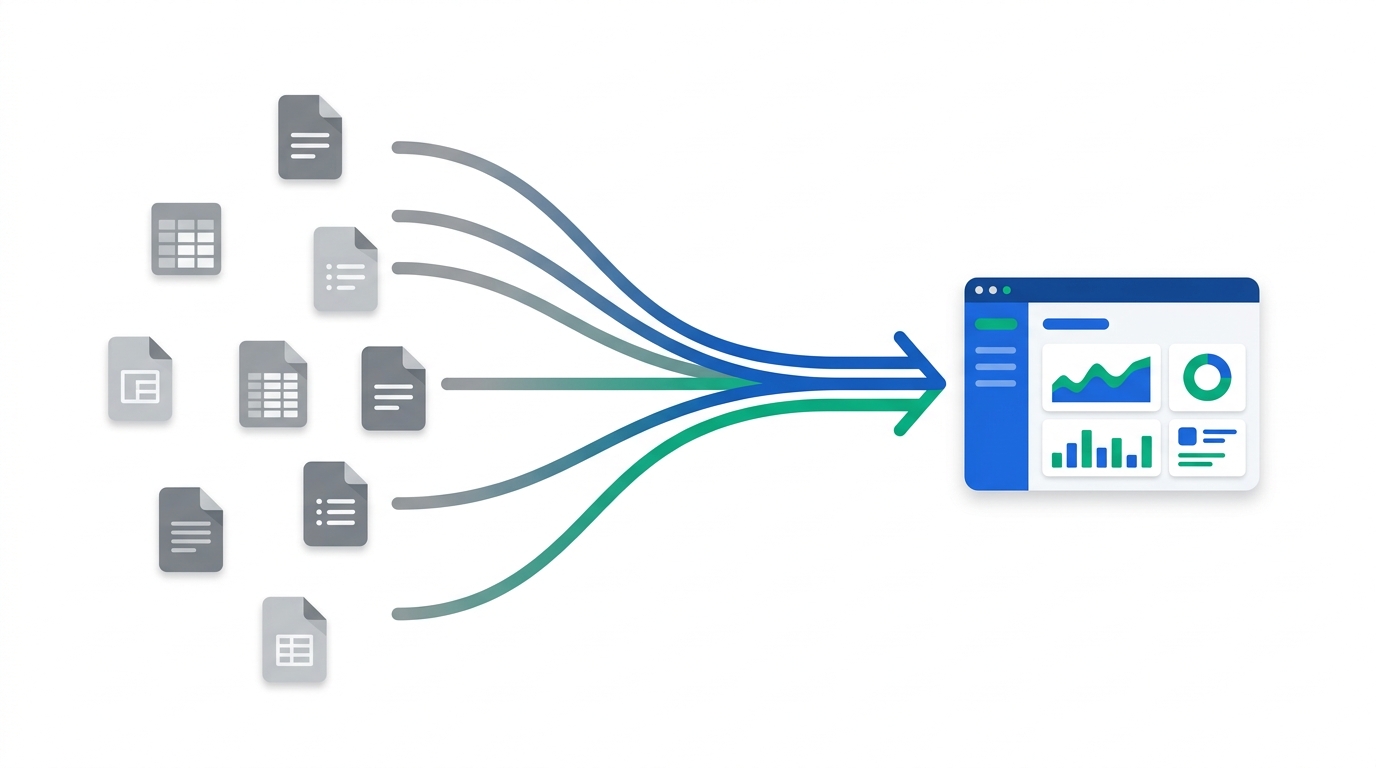
Even after picking a platform, the operational risk in multi-country payroll rarely comes from any single vendor — it comes from accumulation. Most companies with an international footprint didn't design their payroll stack; it grew organically: a local provider here, a spreadsheet-based workaround there, a regional platform that covers some but not all of the relevant jurisdictions. Industry research on payroll leaders consistently surfaces the same top pain points: compliance complexity across jurisdictions, fragmented systems with no single source of truth, and — underneath both — unreliable data flow between the HRIS (where a hire, raise, or termination is first recorded) and whatever actually runs payroll.
Consolidating onto fewer, better-integrated systems is consistently what separates payroll functions that scale cleanly from those that accumulate compliance exposure as they grow. That's a stronger predictor of a smooth multi-country rollout than which single vendor's logo you pick.
Frequently asked questions
Which payroll software handles multiple countries the best?
There's no single universal answer — it depends on which axis matters most to you. Deel has the broadest combined country coverage and integration marketplace; Remote has one of the largest owned-entity footprints, which matters for direct compliance control; Rippling wins if payroll needs to sit inside a broader HR and IT system; and Papaya Global wins if the buyer is finance and the priority is consolidating payment flows and audit trails.
How do I pay international employees from the UK?
A UK company generally has three routes: engage the person as a genuinely independent contractor (mind IR35 and local misclassification rules in their country), use an Employer of Record in their country so the EOR becomes the legal employer while you direct the work, or open a local entity and run payroll there once headcount justifies it. Platforms like Deel, Remote, Multiplier, and Oyster let a UK company execute either of the first two options from one dashboard without incorporating abroad.
Does ADP handle international payroll?
Yes. ADP Global Payroll — combining its Celergo and GlobalView products — processes payroll in 140+ countries for enterprises. It's quote-based rather than published, and it's not an EOR: it's built for companies that already own their entities and want one vendor consolidating the payroll processing across them.
What's the best HR payroll software for global companies?
For most scaling companies, Deel or Remote's combined EOR-plus-Global-Payroll platforms cover the most ground with the least operational risk as headcount shifts between countries. Enterprises consolidating an already fragmented, multi-vendor setup often prefer Papaya Global for the finance and treasury layer, while tech-first companies that also want IT and device management on the same employee record tend to choose Rippling.
How much does it actually cost to run payroll for a distributed team?
Two layers: the platform fee — roughly $25–$50/employee/month for entity-owned global payroll, or $400–$770/employee/month for EOR — plus pass-through statutory costs that aren't platform revenue at all. Employer social contributions and mandatory benefits typically add 15–40% on top of gross salary depending on the country, and one-time implementation fees per entity or country can range from around $1,000 to $25,000+ depending on the vendor and market complexity. Budget the loaded cost, not the headline rate.
How we evaluated these platforms
We compared providers on five criteria: (1) product fit — whether the platform is fundamentally an EOR, an owned-entity payroll system, or both, since conflating the two is the most common shopping mistake in this category; (2) true total cost — platform fee plus disclosed implementation fees, deposits, and FX spreads, not the headline rate alone; (3) country and entity-ownership depth — owned entities carry less third-party compliance risk than partner-network coverage; (4) pricing transparency, since several vendors here are quote-only; and (5) fit by buyer profile — HR generalist, finance-led, or IT/ops-led evaluations pull toward different platforms. Pricing reflects each vendor's publicly available rates as of July 2026; confirm current figures directly with each provider, since global payroll pricing changes frequently and several vendors negotiate below list price at volume. This assessment is based on documented research and published vendor information, not first-hand implementation of every platform.
Sources & further reading

Technology consultant with 10+ years in the Japanese tech industry. Specializing in SaaS evaluation, workflow automation, and B2B tool integration.