Best EOR for Hiring in Poland (2026): 8 Providers Compared on Reclassification Risk and Net Pay
HR & Payroll ·
The short version
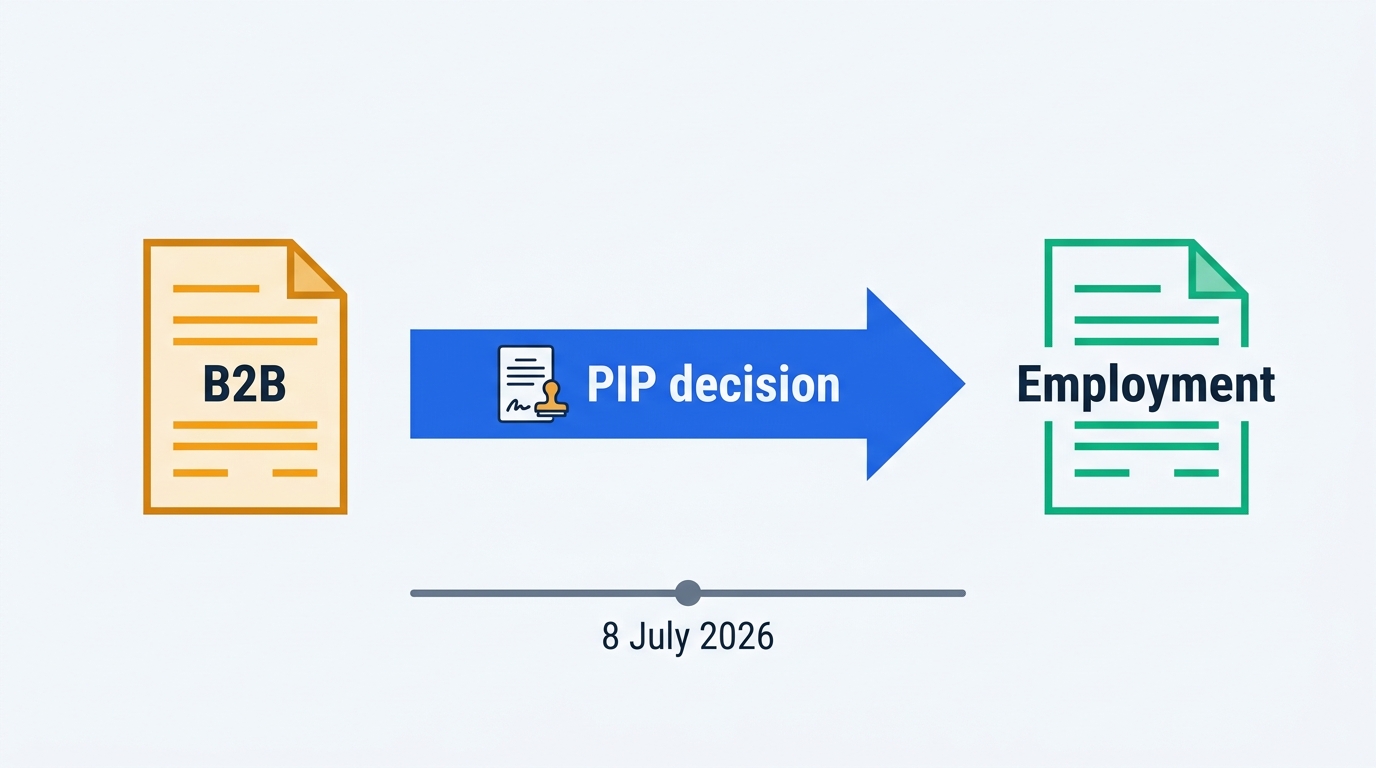
Poland is not a generic EOR market anymore. On 8 July 2026, an amendment to the State Labour Inspectorate Act took effect that lets a district labour inspector reclassify a B2B contract into employment by administrative decision — no court case required. Since roughly 30–40% of Poland's IT talent works on B2B contracts, that single change moves more companies into the EOR market than any pricing promotion ever will.
- Remote — best overall for Poland. Owned entity, the cleanest documentation trail for a ZUS or PIP audit, and no partner in the middle. $599/employee/month.
- Deel — best when Poland is one of six countries, not the only one. Fastest onboarding and the widest coverage, at the cost of a deposit that ties up working capital. From $599/employee/month.
- Multiplier — best price-to-substance in the mid-market. Roughly a third cheaper than the leaders with an owned Polish entity. From $400/employee/month.
But the ranking is secondary. Two questions decide the outcome in Poland, and almost no shortlist asks them: can the provider support the 50% copyright cost deduction (worth 7–13% of net pay to a Polish developer, at zero cost to you), and who is the legal employer on the Polish register — the provider, or a subcontracted partner you have never met?
Section 01What changed in Poland on 8 July 2026
Every "best EOR in Poland" list published this year ranks providers on price, country count, and onboarding speed. Those are the same variables you would use to pick an EOR for Portugal or Spain, and they miss what actually happened in Poland this summer.
The Act of 11 March 2026 amending the Act on the State Labour Inspectorate (Journal of Laws 2026, item 473) entered into force on 8 July 2026. Before that date, if the State Labour Inspectorate (Państwowa Inspekcja Pracy, or PIP) believed a self-employed contractor was really an employee, it had to persuade a labour court — a process that took years and that most inspectors simply did not start. After that date, a district labour inspector can issue an administrative decision confirming the existence of an employment relationship directly.
How the procedure actually runs
It is a two-stage process, not a surprise verdict. Based on published law-firm analysis of the amendment, the sequence is:
- Inspection. Inspectors can now work remotely — requesting documents electronically and conducting parts of the inspection over a live connection — and PIP selects targets analytically, using algorithms and data received from other public authorities rather than waiting for an employee complaint.
- Hearing. Both parties present their position on the nature of the engagement.
- Remediation order. PIP issues an order with a deadline to correct the irregularity. Most cases should end here.
- Administrative decision. If the order is ignored, the district inspector issues a decision confirming employment.
- Appeal. One month to appeal, and all evidence must be filed with the appeal — you do not get to add it later.
The PIP decision itself is generally forward-looking: the employment relationship is treated as existing from the decision, not retroactively. That sounds reassuring, and several vendor blogs stop there. It is not the whole picture. The same amendment substantially deepened PIP's cooperation with ZUS (social security) and KAS (the tax administration), and an inspector's findings can become the basis for those authorities to open their own proceedings — which do reach backwards, within their own limitation periods. The administrative decision is the trigger, not the ceiling.
The fines went up, and there is a closing amnesty window
Penalties for misclassification-adjacent offences rose from a PLN 1,000–30,000 band to PLN 2,000–60,000, with up to PLN 90,000 where the offence is serious or repeated within two years. Individual managers and HR leads can be held personally liable.
More usefully, the amendment includes a 12-month transitional window. An entity that voluntarily converts a civil-law or B2B arrangement into a proper employment contract during that window avoids petty-offence liability under Article 281 § 1 point 1 of the Labour Code. That window closes in July 2027. If you have Polish B2B contractors who look like employees — fixed hours, your equipment, your management chain, no other clients — the cheapest month to fix it is any month before then.
A proactive option most shortlists don't mention. Since 8 July 2026, an employer can also apply to the Chief Labour Inspector for an individual interpretation of how a specific cooperation arrangement will be classified — before PIP ever opens an inspection. The fee is a nominal PLN 40, and the Inspectorate is expected to respond within 30 days. The ruling isn't binding on the applicant, but acting in line with it protects the company against administrative, financial and criminal sanctions on the arrangement it covers, and it binds PIP itself. The protection only holds if the real working arrangement matches what was described in the application — so this is a tool for confirming a setup you believe is genuinely defensible, not for papering over one you know is not.
One caveat worth knowing. President Nawrocki signed the act on 2 April 2026 and simultaneously announced he would refer it to the Constitutional Tribunal under subsequent-review procedure; the motion was filed on 21 July 2026. A subsequent-review referral does not suspend a law — the amendment is in force and PIP is operating under it today. But there is a non-zero chance parts of it are struck down later. That argues for compliance choices that are defensible either way, not for waiting.
Why this is a Poland problem specifically
Poland has more than 229,000 companies in software and IT services, and over 99% of them are micro-enterprises with fewer than ten people — in practice, individual specialists trading under a sole proprietorship (jednoosobowa działalność gospodarcza). Industry estimates put 30–40% of Poland's IT talent pool on B2B contracts, and 50–60% of senior specialists prefer that model, because the flat 19% business tax and lump-sum options leave far more in their pocket than progressive PIT does.
That is a structural feature of the market, not an abuse. But it means the average foreign company hiring engineers in Poland is sitting on exactly the arrangement the new inspection regime is built to test. An EOR does not make the problem disappear — it relocates it. The EOR becomes the legal employer, runs ZUS and PIT, files the payroll, and carries the employment-law risk you would otherwise hold through a contractor agreement.
Section 02The 50% copyright deduction: the lever most global EORs never pull
Here is the mechanism that decides whether your Polish offer is competitive, and it is missing from essentially every English-language EOR shortlist we reviewed.
Polish tax law allows a 50% deductible-cost rate (50% koszty uzyskania przychodu, usually shortened to 50% KUP) on income earned from the transfer of copyright. The statutory catalogue of qualifying activity explicitly includes the creation of computer programs. The annual cap on the deduction is 120,000 PLN of costs per person, across all sources.
Applied correctly, it lowers the employee's income tax base without changing gross salary — so it raises take-home pay at zero additional employer cost. Here is the arithmetic on a 20,000 PLN gross monthly salary, in the 12% bracket, with a PIT-2 declaration on file:
| Line | Standard costs | With 50% KUP |
|---|---|---|
| Gross salary | 20,000.00 | 20,000.00 |
| Employee ZUS (13.71%) | −2,742.00 | −2,742.00 |
| Health contribution (9%, non-deductible) | −1,553.22 | −1,553.22 |
| Deductible costs applied | 250.00 | 8,629.00 |
| PIT advance (12%, less 300 PLN relief) | −1,741.00 | −735.00 |
| Net pay | 13,963.78 | 14,969.78 |
| Difference | — | +1,006.00 (+7.2%) |
That is the conservative floor. Above the 120,000 PLN annual income threshold the marginal rate is 32%, so the same deduction shelters income taxed at nearly three times the rate — until the 120,000 PLN annual cost cap is reached. One Kraków-based employer of record publishing on the mechanism cites a net increase of up to 13% per year on a 20,000 PLN gross salary, with no increase in employer cost. For a senior engineer at 26,000–35,000 PLN gross, that is the difference between an offer that competes with a B2B rate and one that does not.
Why most EORs will not do it
Because it is real work, and it creates real liability if done badly. The conditions are strict:
- The employment contract must explicitly split remuneration into an authorial honorarium and pay for non-creative duties — meetings, reporting, support. A clause that simply says "50% KUP applies" is not enough and has been rejected by the tax authorities.
- The employer must maintain an evidence register of works (ewidencja utworów): what was created each month, where it is stored, and a manager's monthly confirmation. Commit history and repository links are acceptable evidence; a spreadsheet of good intentions is not.
- The 50% is calculated on income after deducting that month's social insurance contributions, not on raw gross.
Setting the scheme up properly — feasibility analysis, position analysis, contract templates, procedure — is quoted in the Polish market at around EUR 10,000 for a team of 15–20 engineers. A global EOR running a standardized payroll template across 150 countries has no commercial reason to build this for you. A Poland-native provider often already has it.
"Do you support a split authorial honorarium with 50% deductible costs for software engineers, and do you maintain the ewidencja utworów on our behalf? If yes, at what additional fee, and who carries the risk if the tax authority challenges the split?" The answers separate providers faster than any pricing page.
Section 03What hiring in Poland actually costs in 2026
Before comparing providers, you need the denominator. The EOR fee is the smallest line in your Polish cost stack, and vendors know it.
Employer-side statutory costs
| Contribution | Rate | Notes |
|---|---|---|
| Pension (emerytalne) | 9.76% | Capped at the annual ZUS ceiling |
| Disability (rentowe) | 6.50% | Capped at the annual ZUS ceiling |
| Accident (wypadkowe) | 0.67–3.33% | Set by sector and risk profile; uncapped |
| Labour Fund + Solidarity Fund | 2.45% | Uncapped |
| Guaranteed Employee Benefits Fund (FGŚP) | 0.10% | Uncapped |
| PPK (employee capital plan) | 1.50% | Mandatory employer share if the employee is enrolled; up to 2.5% more optional |
| Total employer load | 19.48–22.14% | Plus PPK where applicable |
Two details catch people out. Pension and disability stop once the employee's cumulative annual base reaches the ZUS ceiling — 282,600 PLN in 2026, thirty times the projected average monthly wage of 9,420 PLN. For a senior engineer at 26,000 PLN/month that arrives in late autumn and your monthly cost drops for the rest of the year, so budget annually rather than monthly. Accident insurance, the Labour Fund and FGŚP, by contrast, are uncapped and accrue on every złoty.
Employee-side deductions and the statutory floor
- Employee ZUS: 13.71% (pension 9.76%, disability 1.50%, sickness 2.45%).
- Health contribution: 9%, and it is not deductible from tax.
- PIT: 12% up to 120,000 PLN of annual income, 32% above, with a 30,000 PLN tax-free allowance.
- Minimum wage 2026: 4,806 PLN gross per month, 31.40 PLN per hour. Employer cost at that level is roughly 5,790 PLN. This is the first year since 2023 with no mid-year July adjustment — one rate applies for all twelve months, which makes annual budgeting genuinely easier.
Statutory entitlements your EOR must administer
Annual leave is 20 days below ten years of career seniority and 26 days at or above it — note that this counts total career seniority including education credits, not tenure with you, which is a common budgeting error. The employer pays the first 33 days of sick leave per calendar year at 80% or 100% depending on cause, after which ZUS takes over. Notice periods run 2 weeks under six months of service, 1 month from six months, and 3 months from three years; probation is capped at 3 months. PPK enrolment is automatic with an opt-out, and the employer must repeat the auto-enrolment cycle every four years — the next one falls in 2027, so budget for a step-up in take-up next year.
The all-in number
For a senior engineer at 25,000 PLN gross per month (a realistic 2026 mid-to-senior figure; senior salaries in the major hubs run 26,000–35,000 PLN gross on an employment contract), the stack looks like this at a mid-range 20.48% employer load:
| Component | PLN / month | Approx. USD |
|---|---|---|
| Gross salary | 25,000 | $6,720 |
| Employer ZUS (20.48%) | 5,120 | $1,376 |
| PPK employer (1.5%, if enrolled) | 375 | $101 |
| EOR platform fee (mid-market) | ~1,860 | $500 |
| Total | ~32,355 | ~$8,697 |
| EOR fee as % of total | ~5.7% | |
That last row is the point. Choosing the $199 provider over the $699 provider changes your total cost by about 6%. Choosing a provider that cannot support the 50% copyright deduction costs your engineer 7–13% of net pay — which you will eventually pay for in gross salary to stay competitive. The cheap provider is not always the cheap outcome.
If your headcount is heading past five or six people in Poland, the entity question re-opens: a Polish sp. z o.o. needs 5,000 PLN share capital and roughly EUR 2,500–5,000 all-in to establish realistically, with ongoing accounting at EUR 150–400 per month. We work through that threshold in detail in our EOR vs. foreign entity break-even analysis.
Section 04Comparison table: 8 EOR providers for Poland
Prices are published list prices for standard EOR service, per employee per month. This list was first compiled in August 2026 and re-checked against provider pricing pages and independent EOR directories in September 2026; all eight list prices below are unchanged. Every provider on this list negotiates at volume; treat these as the ceiling, not the quote.
| Provider | List price | Entity model (claimed) | Best fit |
|---|---|---|---|
| Remote | $599 | Owned entity | Poland-heavy teams that expect an audit |
| Deel | $599 / $899 | Owned entity | Multi-country rollouts, fastest onboarding |
| Multiplier | from $400 | Owned entity | Mid-market price-to-substance |
| Boundless | from £149 | EU-focused | EU-only hiring, transparent pricing |
| Oyster HR | $699 | Hybrid | Benefits depth, B Corp procurement criteria |
| Papaya Global | $650–$770 | Partner-led | Finance-led multi-country payroll consolidation |
| Pebl (Velocity Global) | $399–$599 | Mixed | Enterprise procurement, services-heavy |
| RemoFirst | $199 | Partner network | Budget-constrained, low-complexity hires |
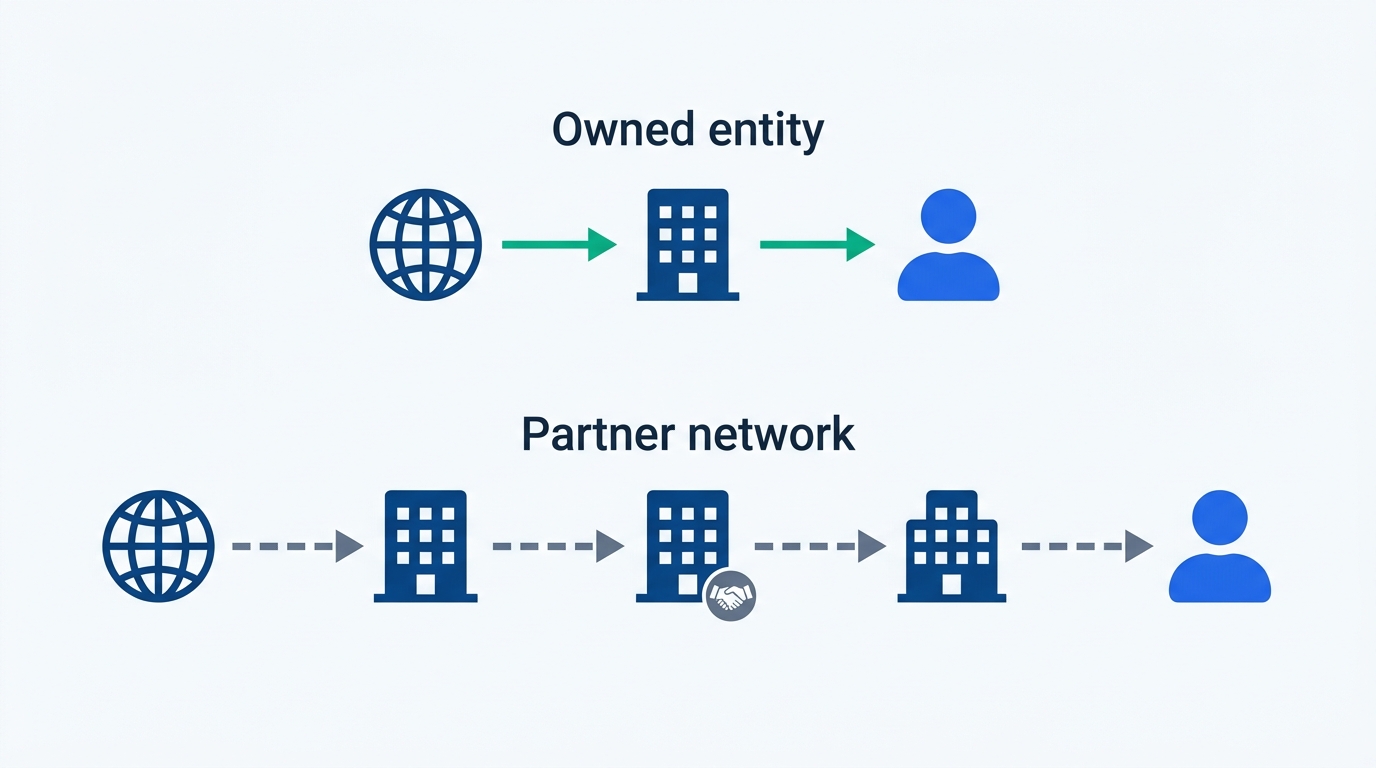
We found direct contradictions between reputable comparison sites on which providers own a Polish entity. One directory lists Deel, Multiplier and Oyster as partner-model in Poland; provider documentation and other directories describe owned Polish entities for the same firms. This is not a detail you should resolve by reading blogs, including this one.
Ask one question in writing: "What is the full legal name and KRS number of the entity that will appear as employer on the Polish employment contract, and is it a subsidiary of your group?" A provider with an owned entity answers in a sentence. A provider using a partner will hedge, or will name a company you have never heard of. Then look the KRS number up in the public register yourself — it takes two minutes and settles the question permanently.
Section 05Individual provider reviews
Remote
$599 / employee / monthThe default choice when Poland is the country that matters.
Remote's differentiator is structural rather than featural: it operates through owned local entities rather than a partner network, and it has built its positioning around EU employment compliance specifically. For a Polish hire, that translates into a single accountable legal employer, a documentation trail that does not stop at a partner's front door, and a provider whose incentive is aligned with surviving a ZUS inspection rather than closing a contract.
The platform is comprehensive — expense management, equity administration, and a mature IP assignment framework that matters more in Poland than in most jurisdictions. Pricing is flat and published, which makes budgeting straightforward, but Remote does not compete on price and will not.
Where the premium earns its keep: if you are converting existing Polish B2B contractors to employment during the transitional window, the quality of the paperwork is the product. If you are hiring one junior contractor for six months, you are paying for insurance you may not need.
Pros
- Owned entity model; no partner relay
- Deep EU employment-law posture
- Flat published pricing, no percentage-of-salary model
- Strong IP and equity administration
Cons
- Among the more expensive options at list price
- Feature breadth exceeds what a Poland-only hirer needs
- Onboarding typically 4–6 days, slower than Deel
Hiring in Poland where the compliance trail matters most
Request a Poland-specific quote that names the employing entity and its KRS number.
Deel
$599 standard / $899 enterpriseThe right answer when Poland is one line item in a six-country plan.
Deel covers 150+ countries and onboards in roughly two to three days, which is materially faster than the field. If your 2026 plan involves engineers in Poland, a sales lead in Spain and a support hire in Portugal, running one contract across all three has real operational value that a Poland-only comparison undersells. Deel also runs a contractor-management product alongside EOR, which matters if you intend to keep some Polish relationships on B2B and move others to employment — a split most companies will face during the transitional window.
The costs to model carefully are the ones outside the sticker price. Deel requires a refundable deposit typically equal to 1–1.5× the total monthly cost, which locks up working capital per head; FX spreads of roughly 0.5–2% apply on each payroll cycle when funding in USD against PLN payroll; and negotiated rates commonly fall to the $400–$500 range past 20 seats, so the list price is a poor planning assumption at scale.
For a like-for-like read on the two market leaders, see our Deel vs. Remote total cost of ownership comparison.
Pros
- Fastest onboarding in the group (2–3 days)
- Widest country coverage; one contract for a multi-country plan
- EOR and contractor management in one platform
- Meaningful volume discounts past 20 seats
Cons
- Refundable deposit of 1–1.5× monthly cost ties up cash
- FX spread of 0.5–2% on every PLN payroll run
- Platform complexity is overkill for a two-person Polish team
Multiplier
from $400 / employee / monthRoughly a third cheaper than the leaders, with an owned Polish entity.
Multiplier sits in the segment that is usually empty: materially below the $599–$699 band without dropping to a pure partner-relay model. The company states it holds its own legal entity in Poland, and setup runs in the 24–72 hour range. For a company placing three to eight engineers in Poland, the annual delta against Remote or Deel at list price is roughly $7,000–$19,000 — not decisive on its own, but not nothing either.
The trade-off is depth of local advisory. Multiplier is strong on the mechanics — contracts, payroll, ZUS filings, statutory benefits — and thinner when you need someone to design an honorarium split for the 50% copyright deduction with your counsel, or to sequence a contractor conversion that does not read as an admission about prior periods. Ask specifically.
Pros
- Best price among providers claiming an owned Polish entity
- 24–72 hour onboarding
- Contractor-of-record option alongside EOR
- Transparent published pricing
Cons
- Less depth on Poland-specific tax structuring
- Entity-ownership claims contradicted by at least one directory — verify the KRS
- Smaller benefits marketplace than Remote or Oyster
Mid-market budget, owned-entity requirement
Worth a side-by-side quote against Remote before you commit to either.
Boundless
from £149 / employee / monthEU-only by design, and priced accordingly.
Boundless does not chase country count. It positions as EU-compliance-first, publishes detailed Polish payroll guidance including ZUS, PIT and PPK mechanics, and prices well below the global platforms. If your hiring map is entirely inside the EU — which, for a company hiring in Poland for nearshore engineering, it very often is — the country-count premium you pay elsewhere buys you nothing.
The limitation is the mirror image: if a US or APAC hire appears in your plan next quarter, you will be running a second provider. Evaluate on whether your hiring geography is genuinely stable.
Pros
- Lowest list price among EU-specialist providers
- Published, detailed Polish payroll and tax documentation
- Transparent pricing with no percentage-of-salary model
Cons
- EU coverage only — no use for a global plan
- Smaller platform and integration surface
- Less brand recognition in enterprise procurement
Oyster HR
$699 / employee / monthBenefits depth and B Corp credentials, at the top of the price band.
Oyster is a capable, well-regarded EOR with strong workflow automation, a broad benefits marketplace and B Corp certification — the last of which is a genuine procurement criterion at some organizations rather than a marketing line. For Poland specifically, though, it is the most expensive option in this group without a Poland-specific capability that justifies the delta over Remote at the same tier.
Its entity posture in Poland is described as hybrid across sources, which is exactly the case where the KRS question matters. If Oyster is on your shortlist for reasons that are not Poland-specific — an existing relationship, a benefits requirement, an ESG procurement policy — it will do the job. If Poland is the whole decision, there are better-fitting options at the price.
Pros
- Strong benefits marketplace and automation
- B Corp certification; clears ESG procurement gates
- Transparent published pricing
Cons
- Highest flat list price in this comparison
- Hybrid entity model in Poland needs verification
- Narrower country coverage than Deel or Remote
Papaya Global
$650–$770 / employee / monthA payments and payroll-consolidation platform that also sells EOR.
Papaya's real product is multi-country payroll visibility and payment rails, with EOR as one delivery mode. If your CFO's problem is that payroll data sits in eleven systems across nine countries and nobody can produce a consolidated view, Papaya solves a problem the others do not. If your problem is "hire four engineers in Kraków compliantly," you are buying a treasury platform to solve a hiring question.
Poland delivery leans on local partners more than the owned-entity providers — a legitimate model, but at $650–$770 it is top-of-market pricing for it, so the consolidation value has to be real. Teams whose actual requirement is multi-country payroll rather than employment should read our comparison of payroll platforms for international teams first.
Pros
- Best-in-class multi-country payroll consolidation
- Strong payments infrastructure and treasury reporting
- Enterprise-grade compliance reporting
Cons
- Top-of-market pricing for partner-led delivery in Poland
- Over-specified for a Poland-only hiring need
- Less nimble for small-team onboarding
Pebl (formerly Velocity Global)
$399 promotional / $599 standardEnterprise services orientation, with a coverage map worth reading closely.
Pebl rebranded from Velocity Global and retains an enterprise, services-heavy posture — useful when your requirement includes advisory work, complex equity, or unusual employment structures. The entry price of $399 is promotional; the standard rate is $599, and some plans price as a percentage of salary rather than flat per seat, which changes the math significantly for senior engineers. Model both.
The structural caveat: published analysis puts Pebl at roughly 65 owned entities against a claimed 185+ country coverage, meaning the large majority of markets are served through partners. Poland is a major enough market that owned coverage is plausible — but "plausible" is exactly the standard you should not accept. Ask for the KRS.
Pros
- Enterprise services depth and advisory capacity
- Competitive promotional entry pricing
- Handles complex equity and unusual structures
Cons
- Promotional price is not the standard rate
- Percentage-of-salary plans penalize senior hires
- Roughly two-thirds of claimed countries are partner-served
RemoFirst
$199 / employee / monthThe budget option — appropriate for a narrower set of situations than its price suggests.
At $199 RemoFirst is roughly a third of the leaders' list price, covers 179 countries, and onboards in about 24 hours. That combination is achieved through a partner-network model, and the honest framing is that you are buying coordination rather than direct employment infrastructure.
For a straightforward hire — standard employment contract, standard benefits, no copyright honorarium split, no contractor conversion history to unwind — that is a defensible trade at a real saving. For a company converting long-standing Polish B2B contractors under the new inspection regime, where the quality and consistency of the employment documentation is precisely what will be examined, the extra $400 a month buys something specific. Match the tool to the exposure.
Pros
- Lowest cost in the comparison by a wide margin
- Broad country coverage (179)
- ~24 hour onboarding
Cons
- Partner-network delivery; longer accountability chain
- Thin fit for reclassification-sensitive conversions
- No meaningful Poland-specific tax structuring support
The category this list leaves out: Poland-native providers
A handful of specialists operate in Poland and CEE only — Motife, Alcor, Mercans, ThisWorks and others. They rarely appear in global comparisons because they cannot compete on country count, and they generally quote rather than publish prices, which excludes them from list-price tables like the one above.
They are the providers most likely to answer yes to the 50% copyright deduction question, to have handled contractor conversions in Polish IT before, and to have an opinion about how PIP inspectors are actually behaving in your city this quarter rather than what the statute says. If Poland is your only European hire and the engagement is complex, put at least one of them in the RFP alongside the global platforms. The comparison is often instructive even when you end up choosing the global option.
Section 06The IP question nobody asks until it matters
This is Poland-specific and it is not a formality.
In an EOR arrangement the provider — not you — is the legal employer. Under Polish copyright law, economic rights in a computer program created by an employee in the course of their duties vest with the employer by operation of law. That employer is the EOR. Unless the contractual chain explicitly assigns those rights onward from the EOR to you, the EOR may hold first ownership of code your engineers write. Legal commentary on EOR arrangements identifies precisely this gap: without robust assignment clauses linking worker, EOR and client, the EOR can end up as first owner.
Poland then adds a wrinkle most jurisdictions do not have. Polish law distinguishes economic rights from moral rights (autorskie prawa osobiste), and moral rights cannot be transferred or waived. They are managed through a commitment by the author not to exercise them plus an authorization for the employer to exercise them on their behalf — but that must be drafted, not assumed. Get it wrong and you can end up owning code you cannot legally modify or derive from without the original author's consent.
1. Full assignment of economic rights from the EOR to your entity, covering all fields of exploitation, with no expiry tied to the employment relationship. 2. A commitment from the employee not to exercise moral rights, plus authorization for the employer to exercise them, drafted under Polish law. 3. Explicit coverage of derivative works and the right to authorize third parties to modify. Ask to see the actual Polish-language template, not the English summary.
Data handling sits alongside this: your Polish EOR is processing employee personal data under GDPR, and the processor agreements need to reflect that. If your compliance stack is still being assembled, our GDPR compliance software comparison covers the tooling side.
Section 07Which provider fits which situation
- You are converting existing Polish B2B contractors to employment before July 2027. Remote, or a Poland-native specialist. Documentation quality is the entire product here and the window is a hard deadline — do not optimize for price on this one.
- Poland is one of several countries in a 2026 hiring plan. Deel. One contract, fastest onboarding, and the contractor-management product covers the mixed states you will pass through. Negotiate hard past 20 seats.
- Three to eight engineers in Poland, mid-market budget, no exotic requirements. Multiplier, with Remote as the comparison quote. Verify the KRS before signing.
- Your entire hiring map is inside the EU and likely to stay there. Boundless. You are not paying for coverage you will never use.
- Your engineers' net pay is the competitive constraint. Shortlist on the 50% copyright deduction question first and price second — 7–13% more net pay at no cost to you beats a $400/month fee difference at almost any salary level.
- Headcount in Poland is heading past six people and staying. Run the entity math before you renew; our EOR vs. entity break-even model gives the thresholds.
Not sure whether Poland is the right first EU hire at all?
The employer cost load, notice periods and reclassification exposure vary widely across the EU. Comparing two or three countries before committing usually pays for itself.
If you are weighing Poland against other European nearshore markets, our country breakdowns for Portugal and Spain use the same cost framework, and our walkthrough of hiring an employee in the Netherlands through an EOR covers the mechanics end to end. The specific sequence for unwinding a Polish B2B relationship into employment without creating an admission about prior periods deserves its own treatment; we are working through the contractor-to-employment conversion playbook separately.
Section 08How we evaluated
Based on our research, not on vendor testing. We assembled the provider shortlist from the current SERP for Poland-specific EOR queries and from three independent comparison directories, then scored each provider on four criteria weighted for the Polish market as it stands in September 2026:
- Entity ownership in Poland — because the July 2026 inspection regime makes the length of the accountability chain a live risk rather than a procurement preference.
- Support for Poland-specific tax structuring — principally the 50% copyright deduction, which is the largest single lever on a Polish engineer's net pay.
- Total cost, not headline fee — including deposits, FX spread, and the employer contribution load the fee sits on top of.
- Fit for contractor conversion — the dominant Polish use case for the next twelve months.
Pricing figures are published list prices gathered in August 2026 from provider documentation and independent pricing directories, and re-verified in September 2026 with no changes found; they are the ceiling, and all of these providers discount at volume. Polish statutory figures (ZUS rates, the 2026 contribution ceiling, minimum wage, PIT bands, the 50% deduction cap) come from Polish primary and professional sources listed below. Where sources conflicted — notably on entity ownership — we have said so rather than picking the more convenient version. We have not tested these platforms in production and do not claim to have.
Section 09Frequently asked questions
What is an Employer of Record (EOR) in Poland?
Can an EOR take over my existing Polish B2B contractors?
Yes, and since July 2026 this is the most common reason companies engage one. Two structures exist: converting the person to an employment contract under the EOR (the option that actually removes reclassification risk), or keeping them on B2B through a contractor-of-record arrangement, which adds administration but does not change the underlying legal character of the relationship.
If the engagement has employment characteristics — set hours, your equipment, your management chain, no other meaningful clients — a contractor-of-record wrapper will not protect you. Conversion during the twelve-month transitional window closing in July 2027 avoids petty-offence liability under Article 281 § 1 point 1 of the Labour Code. Take Polish legal advice on the sequencing; how the conversion is documented affects what it implies about prior periods.
How much does an EOR in Poland cost in total?
How much are salaries rising in Poland in 2026?
Who owns the code my Polish engineers write through an EOR?
Section 10The bottom line
The Polish EOR market in August 2026 is not primarily a pricing question. The spread between the cheapest and most expensive credible provider is about $500 per employee per month — roughly 6% of fully loaded cost. The spread between a provider that can support a properly documented copyright honorarium split and one that cannot is 7–13% of your engineer's net pay, permanently, and it compounds into gross salary pressure every time you make an offer against a local employer who does support it.
And behind both sits a hard date. The transitional window that lets you convert misclassified B2B arrangements without petty-offence liability closes in July 2027. PIP is now selecting inspection targets algorithmically, working remotely, and sharing findings with ZUS and KAS. If you have Polish contractors who function as employees, the decision in front of you is not which EOR is best. It is whether you fix the arrangement on your schedule or on an inspector's.
Sources and further reading
- getsix — New powers of the State Labour Inspection (PIP) in Poland from 8 July 2026 (Act of 11 March 2026, Journal of Laws 2026 item 473; procedure, appeal deadline, transitional window; Chief Labour Inspector individual interpretation — PLN 40 fee, 30-day response)
- getsix — PIP inspections in Poland: the rules changed on 8 July (remote inspections, algorithmic target selection, PIP–ZUS–KAS cooperation, fine bands)
- Mondaq — Reclassification of B2B into employment in Poland: how the new PIP law works (corroborates the individual interpretation mechanism; September 2026 review)
- TGC Corporate Lawyers — New powers of the National Labour Inspectorate from July 2026 (publication date, non-retroactivity of the decision, Constitutional Tribunal referral)
- prawo.pl — President's motion to the Constitutional Tribunal on the PIP amendment (signed 2 April 2026, motion filed 21 July 2026, no suspensive effect)
- Boundless — Payroll in Poland: ZUS, PIT and employer costs (2026) (contribution rates, PIT bands, PPK, minimum wage)
- zus.info.pl — Limit 30-krotności 2026 (2026 annual contribution ceiling of 282,600 PLN, based on a projected average wage of 9,420 PLN)
- e-pity.pl — Autorskie koszty uzyskania przychodu 2026 (120,000 PLN annual cap, qualifying activities including computer programs, contract and evidence requirements)
- MOTIFE — Tax-deductible costs in Poland for IT professionals (net-pay impact, documentation requirements, implementation cost)
- MOTIFE — B2B contracts in the IT industry in Poland (2026) (share of the talent pool on B2B, employer cost comparison)
- Accace — Labour law and employment in Poland: 2026 guide (notice periods, probation, annual leave, 33-day employer sick pay)
- Lexology — Employer of Record arrangements: the overlooked intellectual property implications
- Multiplier — Entity vs EOR in Poland: sp. z o.o. setup, costs and compliance (entity setup cost and timeline, break-even headcount)

Technology consultant with 10+ years in the Japanese tech industry. Specializing in SaaS evaluation, workflow automation, and B2B tool integration.