Best EOR for Hiring in India (2026): 8 Providers Compared on Price, PF Treatment, and the New ₹25,000 Ceiling
For most US and European tech companies hiring their first engineers in India, Remote ($699/employee/month, deposits only in "rare, high risk circumstances") is the cleanest default, Deel ($599, its own Bengaluru entity) is the better pick if you also pay Indian contractors, and Multiplier ($459/month billed annually) is the strongest global platform on price. If India is your only country and budget matters more than a big-brand dashboard, Wisemonk ($99–$399, India-only) and Skuad (from $199) are worth a quote.
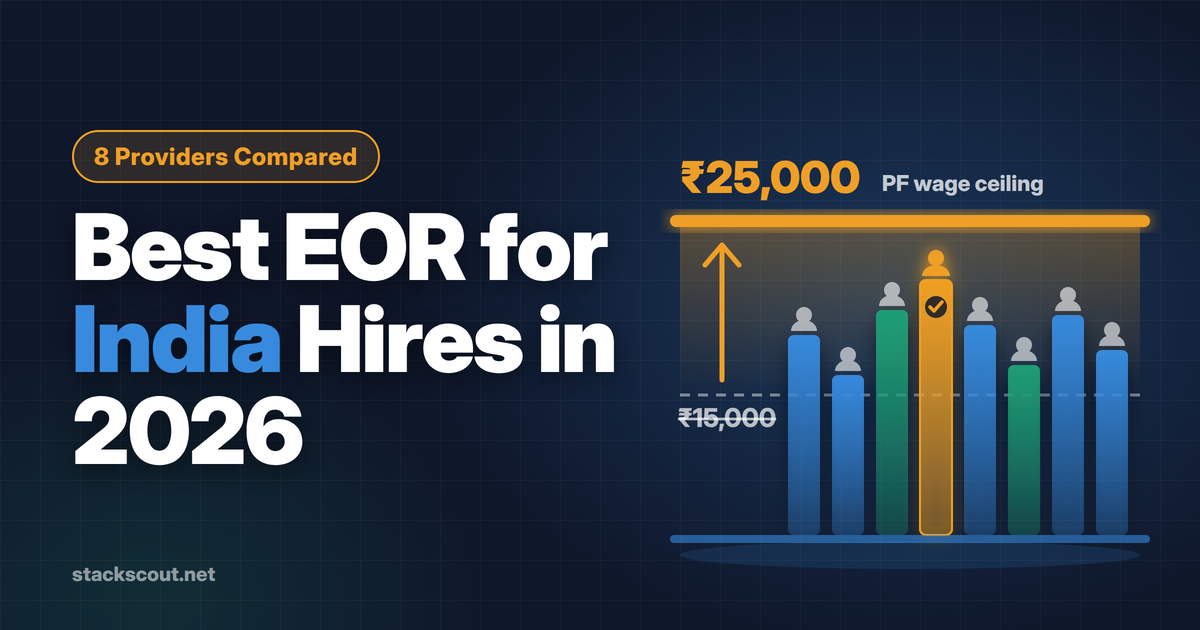
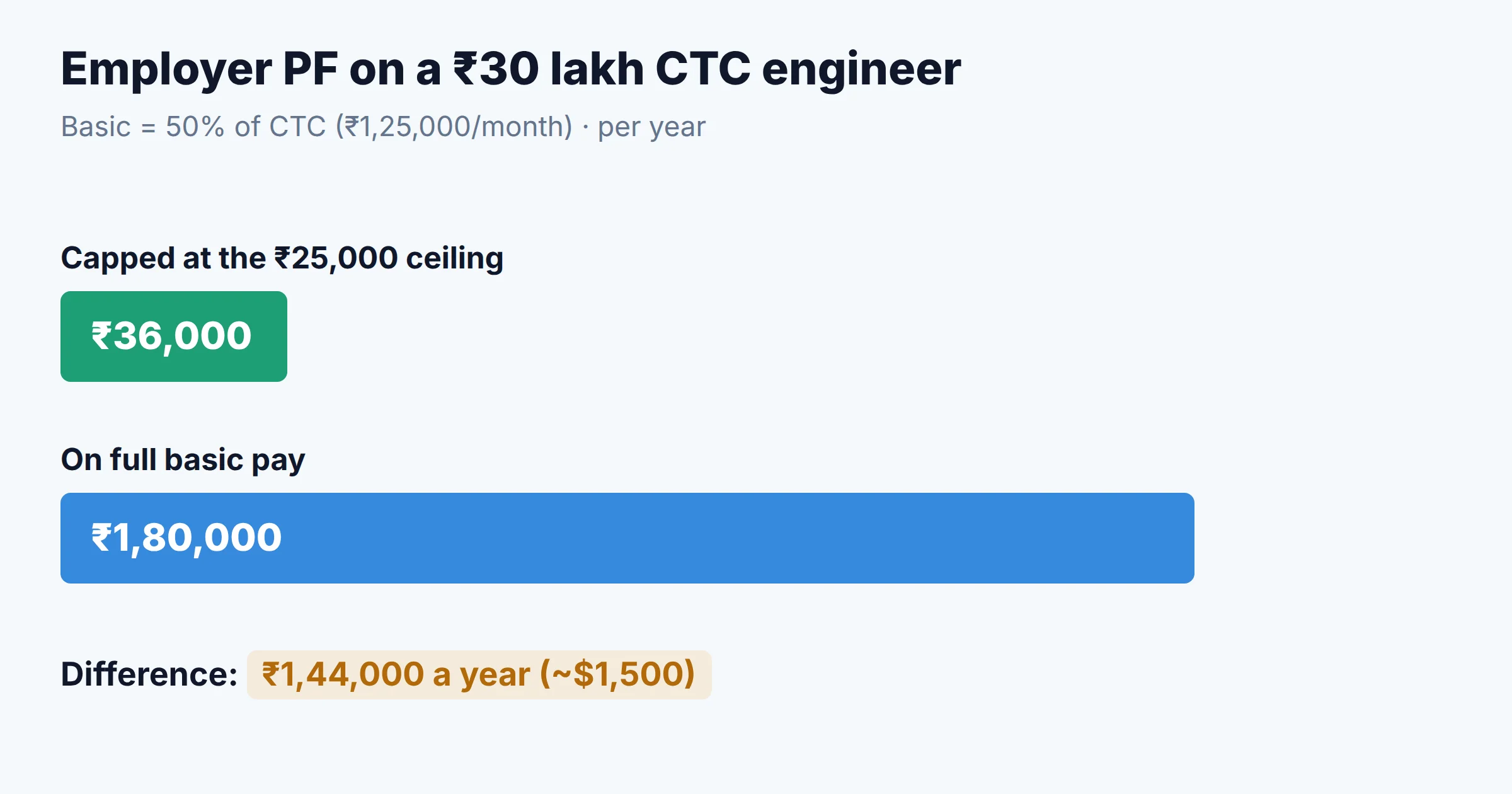
The bigger 2026 story is not the platform fee. India's EPF wage ceiling rose from ₹15,000 to ₹25,000 per month on September 17, 2026, and providers do not all calculate employer PF the same way. On a ₹30 lakh engineer, the gap between "PF capped at the ceiling" and "PF on full basic" is about ₹1.44 lakh a year (~$1,500), which can be larger than the price difference between two EORs. Ask every provider which method its quote uses.
01Quick answer: our top 3 picks
$699/mo, no deposit in normal cases, clear published India guide. Good default for a first India hire.
$599/mo, owned Bengaluru entity, contractors at $49. Best when your India team mixes employees and contractors.
$459/mo billed annually ($499 monthly). The lowest-priced global platform with India as a core market.
This guide is for CTOs, VPs of Engineering, and HR leads at companies with no Indian entity who want to employ (not contract) people in India. If you are still deciding between an EOR and incorporating a private limited company, read our break-even analysis of EOR vs. setting up a foreign entity first. If you have not yet picked a short list of providers for any country, our 7-question framework for choosing an EOR provider is the general version of this page.
Most of the pages ranking for "best EOR in India" are written by EOR vendors or by firms that sell EOR shortlisting. That does not make them wrong, but each one tends to rank its own service first. We have no affiliate relationship with any provider on this page, and every price below comes from the provider's own pricing or India page, checked between September 29 and October 1, 2026.
02Comparison table: 8 India EOR providers
Prices are the provider's published starting EOR fee per employee per month in US dollars, as of October 1, 2026. "India entity" reflects what the provider itself states. Statutory costs (PF, gratuity, insurance) are billed on top by every provider.
| Provider | Published EOR fee | India entity | Deposit (published policy) | Best for |
|---|---|---|---|---|
| Remote | $699 | Own entity model | Reserve only in "rare, high risk circumstances" | First India hire, low-friction default |
| Deel | $599 | Own entity, registered in Bengaluru | Deposit typical; refunded after termination is complete | Teams mixing employees and contractors |
| Multiplier | $459 annual / $499 monthly | Own entity (per Multiplier) | Not published on pricing page | Price-sensitive multi-country APAC teams |
| Skuad | From $199 | Skuad-owned India entity | Not published | Budget teams wanting a platform |
| Wisemonk | $99–$399 | Fully owned Indian entity | Not published | India-only teams that also need recruiting |
| RemoFirst | From $199 ("may vary") | Not stated for India | Not published; no setup/termination fees | Lowest commitment, no annual contract |
| Oyster | $699 | Not stated on India page | Refundable deposit required | Startups using Oyster's discount |
| Atlas HXM | $599 + local rate | Owned entities in 160+ countries | Not published | Enterprises wanting owned-entity coverage |
Also considered: G-P (from USD 599), Rippling (no public EOR price), and Papaya Global (quote-only). See How we chose.
03Six India checks to run before you compare prices
India is one of the most-requested EOR countries, and every provider on this list supports it. Coverage does not separate them. How each one handles the six points below does. Most of them changed between November 2025 and September 2026.
1. The EPF ceiling is now ₹25,000, and "PF on what?" is the most important pricing question
India's Employees' Provident Fund takes 12% from the employee and 12% from the employer. On September 16, 2026, the Ministry of Labour & Employment announced that the wage ceiling for mandatory EPF coverage would rise from ₹15,000 to ₹25,000 per month with effect from September 17, 2026. It was the first change since September 2014. The ministry's announcement says the change brings employees earning between ₹15,000 and ₹25,000 into mandatory EPF, pension (EPS), and insurance (EDLI) coverage.
For an engineer earning well above the ceiling, the change matters in a different way. Indian employers have long been able to choose one of two methods:
- Capped: employer PF is 12% of the ceiling wage. Before September 17 that meant ₹1,800 a month. It is now ₹3,000 a month.
- Uncapped: employer PF is 12% of the employee's full PF wage (basic pay plus dearness allowance). For senior engineers this is several times larger.
Some provider India guides published before September still quote "12% of basic or a fixed ₹1,800." Deel's India EOR guide, for example, still listed that figure in our check. Multiplier's India page had already been updated to the ₹25,000 ceiling. Ask every provider three things in writing: which method its quote uses, whether it has repriced existing employees for the new ceiling, and whether the employee can choose.
2. Under the new Labour Codes, "wages" must be at least 50% of pay
India's four Labour Codes took effect on November 21, 2025, combining 29 central labour laws into the Code on Wages, the Industrial Relations Code, the Code on Social Security, and the OSH Code. The change that affects EOR quotes most is the new definition of "wages." If allowances exceed half of total pay, the excess is added back for PF, gratuity, and bonus calculations. In practice, basic pay plus DA now needs to be at least 50% of pay.
Older Indian salary structures often kept basic pay at 30–40% to hold down PF and gratuity. If a provider's sample payslip still does that, its cost estimate is probably too low.
3. Gratuity is a real liability, and fixed-term staff now qualify after one year
Gratuity is a lump sum paid at exit. The formula is (last basic + DA) × 15 × completed years ÷ 26, capped at ₹20 lakh. For permanent employees it becomes payable after five years. Under the Code on Social Security, fixed-term employees qualify after one year. That matters if you planned to use one-year contracts to "test" a hire. Ask whether your provider accrues gratuity monthly (about 4.81% of basic is the common accrual) and bills it to you, or bills it only at exit. The first method smooths your costs. The second can produce a large invoice at termination.
4. ESI and statutory bonus usually don't apply to engineers, but check
Employees' State Insurance applies when gross wages are ₹21,000 a month or less. The employer pays 3.25% and the employee pays 0.75%. That ceiling has not changed since 2017. Most software hires are far above it, so ESI won't apply. Support, operations, or junior roles may still fall under ESI and statutory bonus rules, so do not copy one engineering cost model across your whole India plan.
5. GST on the EOR's invoice changed on March 30, 2026
Indian EORs bill foreign clients for the service, and the GST on that invoice has long been disputed. Section 13(8)(b) of the IGST Act made the place of supply for "intermediary" services the supplier's location (India), so many of these invoices carried 18% GST. The Finance Act 2026 removed that clause with effect from March 30, 2026. Many cross-border service invoices can now qualify as zero-rated exports. Ask whether your quote includes GST, and whether the provider bills from India or from an offshore entity. Treat this as a question for the provider's tax team rather than a rule you can assume. The outcome still depends on how the contract is structured.
6. You probably can't grant ordinary stock options to a pure EOR employee
This one surprises US startups. Under India's Overseas Investment rules (August 2022), a resident can receive shares from a foreign company's ESOP plan as an employee or director of that company's Indian office, branch, or subsidiary, or of an Indian entity in which the foreign company holds direct or indirect equity. An EOR employee is employed by the EOR's entity, which your company does not own. Indian law firms describe this as a gray zone. The usual workarounds are phantom equity, stock appreciation rights, or cash bonuses tied to a liquidity event, followed by a proper grant once you set up an Indian subsidiary. If equity is part of your offer, get India-specific advice before you send the offer letter. Our guide to the best EOR for startups covers how equity works with EOR employees in general.
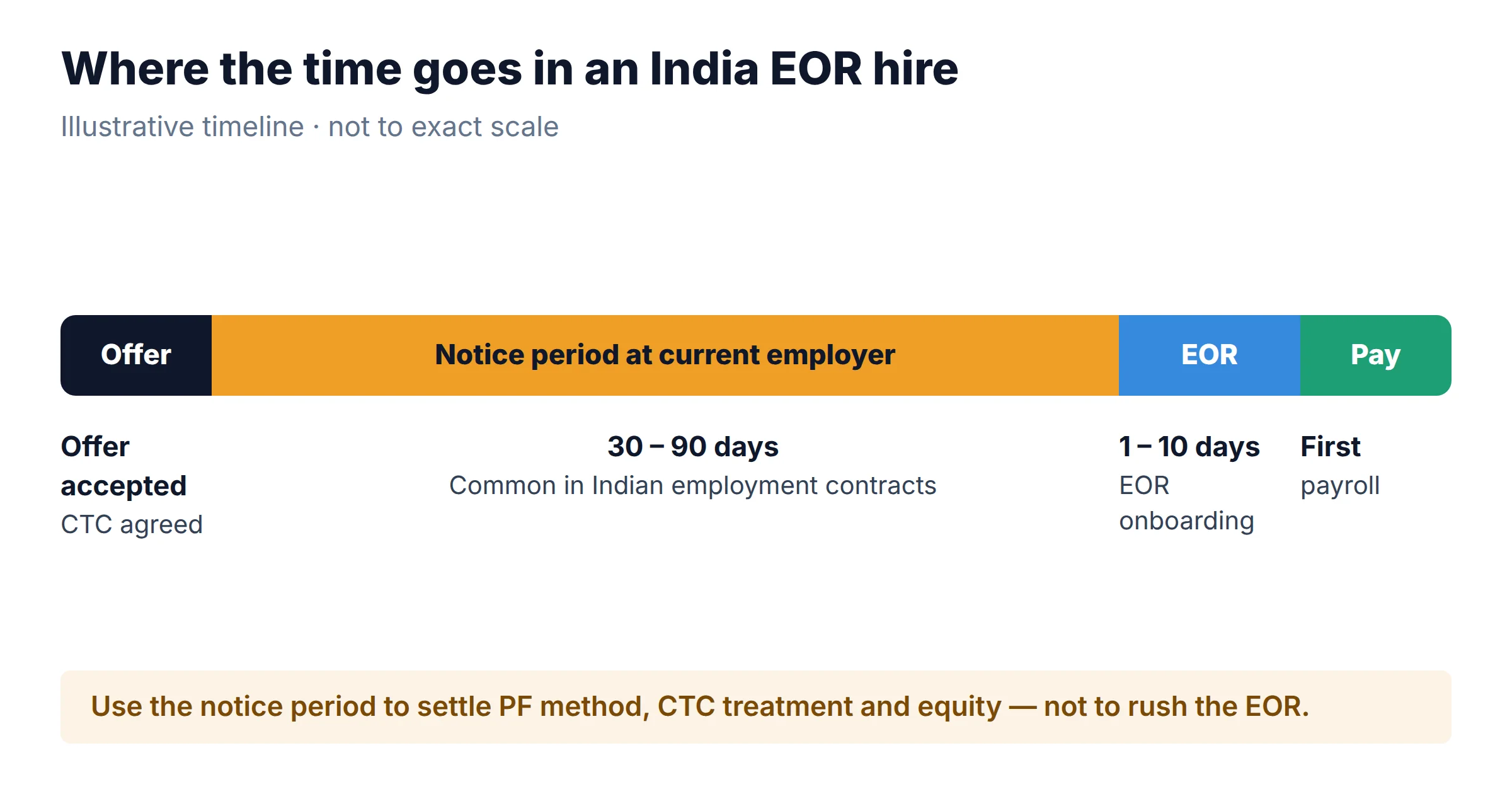
Providers advertise onboarding in "24 hours" or "2–3 business days." In India, the slow part is usually the candidate's current employer. Employment contracts commonly set notice periods of 30 to 90 days, and established tech employers often use the longer end. Remote's India guide notes that notice periods vary by sector and state; in Delhi, for example, 30 days is required for an employee who has worked at least 3 months. Plan your start date around the notice period, not the EOR's onboarding speed.
Two more rules belong in your offer template. Post-employment non-compete clauses are generally unenforceable under Section 27 of the Indian Contract Act. In addition, professional tax is set by each state and capped at ₹2,500 a year under the Constitution, so the deduction depends on where the employee lives. Your EOR should handle both, but don't paste in your US template unchanged.
04The 8 providers, reviewed
1. Remote Best overall
- $699 / employee / month
- 90+ countries
- Contractors from $29
Remote's pricing page now shows a single EOR price of $699 per employee per month. The $599 annual rate that comparison sites still quote is no longer displayed. What you get for that premium is a cleaner commercial model. Remote says it collects reserve payments only "in rare, high risk circumstances." It also says it does not charge extra deposits for PTO above the legal minimum, removed probation periods, incentive plans, or monthly severance accruals, which other EORs sometimes require.
Remote's India country guide is one of the more detailed ones, covering notice-period variations by state and Shops and Establishments Acts. Its India page also describes a group personal accident cover with a ₹5,000,000 sum insured per employee. Remote is a good fit when you want one predictable invoice and you have no reason to pay contractors through the same tool.
Pros
- No deposit in standard cases
- No extra charges for above-minimum benefits
- Detailed, current India compliance guide
Cons
- Highest published fee on this list
- The annual discount is no longer published
- Fewer countries (90+) than Deel or Multiplier if you expand
2. Deel Best for mixed teams
- $599 / employee / month
- Contractors $49
- Own entity in Bengaluru
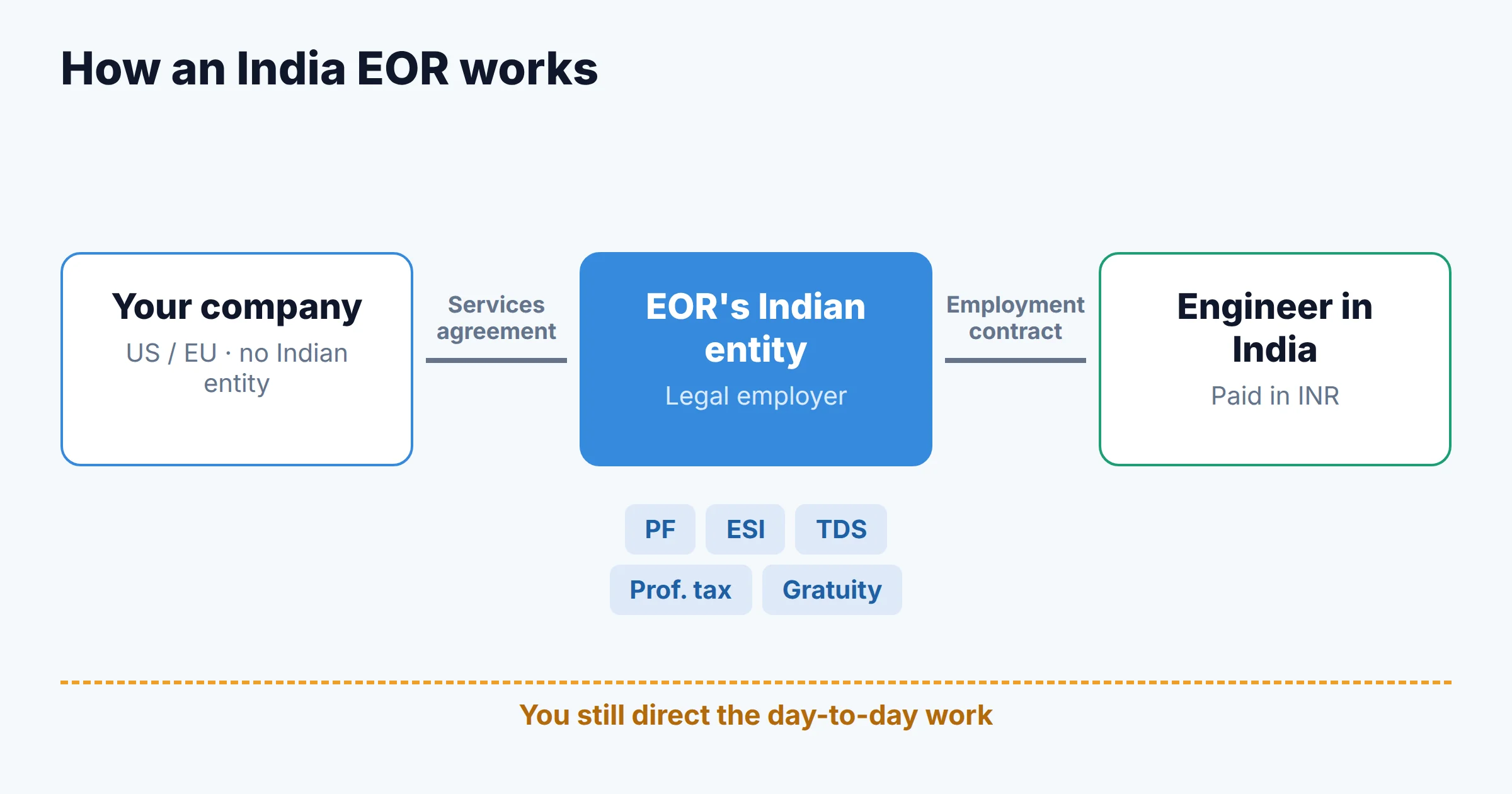
Deel lists EOR at $599 per employee per month, contractors at $49, and contractor of record at $325. Deel's India guide says its EOR "operates its own legal entity registered in Bengaluru." It also claims compliant offer letters within 48 hours and onboarding "in as little as 24 hours." The reason to choose Deel for India is the mix. Many companies start with Indian contractors and convert the best ones to employees, and Deel runs both on one platform.
Two caveats. First, Deel generally collects a security deposit. Its help center says the deposit is refunded within 60 days after termination is complete and invoices are paid. Second, at least one third-party comparison says Deel's real India price is higher than the list rate. We could not verify that from Deel's own pages, so get an all-in India quote in writing. As noted above, Deel's India guide still quoted the old ₹1,800 PF figure when we checked, so confirm which PF method your quote uses. For a broader look at Deel's competitors, see our Deel alternatives comparison.
Pros
- Owned Indian entity
- Contractors and employees on one platform
- Fast offer-letter turnaround
Cons
- Deposit usually required
- India guide lagged the September 2026 PF change
- All-in India price needs a written quote
3. Multiplier Best value (global platform)
- Core $459 annual / $499 monthly
- Growth $519 / $559
- 150+ countries
Multiplier's Core plan is $459 per person per month billed annually, or $499 month-to-month. Its Growth plan is $519 or $559. Many comparison articles still say "$400." That figure is out of date, and we have stopped using it in our own older country guides. Multiplier has a strong presence in Asia-Pacific. Its India page had already been updated for the ₹25,000 EPF ceiling when we checked, and it states the gratuity formula and ₹20 lakh cap clearly.
Multiplier is the right call if India is one of several APAC hires (Singapore, the Philippines, Australia) and you want a global platform without paying $599–$699 per head. If you are also hiring in Australia, compare our Australia EOR rankings, where Multiplier placed in the top three.
Pros
- Lowest published price among the big global platforms
- India page current with the 2026 ceiling
- Payroll from $20 if you later open your own entity
Cons
- The lowest rate requires annual billing
- Deposit policy not published
- Pricing page blocks some automated tools, so screenshot your quote
4. Skuad Budget platform
- From $199 / employee / month
- 160+ countries
- Contractors (AOR) from $99
Skuad's pricing page lists EOR from $199 per employee per month, with volume discounts. Skuad's India page says it has a Skuad-owned India entity and quotes 5 to 10 working days for onboarding. That is slower than the big platforms claim, but it rarely matters given Indian notice periods. Its India guide is current on the Labour Codes, including gratuity for fixed-term staff after one year and nationwide ESIC coverage.
Skuad suits a team that wants a real platform (dashboard, integrations, payroll in 70+ currencies) at roughly a third of Deel's list price. "From $199" is a starting price, so get the India number in writing.
Pros
- Owned India entity at a low published price
- Volume discounts
- Up to date on the Labour Codes
Cons
- "From" pricing; India rate needs a quote
- Slower stated onboarding (5–10 working days)
- Smaller brand if your investors expect a known vendor
5. Wisemonk India specialist
- $99–$399 / employee / month
- India only
- Recruiting at 10% of annual salary
Wisemonk only does India. Its India EOR page lists $99 to $399 per employee per month, while its pricing page shows only "from $99," so expect your rate to depend on the role. Wisemonk says it has a fully owned Indian legal entity and that most first employees are fully onboarded within two to three business days. Each client gets an assigned HR business partner. It also sells contractor of record at 6% per payment and a recruiting service at 10% of annual salary with a 90-day placement guarantee.
That makes Wisemonk a strong option for companies whose whole international team will be in India and who need help hiring as well as employing. The trade-off is that you will need a second vendor for any other country. Wisemonk also publishes many of the "best EOR" lists you will find in search, so read those as vendor content.
Pros
- Lowest published starting price
- Dedicated HR business partner
- Recruiting and EOR from one vendor
Cons
- India only
- What each price level includes is not published
- Its own blog dominates comparison results
6. RemoFirst Lowest commitment
- From $199 / employee / month
- 185+ countries
- Contractor payments $25
RemoFirst's EOR fee starts at $199 per employee per month and "may vary based on local country requirements." It says there are no setup, onboarding, or termination fees, no annual contracts, and no minimums. It also says it will try to match a lower quote. It covers 185+ countries and offers visas and work permits in 110+.
RemoFirst does not publish its India entity model or a deposit policy on the pages we checked. Ask about both. It is a good fit for a company that wants to try one or two Indian hires without an annual commitment.
Pros
- No annual contract or minimums
- No termination fee
- Will try to match a lower quote
Cons
- India price "may vary" from $199
- Entity model for India not stated
- Deposit policy not published
7. Oyster Startup discount
- USD 699 / employee / month
- 120+ countries
- Startups save up to $1,200
Oyster lists EOR at USD 699 per employee per month and says setup, onboarding, HR expert access, and terminations are included. Its startup program saves up to $1,200 per team member on EOR fees. Oyster's pricing page also says it "requires a refundable deposit for EOR Team Members."
Its India hiring page gives far less detail than Remote's, Skuad's, or Multiplier's, and it does not say whether Oyster uses its own Indian entity. Ask before you sign. Oyster makes sense if you qualify for the startup discount and value its HR-expert support.
Pros
- Startup discount of up to $1,200
- Terminations and HR advice included
- Misclassification tools in its contractor product
Cons
- Refundable deposit required
- Thin India-specific information
- India entity model not stated
8. Atlas HXM Owned-entity enterprise
- Platform fee from $599
- + country Local Employer Services rate
- 160+ countries, owned entities
Atlas HXM charges a platform fee from $599 per employee per month plus a Local Employer Services (LES) rate that depends on the country. That makes its true India cost harder to compare until you have a quote. Its main selling point is that it says it operates owned entities in 160+ countries, which matters to enterprise legal and procurement teams that will not accept partner networks.
Choose Atlas if you are a larger company where owned entities are a procurement requirement, and use its India quote to check that the LES rate covers PF on your preferred method.
Pros
- Owned entities across 160+ countries
- Volume pricing for multi-country teams
- Contractor classification protection up to $100,000
Cons
- Two-part pricing hides the India total
- Not built for one-person pilots
- No published India-specific rate
05What an Indian engineer really costs through an EOR
Indian candidates negotiate in CTC (cost to company), not base salary. A CTC figure usually already includes the employer's PF contribution and often the gratuity accrual. US hiring managers tend to treat the number as salary and then add employer costs on top. That creates two different problems. You may overestimate your cost, or the candidate may end up with a lower take-home pay than they expected. Agree with your EOR, in writing, whether the offer is CTC-inclusive.
Below is an illustration for a senior software engineer at ₹30 lakh (₹3,000,000) CTC, about $31,250 at roughly ₹96 per US dollar (October 1, 2026). It assumes basic pay is 50% of CTC to meet the Labour Code wage rule. This is a worked example, not a quote.
12% × ₹25,000 × 12 months. Before September 17, 2026 this was ₹21,600 (₹1,800 a month).
12% × ₹1,25,000 monthly basic × 12. That is ₹1.44 lakh (~$1,500) more per year than the capped method.
| Line item (₹30 lakh CTC example) | Annual amount | Notes |
|---|---|---|
| Basic pay (50%) | ₹15,00,000 | Minimum under the Labour Code wage definition |
| Employer PF | ₹36,000 – ₹1,80,000 | Capped vs. full-basic method; usually inside CTC |
| Gratuity accrual (~4.81% of basic) | ≈ ₹72,150 | Payable after 5 years (1 year for fixed-term) |
| ESI / statutory bonus | ₹0 | Wages above the ₹21,000 ESI ceiling |
| Group health insurance | Varies | Not statutory at this wage, but expected by tech candidates |
| EOR fee ($99–$699/month) | $1,188 – $8,388 | ≈ ₹1.1 lakh – ₹8.1 lakh at ₹96/$ |
Two takeaways. First, on a ₹30 lakh hire the EOR fee alone can range from about 4% to 27% of CTC, which is a much bigger share than on a European or US salary. That is why India-specialist pricing exists. Second, the PF method alone moves cost by about $1,500 a year, which is close to the gap between Deel and Remote ($1,200 a year). Compare quotes using the same PF method and the same CTC treatment, or the cheapest-looking quote may not be the cheapest. Our explainer on flat-fee vs. percentage-of-payroll EOR pricing explains why flat fees hit lower-salary countries hardest.
06Who should choose which
- Your first one to three engineers in India, US or EU company, no other EOR yet → Remote. You pay more, but you avoid deposits and extra charges, and you get a well-documented India setup.
- You already pay Indian contractors and want to convert some to employees → Deel. Keeping both on one platform is worth more than the list-price difference. Get an all-in India quote.
- India is one of several APAC countries, and price matters → Multiplier. Commit annually to get $459.
- India is your only international market and you also need recruiting → Wisemonk. Ask for the India rate by role and get its PF method in writing.
- Small budget, but you still want a platform → Skuad or RemoFirst. RemoFirst if you want no annual contract; Skuad if you want its owned Indian entity.
- Enterprise procurement requires owned entities → Atlas HXM, after you have the LES rate in hand.
- You expect 10+ people in India within two years → treat the EOR as a bridge. Run the numbers in our entity break-even guide, and ask each provider how it handles moving employees to your own Indian subsidiary. If you later change EOR providers, it is new employment rather than a transfer. Our PEO-to-EOR migration guide covers how to sequence payroll so nobody misses a pay date.
- Is employer PF calculated on the ₹25,000 ceiling or on full basic? Can the employee choose?
- Have you updated payroll for the September 17, 2026 ceiling change? From which pay cycle?
- Is gratuity accrued monthly and billed, or billed at exit?
- Does your sample payslip keep basic + DA at 50% or more of pay?
- Does your invoice to us include GST, and which entity bills us?
- Do you employ through your own Indian entity or a partner? What deposit do you require for India?
One more risk to manage: if your Indian employee negotiates and signs contracts for your company, Indian tax authorities may argue that you have a permanent establishment in India regardless of the EOR. Our guide to EOR mistakes that trigger permanent establishment risk covers how to scope sales and leadership roles. If you are planning APAC hires beyond India, we have also compared providers for Australia, and a guide to the best EOR for hiring in Singapore is in progress.
07FAQ
Which EOR services are available in India?
Does Deel work in India?
What is the cheapest EOR for India?
Can I give stock options to an employee hired through an EOR in India?
How long does it take to hire through an EOR in India?
08How we chose
We started from the providers that appear most often in the current top search results for "best EOR in India," then removed those without a published EOR price unless they are widely used by enterprises (we mention G-P, Rippling, and Papaya Global without ranking them). For each provider we checked the official pricing page and India page between September 29 and October 1, 2026, and recorded the published fee, deposit policy, India entity claim, and how current the India compliance content was. We weighted the PF and gratuity handling most heavily, because those statutory costs move the real cost of an Indian hire more than the platform fee does. We checked statutory figures against Ministry of Labour & Employment releases and multiple Indian payroll and legal sources. We did not test the platforms with live employees, and no provider paid for placement. Prices and policies change, so treat every figure here as a starting point for a written quote.
09Sources
- Ministry of Labour & Employment / PIB, "Cabinet Approves Higher EPFO Wage Ceiling of Rs. 25,000" (Sept 16, 2026): labour.gov.in
- Bird & Bird, "India's New Labour Codes: Wages, Workers, and Welfare Rights": twobirds.com
- Fisher Phillips, "India's New Labor Codes Expand Gratuity Payment Rules": fisherphillips.com
- Taxguru, "End of Intermediary Conundrum: Omission of Section 13(8)(b) of IGST Act": taxguru.in
- Treelife, "Foreign Parent Company ESOP for Indian Employees: FEMA, Reporting": treelife.in
- IndianHRM, "ESI Wage Ceiling Holds at Rs 21,000: FY 2026-27": indianhrm.com
- Remote pricing and India country guide: remote.com/pricing, remote.com/country-explorer/india
- Deel pricing and India EOR guide: deel.com/pricing, deel.com/blog/employer-of-record-india
- Multiplier pricing and India EOR page: usemultiplier.com/pricing, usemultiplier.com/india/employer-of-record
- Skuad pricing and India EOR page: skuad.io/pricing, skuad.io/employer-of-record/india
- Wisemonk pricing and India EOR page: wisemonk.io/pricing, wisemonk.io/employer-of-record-india
- RemoFirst, Oyster, and Atlas HXM pricing: remofirst.com, oysterhr.com, atlashxm.com

Technology consultant with 10+ years in the Japanese tech industry. Specializing in SaaS evaluation, workflow automation, and B2B tool integration.