EOR Pricing Models Explained: Flat-Fee vs. Percentage-of-Payroll Costs Across 8 Countries (2026)
Quick answer
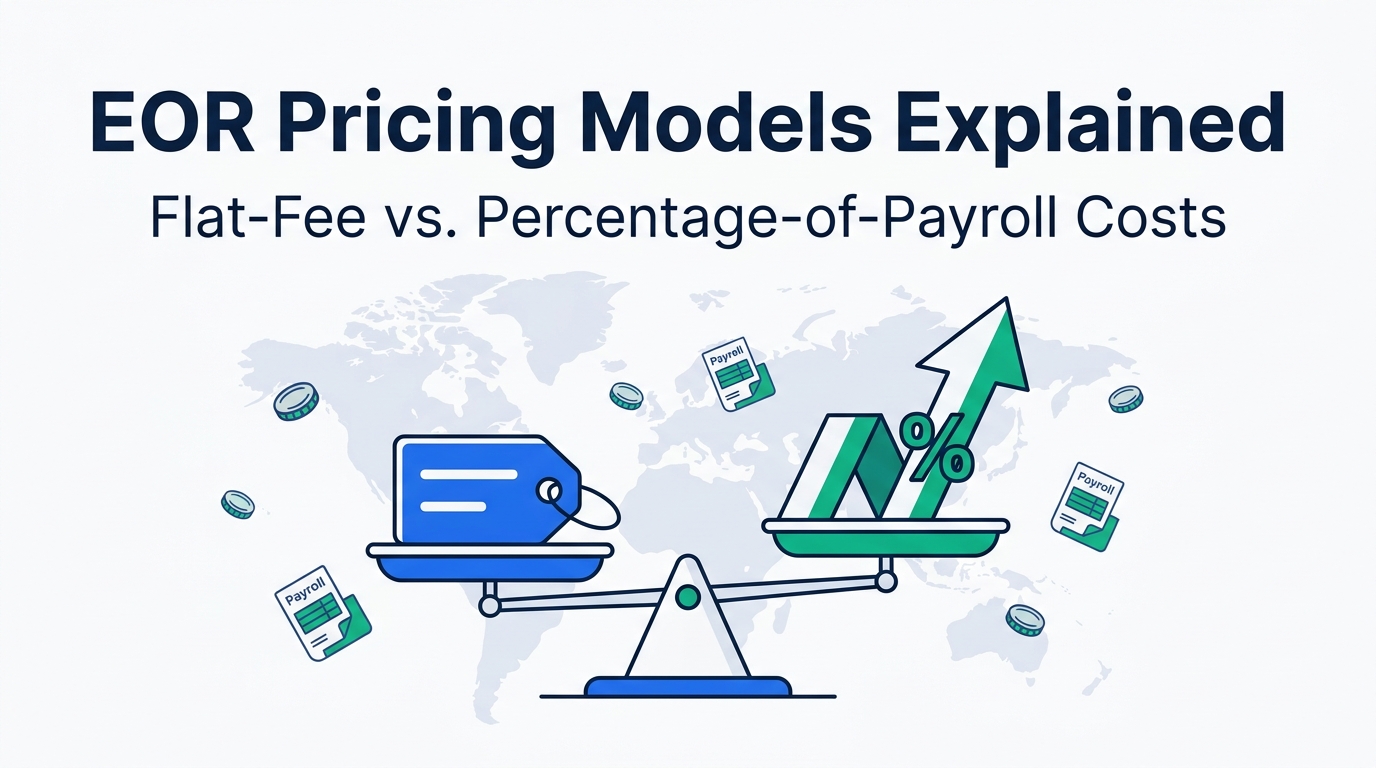
Flat-fee pricing wins for most EOR hires — but not all of them. Across the eight countries in this guide, the breakeven point where a flat monthly fee starts beating a percentage-of-payroll fee typically lands between $30,000 and $72,000 in annual salary, depending on the country's typical flat fee and percentage rate. Below that line, a percentage model can genuinely cost less; above it, percentage pricing gets more expensive with every raise you give.
In practice: flat-fee pricing is the better default for mid-to-senior hires anywhere, and for nearly all hires in the US, UK, Germany, Poland, Vietnam, and Brazil. Percentage pricing only tends to win for junior or support-level hires in India and the Philippines, where flat fees from country specialists start low enough to make the math close.
The Quick Comparison: 8 Countries, Both Pricing Models
The table below uses representative figures pulled from published 2026 pricing pages and industry cost guides for each country — not a single provider's live quote. Treat the flat-fee and percentage columns as the middle of the range you'll actually see when you request quotes, and use the breakeven column as your starting filter for which model to ask about first.
| Country | Typical flat fee /mo | Typical % of gross salary | Breakeven annual salary | Statutory employer cost (separate, on top of salary) |
|---|---|---|---|---|
| United States | ~$499 | ~12% | ~$50,000 | 7.65% (FICA) + state unemployment |
| United Kingdom | ~$500 | ~10% | ~$60,000 | 15% employer National Insurance (2026/27) |
| Germany | ~$900 | ~15% | ~$72,000 | ~21% employer social insurance |
| Poland | ~$425 | ~10% | ~$51,000 | ~19.2–22.4% employer ZUS |
| India | ~$199 | ~8% | ~$29,900 | 12% PF + 3.25% ESI (both wage-capped) |
| Philippines | ~$250 | ~9% | ~$33,300 | ~14.5% combined SSS/PhilHealth/Pag-IBIG (capped) |
| Vietnam | ~$425 | ~10% | ~$51,000 | 21.5% employer social/health/unemployment insurance |
| Brazil | ~$550 | ~15% | ~$44,000 | ~29–31% INSS + FGTS + RAT, plus 13th salary |
Two things jump out. First, the breakeven salary isn't the same everywhere — it moves with both the local flat fee and the local percentage rate, so "just use flat fee" isn't universally correct advice. Second, the statutory employer cost column is a separate line item from the EOR's own fee in every country here; it's the government's cut, not the provider's, and it applies regardless of which pricing model you pick.
How the Two Pricing Models Actually Work
Every EOR pricing page eventually reduces to one of two mechanics, sometimes blended into a third.
Flat fee per employee per month
You pay a fixed amount regardless of what the employee earns. Global platforms tend to charge one flat rate worldwide — Deel and Remote both list $599 per employee per month for EOR as of September 2026 (Remote drops to $599 on annual billing, versus $699 billed monthly), Multiplier starts at $400, and Papaya Global runs $650–$770. Safeguard Global advertises a $499 starting rate but prices custom by country on request. That's why the flat-fee column in the table above varies by country even though the pricing model is the same: country specialists and hybrid platforms (the kind quoted for India, the Philippines, Poland, and Vietnam above) price to local cost-of-service, while global platforms often charge one number everywhere and rely on volume and higher-margin markets to subsidize cheaper ones.
Percentage of gross payroll
The provider takes a cut of the employee's gross salary, commonly 5–20%, with 8–15% the most frequently published range. The fee scales automatically with every raise, bonus, or promotion — which is the entire appeal for a $2,000/month hire and the entire problem for a $12,000/month one. It also creates a structural incentive misalignment: the provider earns more the more your employee earns, which is the opposite of what a buyer usually wants from a vendor relationship.
Hybrid and tiered pricing
A smaller group of providers blend the two — a lower base monthly fee plus a smaller percentage, or tiered flat fees that step up at defined salary bands. This shows up most often at volume (10+ employees on one provider), where published guidance suggests a 15–25% effective cost reduction versus list-price flat fees. It's worth asking about explicitly; almost no provider surfaces hybrid pricing on its public pricing page.

The Breakeven Formula (Run It Yourself)
You don't need the table above to make this decision for your actual hire — you need your two real quotes. The formula is the same in every country:
Below that salary, the percentage quote costs less. Above it, the flat fee costs less — and the gap widens every time the employee gets a raise.
Worked example (US): a $499/month flat fee against a 12% percentage quote breaks even at $499 ÷ 0.12 = $4,158/month, or roughly $49,900/year. A support hire at $42,000/year would cost less under the percentage model ($420/month); a senior engineer at $130,000/year would cost dramatically more under it ($1,300/month, more than double the flat fee) — and that gap only grows at the next performance review.
Monthly EOR fee at a 12% percentage rate vs. a $499 flat fee, US example
Country-by-Country: Where Each Model Actually Wins

United States
Flat fee wins for most hiresUS flat fees run roughly $199–$1,200/month with a $400–$700 median; percentage quotes run 10–20% of gross. The statutory employer add-on is comparatively light — 7.65% FICA plus state unemployment insurance, which varies by state. Given the US median tech and knowledge-worker salary sits well above the ~$50,000 breakeven, flat fee is the better default for nearly every US hire outside entry-level support roles.
United Kingdom
Flat fee wins for most hiresUK flat fees cluster around $300–$700/month; percentage quotes run 8–15%. The statutory add-on jumped for the 2026/27 tax year — employer National Insurance sits at 15% above the £5,000 secondary threshold — which makes the total cost of a UK hire noticeably front-loaded regardless of which EOR pricing model you choose. For a deeper comparison of UK-specific providers, IR35 handling, and visa sponsorship support, see our full UK EOR provider comparison.
Germany
Flat fee wins almost alwaysGermany is the most expensive country in this comparison on every axis: flat fees run $600–$1,200/month, percentage quotes skew toward 15–20% given the compliance complexity, and the statutory employer burden is roughly 21% of gross salary on top of both. With a ~$72,000 breakeven, only genuinely junior hires make percentage pricing worth considering here — and even then, the gap narrows fast at German salary levels.
Poland
Flat fee wins for most hiresPoland's EU membership and comparatively lower labor costs versus Western Europe keep flat fees in the $300–$500/month band, with percentage quotes around 8–12%. The employer-side ZUS contribution runs roughly 19.2–22.4% of gross salary, one of the wider statutory ranges in this list because it includes a variable accident-insurance component tied to sector risk classification.
India
Percentage can win for junior/support hiresIndia shows the widest flat-fee spread in this guide: country specialists start around $99–$199/month, while global platforms charge their standard worldwide rate, sometimes $599–$699. Percentage quotes run 5–15%, commonly 8%. Because Provident Fund (12%) and ESI (3.25% employer share) are both wage-capped — ₹15,000 and ₹21,000 monthly respectively — the effective statutory burden shrinks proportionally for higher earners, which is a nuance the headline percentages don't show. At specialist-tier flat fees, the breakeven drops to roughly $30,000/year, meaning percentage pricing is genuinely competitive for support and junior technical roles, but loses quickly once you're hiring mid-level engineers.
Philippines
Percentage can win for junior/support hiresLocal Philippines specialists price flat fees around $190–$300/month; global platforms run $500–$800. Percentage quotes cluster at 8–10%. Combined employer statutory contributions — SSS (10%), PhilHealth (2.5%), and Pag-IBIG (2%) — land around 14.5%, though SSS and Pag-IBIG are both wage-capped, so the proportional burden falls for higher earners. With a ~$33,300 breakeven at specialist pricing, this is another market where percentage pricing is worth quoting for support-tier hires specifically.
Vietnam
Flat fee wins for most hiresVietnam flat fees run $350–$500/month against percentage quotes around 8–15%. Employer statutory contributions total 21.5% (17.5% social insurance, 3% health insurance, 1% unemployment insurance), capped at 20 times the regional minimum wage. The breakeven lands around $51,000/year — high enough that flat fee is the better default outside genuinely entry-level roles.
Brazil
Flat fee usually winsBrazil's labor-law complexity pushes both pricing models higher: flat fees run $400–$700/month and percentage quotes often skew to 15–20% rather than the 10–15% seen elsewhere, reflecting the compliance overhead providers price in. Statutory employer costs are the highest in this guide — roughly 20% INSS plus 8% FGTS plus a variable 1–3% work-accident charge, before accounting for the mandatory 13th-month salary and vacation bonus that inflate total annual compensation separately from the EOR fee itself. At a ~$44,000 breakeven, flat fee wins for most professional-level hires, though the margin is narrower than in Germany or the UK because Brazilian percentage quotes are already priced at a premium.
Pros and Cons of Each Model
- Fully predictable for budgeting and multi-country headcount planning
- Cost stays flat through raises, bonuses, and promotions
- No incentive misalignment between you and the provider
- Usually cheaper for mid-to-senior hires almost everywhere
- Can cost more than necessary for genuinely low-salary roles
- Global platforms often charge the same rate regardless of local cost-of-service
- Volume discounts usually require asking, not published upfront
- Can beat flat fee by a wide margin for junior/support hires in lower-salary markets
- Sometimes bundled with more hands-on local compliance support
- Scales down naturally if you're testing a market with entry-level hires first
- Cost is unpredictable — every raise, bonus, or promotion increases your fee
- Structurally expensive for mid-to-senior hires, often by hundreds of dollars a month
- Creates a quiet misalignment: the provider earns more as your employee earns more
Hidden Costs That Change the Math (Either Model)
The headline flat fee or percentage rate is rarely the full story. Published EOR cost guides consistently flag the same handful of add-ons that can inflate the effective monthly cost well beyond the sticker price:
FX markup on cross-border payments (often unstated until you ask); onboarding and offboarding fees charged per employee, separate from the monthly rate; benefits administration surcharges for health insurance or local perks; off-cycle payroll run fees if you need to pay someone outside the standard cycle; and minimum contract terms or early-termination fees that lock in cost even if the hire doesn't work out. One aggregator's 2026 analysis put the combined effect of these add-ons at 50–150% above a provider's published entry rate in some cases — enough to flip a flat-fee vs. percentage comparison that looked settled on the pricing page alone.
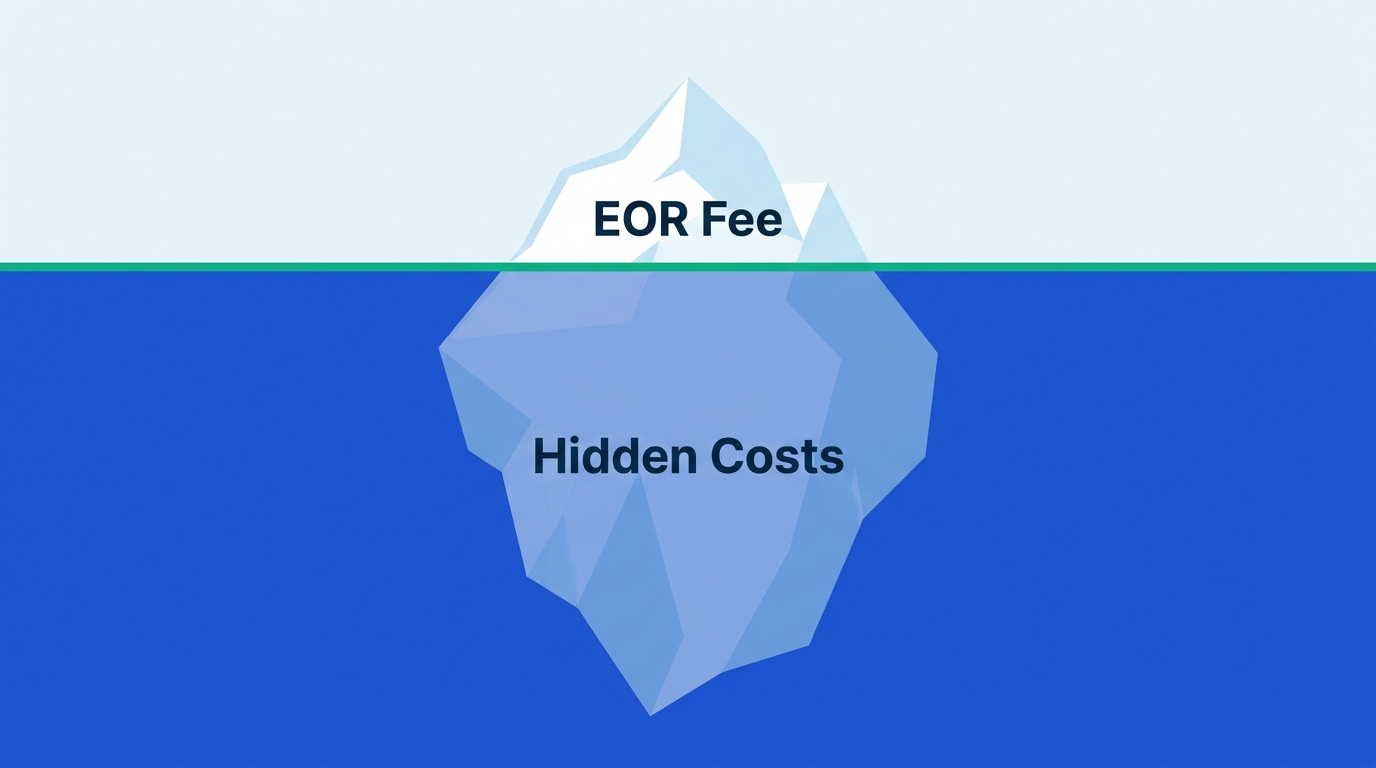
Total cost of employment, in every country in this guide, is really three stacked numbers: the employee's gross salary, the statutory employer burden that country requires regardless of provider, and the EOR's own fee (flat or percentage) plus whichever add-ons apply. Comparing two providers' headline rates without normalizing for all three is the single most common reason companies think they got a good deal and then find out otherwise at renewal. Compliance shortcuts carry their own cost too — cutting corners to save on fees is a different risk profile than the pricing question in this guide; see our breakdown of EOR compliance mistakes that trigger permanent establishment risk if that's the trade-off you're weighing.
How to Choose the Right Model for Your Hiring Profile
- Single senior or mid-level hire, any country: ask for flat-fee quotes first. It's the better default outside a narrow set of low-salary scenarios.
- Junior, support, or entry-level hire in India, the Philippines, or a similarly priced market: get both quotes and run the breakeven formula — percentage pricing is genuinely competitive here.
- Growing team of 10+ on one provider: ask specifically about hybrid or tiered pricing; it's rarely published but commonly available, and can beat straight flat-fee list price.
- Mixed roster across salary bands: don't standardize on one model company-wide — the breakeven math argues for matching the model to each hire's salary band, country by country.
- Comparing specific providers, not just models: our EOR provider decision framework covers the seven questions worth asking beyond price, and our Deel vs. Rippling comparison shows how flat-fee pricing plays out between two providers on the same model.
If you're deciding between an EOR at all versus setting up your own foreign entity, the cost logic changes again — entity setup trades a recurring EOR fee for fixed legal and accounting overhead, which only pays off past a certain headcount. That's a different comparison than the one in this guide; we're preparing a dedicated EOR vs. setting up a foreign entity cost comparison to cover it in depth. And if the underlying question is EOR vs. PEO rather than which EOR pricing model to pick, the fee structures aren't directly comparable — see our EOR vs. PEO breakdown for how PEO co-employment pricing differs from either model here. If your target country isn't one of the eight above, our EOR comparison for hiring in Canada applies the same breakeven logic to a market we didn't cover in this guide.
Frequently Asked Questions
Is flat-fee or percentage-of-payroll EOR pricing cheaper?
It depends on the employee's salary relative to the country's breakeven point (flat fee ÷ percentage rate). Across the eight countries in this guide, that breakeven lands between roughly $30,000 and $72,000 in annual salary. Below it, percentage pricing tends to cost less; above it, flat fee does — and the gap widens with every raise under a percentage model.
Why does the same EOR charge different flat fees in different countries?
Two different pricing approaches get mixed together in most public comparisons. Some global platforms (Deel, Remote, Papaya Global) charge one flat rate worldwide regardless of country. Country specialists and hybrid platforms price to local cost-of-service instead, which is why flat fees for India or the Philippines can run under $250/month while the same specialist's German or US rate runs several times higher.
Does the EOR fee include payroll taxes and social contributions?
No. The EOR's flat fee or percentage cut is the provider's own service charge. The statutory employer burden — Social Security and Medicare in the US, National Insurance in the UK, social insurance in Germany and Vietnam, INSS and FGTS in Brazil, and so on — is a separate cost the EOR remits on your behalf but does not absorb. Total cost of employment is salary plus statutory burden plus the EOR fee.
Can I negotiate EOR pricing, or are published rates fixed?
Published rates are usually a starting point, not a fixed price. Industry guidance consistently points to volume discounts kicking in around 5–10 employees with most providers, and hybrid or tiered pricing that blends a lower base fee with a smaller percentage — an option rarely listed on public pricing pages but commonly available if you ask directly, especially at 10+ headcount on one provider.
Should I use the same pricing model for every country I hire in?
Not necessarily. The breakeven point moves country by country, so a flat fee that's clearly the better deal for a US or German hire may not be the better deal for a junior hire in India or the Philippines. Running the breakeven formula per country, and sometimes per role, tends to produce lower total cost than standardizing on one model company-wide.
Methodology
Figures in this guide are drawn from EOR providers' own 2026 pricing pages, published cost-comparison guides, and country-specific statutory-contribution references current as of September 2026, cross-checked against at least two independent sources per data point where possible. Flat-fee and percentage figures in the comparison table are representative midpoints of published ranges, not a single provider's live quote — actual pricing varies by provider, contract volume, and negotiated terms, so treat the breakeven figures here as a starting filter and confirm against real quotes before deciding. Statutory employer contribution rates reflect standard-category, non-hazardous-industry rates and may not capture every wage cap, regional variation, or sector-specific surcharge.
References and sources
- Safeguard Global, EOR Pricing Models Explained for Mid-Market Companies — checked September 2026.
- Second Talent, EOR Pricing Models Explained: Flat Fee vs. Per Employee vs. Custom Packages — checked September 2026.
- CompareOR, EOR Pricing Models: Flat Fee vs. Percentage of Salary — checked September 2026.
- teamed., How Much Does an EOR Cost? 2026 Guide for Employers — checked September 2026.
- RemotePeople, EOR Cost 2026: 31-Provider Pricing Comparison & Hidden Fees — checked September 2026.
- Employers Calculator, Employer NI Rates 2026/27 — checked September 2026.
- NetViet, Vietnam Social Insurance Contribution Rates 2026 — checked September 2026.
- Mismo, Brazil Employer Payroll Taxes: 2026 Rates & Deadlines — checked September 2026.
- KAMI Workforce, SSS, PhilHealth and Pag-IBIG Contribution Tables 2026 — checked September 2026.
- getsix, ZUS Contributions in Poland in 2026 — checked September 2026.
- EZHRM, PF & ESI Calculator India 2026: New Wage Code Changes — checked September 2026.

Technology consultant with 10+ years in the Japanese tech industry. Specializing in SaaS evaluation, workflow automation, and B2B tool integration.