
For most agencies, Plutio is the best fit — it turns tracked time and retainer balances directly into invoices, starting at $19/month. If your agency is small enough that the owner or an ops lead handles billing between client calls, FreshBooks is the easier on-ramp at $23/month. If you need one system for both agency invoicing and real double-entry books (tax filing, payroll, a CPA who already knows the tool), QuickBooks Online is the safer long-term bet — though its Plus and Advanced tiers just got significantly more expensive. And if your agency is pre-revenue or under five clients, Zoho Invoice is free forever and genuinely usable.
- Best overall for agencies: Plutio — time-to-invoice + retainer tracking, from $19/mo
- Best for non-accountants: FreshBooks — simplest UI, client retainers on Plus tier, from $23/mo
- Best free option: Zoho Invoice — unlimited-feel invoicing, $0/mo up to 500 invoices/year
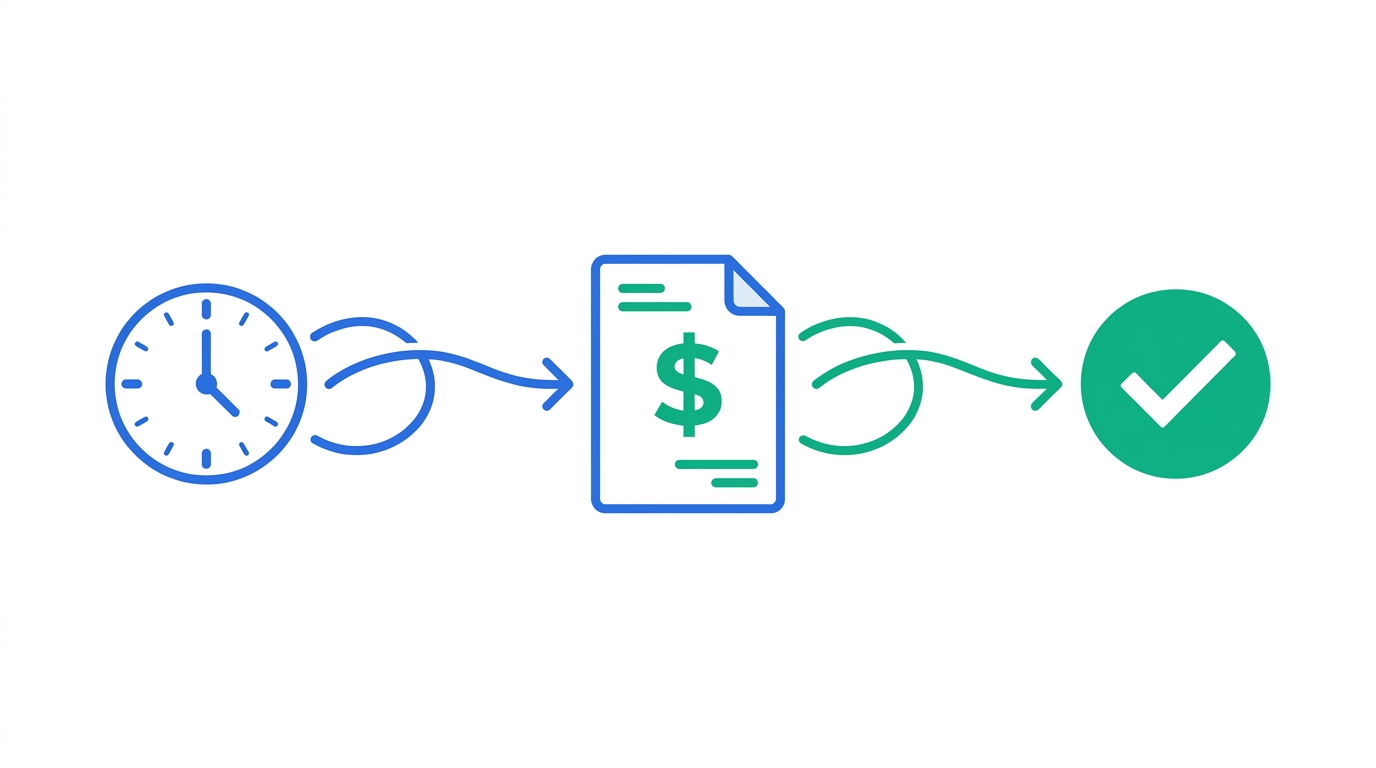
Search "best invoicing software" and you'll mostly get generic small-business lists built for a plumber sending five invoices a month. Agencies don't bill like that. A single client can generate a monthly retainer invoice, an hourly overage on top of it, and a one-off charge for a rush request — often in the same billing cycle. The tool that matters isn't the one with the prettiest invoice template; it's the one that turns tracked time and retainer balances into an invoice without someone rebuilding the math in a spreadsheet first.
We compared seven tools agencies actually use for this: Plutio, FreshBooks, Bonsai, Harvest, QuickBooks Online, Zoho Invoice, and Ignition. All pricing below was checked directly against each vendor's pricing page in July 2026. If you're evaluating accounting platforms more broadly rather than agency-specific billing, our best accounting software for small business comparison covers that wider field.
The Billing Models Agencies Actually Mix
Most invoicing tools are designed around one billing model. Agencies routinely need three or four at once, often for the same client in the same month:
- Retainer billing — a fixed monthly fee for an allocated block of hours or deliverables. The tool needs to track what's left of that allocation, not just send the same invoice amount every month regardless of usage.
- Hourly / time-and-materials — billing for logged hours beyond a retainer, or for clients with no retainer at all. This is where time-tracking-to-invoice matters most; manually copying hours from a spreadsheet into an invoice is where billing errors and missed hours creep in.
- Project / milestone billing — a fixed fee split across deliverables (50% upfront, 50% on delivery, for example). Most tools handle this fine with recurring or scheduled invoices.
- Scope-change billing — the client asks for something outside the original agreement. This is the model agencies handle worst in practice, because it requires someone to notice the scope changed, decide to bill for it, and actually generate the invoice before the work becomes an unbilled favor. Ignition is the only tool here built specifically around closing that gap at the moment of the request.
The practical takeaway: don't evaluate a tool on "can it send an invoice." Evaluate it on whether it can carry a retainer balance and an hourly overage onto the same monthly bill without manual reconciliation — that's the actual daily friction point for agencies, and it's what separates the tools below from a generic invoicing app.
Comparison Table
| Tool | Starting Price | Retainer Billing | Time → Invoice | Best For |
|---|---|---|---|---|
| Plutio | $19/mo | Yes, with balance tracking | One-click from time entries | Agencies billing time + retainers together |
| FreshBooks | $23/mo (5 clients) | Plus tier and up | Yes, per project | Small agencies, non-accountant billing |
| Bonsai | $19–25/user/mo | Yes (Essentials tier+) | Attach time entries | Boutique shops needing contracts + invoicing |
| Harvest | Free (1 seat); $9–11/seat/mo | Recurring invoices | Best-in-class time tracking | Time-tracking-first teams (watch usage fees) |
| QuickBooks Online | ~$20/mo (Solopreneur) | Recurring invoices, no native retainer logic | Manual / via app integration | Agencies that need full accounting too |
| Zoho Invoice | Free (500 invoices/yr) | Yes, recurring invoices | Basic time tracking included | Pre-revenue or sub-5-client agencies |
| Ignition | Custom (quote-based) | Yes, via engagement letters | Not the focus | Agencies fighting scope creep |
The 7 Tools, Reviewed
01 Plutio — Best Overall for Agencies
Core $19/mo · Pro $49/mo (unlimited clients, 30 contributors) · Max $199/mo (white-label, advanced reporting)
Plutio's pitch for agencies is simple: it pulls billable hours straight from time entries, applies whatever retainer allocation the client is on, calculates what's left of that allocation, and sends an invoice with a payment link attached. That workflow is the actual bottleneck for most small agencies — not invoice design. Payments run through Stripe or PayPal, overdue invoices get automatic reminders, and clients can view balances through a portal instead of emailing to ask.
The tradeoff is that Plutio is a full client-ops suite (proposals, CRM, project boards) with invoicing as one module inside it, not a dedicated accounting tool — so it won't replace a bookkeeper's software of choice for tax filing.
Pros
- Invoices generated directly from tracked time and retainer balances
- White-label client portal on the Max tier
- Multi-currency and partial-payment handling built in
Cons
- Not a substitute for real double-entry accounting
- Full feature set (CRM, proposals, boards) is more than a solo billing tool needs
02 FreshBooks — Best for Small Agencies Without a Finance Hire
Lite $23/mo (5 billable clients) · Plus $43/mo (50 clients, client retainers) · Premium $70/mo (unlimited clients) · Select: custom pricing
FreshBooks built its reputation on being the invoicing tool a non-accountant can actually operate without a tutorial. Client retainers, recurring invoices, and expense pass-through billing are all available from the Plus tier up, and the interface stays legible even when someone is billing between calls instead of doing it as their full-time job.
The catch for growing agencies: every plan is single-user by default, and adding team members costs an extra $11/month each. Combined with the 5-client cap on the entry Lite tier, agencies that add clients faster than they add headcount tend to outgrow the cheapest plan within a year.
Pros
- Easiest learning curve of any tool on this list
- Client retainers and project profitability from Plus tier up
- Real double-entry accounting available if you outgrow "just invoicing"
Cons
- Single-user pricing — team seats are a separate add-on cost
- Billable-client caps on lower tiers force upgrades sooner than expected
03 Bonsai — Best for Boutique Shops Bundling Contracts + Invoicing
Basic $9–15/user/mo (no invoicing) · Essentials $19–25/user/mo (invoicing unlocked) · Premium $29–39/user/mo · Elite $49–59/user/mo (3-user minimum)
Bonsai's invoicing only becomes useful once you're on the Essentials tier or above — the entry Basic plan is time tracking and task management only, which trips up people comparing it on price alone. From Essentials up, you get unlimited invoices, retainer and subscription invoicing, scheduled sends, and the ability to attach logged time or expenses directly to a bill, including markups on pass-through costs at the Elite tier.
Because pricing is per user, Bonsai is cheap for a one- or two-person operation and gets expensive fast for a team — the Elite tier alone requires a 3-user minimum, effectively a $147–177/month floor before you've billed a single client.
Pros
- Contracts, proposals, CRM, and invoicing in a single subscription
- Retainer and subscription invoicing built in from Essentials up
- Expense markup support for pass-through billing (Elite)
Cons
- Invoicing is locked behind the second-cheapest tier, not the entry plan
- Per-user pricing scales quickly for growing teams
04 Harvest — Best Time Tracking, But Read the 2026 Pricing Fine Print
Free (1 seat) · Teams from $9/seat/mo billed annually ($11/seat/mo billed monthly) · Enterprise from $14/seat/mo billed annually ($17.50/seat/mo billed monthly), plus usage-based fees
Harvest has been the default time-tracking-to-invoice tool for agencies for over a decade, and the core workflow is still excellent: log hours, run capacity and profitability reports across the team, and turn tracked time straight into an invoice synced to QuickBooks or Xero.
⚠ Worth knowing before you commit
Since being acquired by Bending Spoons in 2025, Harvest restructured its pricing to add usage-based fees on top of the per-seat rate — charging for invoices, projects, clients, and tasks beyond what's included in the base plan. Harvest's own pricing page doesn't publish the exact per-unit usage rates, so for an agency running a few dozen active projects and sending 15+ invoices a month, the usage portion can end up exceeding the seat cost itself, and you won't know the real number until it shows up on your bill.
Pros
- Best-in-class time tracking interface, still the category benchmark
- Deep integrations: QuickBooks, Xero, Stripe, Asana, and more
- Free tier available for a single user
Cons
- 2026 usage-based fees make monthly cost hard to predict at scale
- Project profitability reporting is Enterprise-only
05 QuickBooks Online — Best If You Need Real Accounting, Not Just Invoicing
Solopreneur ~$20/mo · Simple Start ~$35/mo · Essentials ~$70/mo · Plus $140/mo (up from $99) · Advanced $340/mo (up from $200) — Plus and Advanced pricing increased August 1, 2026
QuickBooks Online isn't built around agency billing the way Plutio or Bonsai are — invoicing is a feature of the accounting system, not the other way around. There's no native retainer-allocation logic; recurring invoices work, but tracking "how much of this month's retainer is left" is a manual reconciliation, not something the invoice screen shows you. What you get instead is a real general ledger, tax-ready books, payroll if you need it, and the tool every outside accountant already knows how to use.
⚠ Price increase effective August 1, 2026
Intuit raised QuickBooks Online pricing again in August 2026: Plus went from $99 to $140/month (a 41% increase) and Advanced went from $200 to $340/month (a 70% increase), with the increases hitting existing subscribers at their next renewal. New subscribers get roughly six months of protected pricing before the new rate applies. If invoicing is your only need and you're not tied to QuickBooks' accounting side, this is the point where it's worth pricing out alternatives — we cover several in our QuickBooks alternatives comparison.
Pros
- Full accounting, tax, and payroll in one system, not just invoicing
- The tool most outside accountants and bookkeepers already use
- Deepest ecosystem of integrations of any tool here
Cons
- No native retainer-balance tracking — agencies rebuild that logic manually
- Plus and Advanced tiers just got significantly more expensive
06 Zoho Invoice — Best Free Option
Free forever: 2 users, 3 active projects, up to 500 invoices/year, "Powered by Zoho Invoice" branding on outgoing invoices
Zoho Invoice is a genuinely complete free product, not a crippled trial. Tax-compliant invoices, recurring billing, a self-service client portal, automated payment reminders, and card/ACH payment acceptance are all included at $0. For an agency with two or three clients, the caps (500 invoices/year works out to more than 40/month, which most small shops never hit) rarely bind in practice.
The real limitation is professional polish: outgoing invoices and the client portal carry Zoho's branding on the free tier, which reads fine to a startup client and less fine to an enterprise procurement team. When an agency does outgrow it — more than two people touching billing, or more than three active engagements — Zoho's own upgrade path is Zoho Books, starting around $20/month, rather than a paid Zoho Invoice tier.
Pros
- Actually free, not a time-limited trial dressed up as a plan
- Recurring invoices and a client portal included at $0
- 500 invoices/year covers most agencies under five clients comfortably
Cons
- "Powered by Zoho" branding on the free tier looks unpolished to larger clients
- 2-user and 3-project caps mean it doesn't scale with the team
07 Ignition — Best for Fighting Scope Creep
Pricing: not publicly published — quote-based after a 14-day free trial, no credit card required to start
Ignition starts earlier in the client relationship than any other tool here: proposals and engagement letters are built and sent through the platform, payment is authorized at signature, and billing kicks off automatically once the client signs — no separate "now let's set up invoicing" step. The feature agencies mention most is instant billing for scope changes: when a client asks for something outside the original agreement, Ignition is built to invoice for that add-on immediately instead of it becoming an unbilled favor that quietly erodes the account's margin.

The tradeoff is transparency: Ignition doesn't publish pricing tiers anywhere on its site, so you can't compare cost without booking a call. For an agency that just wants a fast, self-serve invoicing tool, that alone may be reason enough to start with Plutio or FreshBooks instead.
Pros
- Proposal-to-payment in one workflow, no separate invoicing setup
- Built specifically to bill scope changes instantly, not after the fact
- Integrates with Xero, QuickBooks, and Zapier
Cons
- No public pricing — requires a sales conversation to get a quote
- Overkill if you just need to send and track simple invoices
Both Bonsai and Ignition lean on Zapier to connect billing events to the rest of an agency's stack — if you're already relying heavily on Zapier-style automation and want to compare cheaper alternatives, we cover that ground in our Zapier alternatives for small business guide.
How We Chose
We scored each tool on four things that matter specifically for agency billing, not general small-business invoicing: whether retainer and recurring billing is native (versus a workaround), whether tracked time converts into an invoice without manual re-entry, how payment collection and overdue reminders are handled, and total cost at a realistic team size — not just the cheapest advertised tier. Every price in this article was checked against the vendor's own pricing page in July 2026; where a tool changed its pricing structure this year (Harvest, QuickBooks Online), we called that out explicitly rather than quoting a number that may already be stale by the time you read this.
Common Mistakes When Switching Invoicing Tools
- Migrating mid-retainer-cycle. Switching tools halfway through a client's billing period without manually re-entering the remaining hours or budget on the retainer causes the new tool to either double-bill or under-bill the next invoice. Migrate at a cycle boundary, or budget an afternoon to reconcile balances by hand.
- Pricing per-user tools against a growth number, not today's headcount. Bonsai and Harvest both charge per seat. A $19/user/month plan reads as cheap for a 2-person shop and expensive for the 8-person team that shop plans to be in a year — model the cost at your target headcount, not your current one.
- Assuming "invoicing" means "accounting." Plutio, Bonsai, and Zoho Invoice will get a bill to a client and collect payment, but none of them produce tax-ready books on their own. If your accountant needs a proper general ledger at year-end, that's a QuickBooks Online (or equivalent) requirement, not an invoicing-tool one.
- Not testing the client-facing side before rollout. The portal, the payment page, and the emailed invoice are what your client actually sees — and they look different from what the admin dashboard shows you. Send yourself a real test invoice before switching every client over.
Frequently Asked Questions
What's the real difference between invoicing software and full accounting software for an agency?
Can I automate retainer billing so I'm not manually calculating remaining hours every month?
Is free invoicing software like Zoho Invoice good enough for a real agency?
How much should a small agency budget for invoicing software?
What actually changed with Harvest's pricing in 2026?
References & Sources
- Plutio — Invoicing for Agencies (pricing & features)
- FreshBooks — Official Pricing Page
- Bonsai — Official Pricing Page
- Harvest — Official Pricing Page
- Zoho Invoice — Official Pricing Page
- Certum Solutions — QuickBooks Price Increase August 2026: What Every Plan Costs Now
- Ignition — Agency Billing & Agreement Platform

Technology consultant with 10+ years in the Japanese tech industry. Specializing in SaaS evaluation, workflow automation, and B2B tool integration.